Ingredients
Method
- Cook the mushrooms. Heat the olive oil in a non-stick frying pan over medium-high heat. Add the sliced mushrooms and cook until golden and any released moisture has fully evaporated — around 3 to 4 minutes. Do not rush this step. A properly golden mushroom is the flavour foundation of the whole dish.
- Add the vegetables. Add the grated carrot and blitzed broccoli to the pan. Cook for 1 to 2 minutes until just softened. Add the spinach and toss briefly until wilted — about 30 seconds.
- Whisk the eggs. In a bowl, combine the egg whites and whole eggs. Season with salt and pepper. Whisk briefly until just combined.
- Pour and cook. Spread the vegetables evenly across the pan. Reduce heat to medium-low. Pour the egg mixture over the top and tilt the pan gently to distribute evenly. Cook without stirring, lifting the edges occasionally to allow uncooked egg to run underneath.
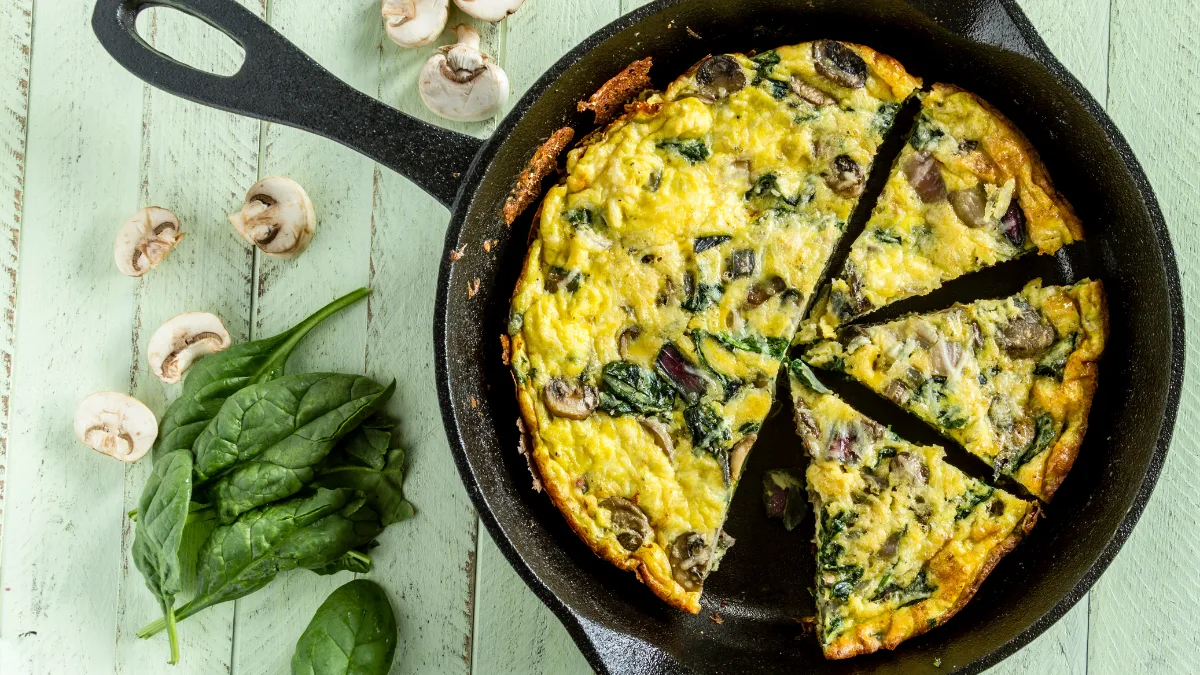
- Finish and serve. When the frittata is just set and still slightly glossy on top, remove from the heat. Finish with a generous pinch of smoked paprika and serve directly from the pan, sliced into portions.
Notes
Nutrition per serving (approximate)
Values are approximate and will vary with exact ingredient quantities. Fat is predominantly monounsaturated from the olive oil and egg yolks. All carbohydrate and fibre comes from vegetables — no added sugars. Adjust olive oil between 5ml and 15ml to suit your daily fat intake.
439
Calories
46g
Protein
20g
Carbs
21g
Fat
8g
Fibre
Why Every Ingredient Is Here
Each component of this frittata earns its place for a specific nutritional reason — not just for flavour.Egg whites and whole eggs
The 250ml of liquid egg whites delivers the protein foundation — around 27 grams with almost no fat or calories. Two whole eggs add richness, texture, and the nutritional depth of the yolk — vitamin D, vitamin K2, choline, and fat that is predominantly unsaturated. The cholesterol question around eggs has been substantially revisited in the clinical literature — for most people, whole eggs consumed regularly do not meaningfully raise cardiovascular risk. We cover this fully in our dedicated article on eggs and cholesterol.Mushrooms
The flavour foundation. Cooked in olive oil until properly golden before anything else goes in, mushrooms develop a deep, savoury quality that anchors the whole dish. They are also a meaningful source of potassium — which supports blood pressure regulation — selenium, B vitamins, and ergothioneine, an antioxidant attracting growing research interest for its cardiovascular and cellular protective properties. Portobello mushrooms deliver the strongest flavour and nutritional profile. Button or Swiss brown mushrooms work equally well and are more economical.Broccoli
Blitzed in a food processor for ten seconds, broccoli becomes fine green crumbs that disappear completely into the egg mixture — adding sulforaphane, one of the most studied phytonutrients in cardiovascular and cancer prevention research, alongside vitamin C, folate, and 3.8 grams of fibre. The soluble fibre in broccoli binds to bile acids in the gut — bile acids that are made from cholesterol. When those bile acids are excreted rather than reabsorbed, the liver draws more LDL cholesterol from the bloodstream to replace them. This is the mechanism by which a high-fibre diet produces meaningful reductions in LDL cholesterol over time.Carrot
Grated carrot contributes beta-carotene, natural sweetness, potassium, and 2.1 grams of soluble fibre — adding to the cholesterol-lowering fibre story of the broccoli. It does not need squeezing and integrates seamlessly into the egg mixture.Spinach
Dietary nitrates in spinach support nitric oxide production — a mechanism that promotes vascular relaxation and healthy blood pressure. Spinach also provides folate, magnesium, iron, and vitamin K. It wilts in 30 seconds and adds genuine cardiovascular value to every bite.Olive oil — the adjustable variable
Ten millilitres of extra virgin olive oil is the baseline — consistent with the Mediterranean dietary pattern that has the strongest cardiovascular evidence base of any dietary approach. The monounsaturated fat and anti-inflammatory polyphenols it contributes are genuinely beneficial. Reduce to 5ml on days when other meals are higher in fat. Use 15ml when the rest of the day is leaner. Treating fat as a conscious dial rather than a fixed quantity is one of the most practical nutritional habits available.Smoked paprika
The finishing touch that makes this worth repeating four times a week. It also contains capsaicin-related compounds with mild anti-inflammatory properties — but more importantly, it transforms a functional meal into a genuinely enjoyable one.
The Fibre Story
This frittata delivers approximately 8 grams of dietary fibre — around 25 to 30% of the recommended daily intake in a single meal. The soluble fibre from broccoli and carrot binds to cholesterol-containing bile acids in the gut, reducing their reabsorption and prompting the liver to draw LDL cholesterol from the bloodstream. Starting the day with this level of vegetable fibre sets a strong nutritional foundation for the hours ahead.