Key Points
- Beta blockers are commonly prescribed after a heart attack, but new research is raising questions about whether all patients need them long-term.
- A major study found no clear benefit from continuing beta blockers beyond one year in patients whose heart was pumping normally after their heart attack.
- For patients whose heart pumping function has been reduced by a heart attack, beta blockers remain essential and this research does not change that.
- Do not stop your beta blocker without speaking to your cardiologist first, this is a conversation worth having, not a decision to make alone.
If you have had a heart attack, there is a good chance beta blockers were part of your treatment plan before you left hospital. That is not an accident, these medications have been a cornerstone of heart attack care for decades, and for most patients, they have made a real difference.
But a question I am asked more and more in my clinic is this: “Do I really need to keep taking this medication forever?”
It is a fair question. And new research from one of the largest cardiac databases in the world has added important evidence to the debate.
What Do Beta Blockers Actually Do?
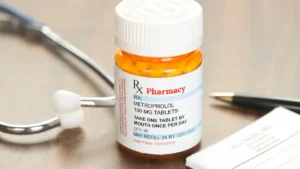
Beta blockers work by blocking the effects of adrenaline on the heart. This slows the heart rate, lowers blood pressure, and reduces the effort the heart has to put in with every beat.
After a heart attack, this can be enormously helpful. A heart that has been through the stress of a heart attack benefits from being able to rest and recover. Beta blockers also reduce the risk of dangerous heart rhythm problems in the days and weeks after the event.
For patients whose heart pumping function has been weakened by a heart attack, the evidence is particularly strong. These patients live longer, are hospitalised less, and feel better on beta blockers. That recommendation is not in question here.
The Key Distinction, Normal Pumping Function vs Reduced
Not everyone who has a heart attack ends up with reduced pumping function. If a blockage is treated quickly with a stent, the heart muscle may recover fully. For these patients, the heart works normally afterwards.
The question this research addresses is specifically about this group, people whose heart is pumping well after their heart attack. Do they still benefit from staying on beta blockers long-term?
What the Research Found
Researchers in Sweden analysed data from more than 43,000 patients who had experienced a heart attack with normal heart pumping function afterwards. They followed these patients for an average of four and a half years.
The team compared outcomes in patients who were still taking beta blockers one year after their heart attack against those who were not.
They found no significant difference in outcomes, including death, another heart attack, or hospitalisation for heart failure, between those taking beta blockers and those who were not.
This was published in the medical journal Heart and has generated significant discussion in the cardiology community.
Should We Change Practice Based on This?
Not yet, and here is why. This was an observational study, which means the researchers watched what happened rather than randomly assigning patients to different treatments. That makes it harder to draw firm conclusions, because the two groups of patients were not identical in all other respects.
The gold standard in medicine is a randomised trial, where patients are assigned by chance to one treatment or another, so the groups are as similar as possible. Several such trials are currently underway specifically to answer this question, and their results will carry more weight.
Until those results are in, I would not advise anyone to stop their beta blocker on the basis of this study alone. What I would encourage is raising it at your next cardiology appointment, it is exactly the kind of question worth asking.
Why This Research Matters, The Side Effect Question
Part of why this debate is clinically important is that beta blockers are not side-effect free. Many patients tolerate them well, but others find them difficult.
Common side effects include persistent tiredness or fatigue, reduced exercise tolerance, mood changes, vivid or disturbing dreams, low blood pressure, and, in some men, effects on sexual function. Patients with asthma or breathing difficulties may also find beta blockers worsen their symptoms.
When the benefit of a medication clearly outweighs these effects, the trade-off is worth it. When the benefit is less certain, as now appears to be the case in patients with normal pumping function after heart attack, the conversation becomes more nuanced. Your experience of the medication matters in that discussion.
If Your Pumping Function Is Reduced, This Does Not Apply to You
This is worth stating clearly. If you have been prescribed a beta blocker because your heart pumping function was reduced after your heart attack, the evidence supporting that treatment is strong and well-established. The following beta blockers are commonly used in this setting:
Do not stop these medications without discussing it with your cardiologist first. Stopping abruptly can cause your heart rate to rebound and may be harmful.
Heart Matters Resource
When in Doubt, Get Checked Out
If you are concerned about any symptoms, new chest discomfort, unusual breathlessness, or side effects from your medications, don’t wait and wonder. Heart Matters has a dedicated resource on the symptoms that should always be taken seriously.
Related Reading
- Recovering After a Heart Attack
- Coronary Artery Disease, Heart Matters Dedicated Resource
- What Is Atherosclerosis?
- Understanding Your Cardiovascular Risk Factors
Conclusion
This is an evolving area of cardiology, and it is a good example of why medicine does not stand still. Research that challenges established practice is how we make sure patients are getting the right treatment for the right reasons, not simply because it has always been done that way.
If you had a heart attack and your heart is pumping normally, it is worth asking your cardiologist at your next visit whether your beta blocker is still the right choice for you. That is not a decision to make alone, but it is absolutely a question worth raising.
For patients whose heart function has been affected, please keep taking your medication. It is working for you in ways this research was not designed to question.
Reference
Ishak D, Aktaa S, Lindhagen L, et al. Association of beta-blockers beyond 1 year after myocardial infarction and cardiovascular outcomes. Heart. 2023;109:1159–1165. Link to Study