









The Pulse Newsletter Expert heart health, in plain English. Fortnightly, from our clinicians. Subscribe →
Section

Medications

Heart medications can feel unfamiliar and sometimes daunting. This section is designed to help you understand what each medication is, how it is generally used, and what questions are worth raising with your doctor or healthcare team — so you can approach those conversations feeling informed and confident.

Jump to a topic
Taking Heart Medicines Well: Why It Matters and What Helps
Latest in Medications

Taking Heart Medicines Well: Why It Matters and What Helps

Heart medicines only protect the heart when they are taken. This article looks at why so many people miss or stop their medicines, and the practical supports that make a routine easier to keep.

All articles
Beta-Blockers: Uses, Side Effects, and Precautions

Beta-Blockers: Uses, Side Effects, and Precautions

Beta-blockers calm the heart by blocking adrenaline, and they treat far more than blood pressure. Here is what yours is doing, the side effects worth knowing about including vivid dreams, and why you must never stop one suddenly.

DOACs (Apixaban, Rivaroxaban, Dabigatran): Uses and Precautions

DOACs (Apixaban, Rivaroxaban, Dabigatran): Uses and Precautions

Most people leave hospital with a DOAC and a thin explanation of what it does. Here is what apixaban, rivaroxaban, and dabigatran actually do, what to expect, and the few situations that need action.

Statin Muscle Aches: When It’s the Drug and When It Isn’t

Statin Muscle Aches: When It’s the Drug and When It Isn’t

Muscle aches on a statin are real, and dismissing them is the fastest way to lose a patient. The more useful conversation starts one step earlier, with whether the statin was clearly needed at all.

Ticagrelor (Brilinta): Uses, Side Effects, and Precautions

Ticagrelor (Brilinta): Uses, Side Effects, and Precautions

Ticagrelor, sold as Brilinta, plays an important role in protecting the heart after a heart attack or stent. Here is how it works, what side effects to expect, and the practical questions patients ask most.

Vascepa and Vazkepa: What This Prescription Omega-3 Actually Does

Vascepa and Vazkepa: What This Prescription Omega-3 Actually Does

Vascepa, known as Vazkepa in Australia, is a prescription omega-3 medication. In the REDUCE-IT trial it reduced serious cardiovascular events by 25% in high-risk patients already on a statin. Here is who it is for and how it differs from fish oil.

Angiotensin Receptor Blockers (ARBs) and Heart Health

Angiotensin Receptor Blockers (ARBs) and Heart Health

ARBs are among the world's most prescribed heart medicines, and the go-to alternative when ACE inhibitors cause a cough. Here is what an ARB does, what to expect while taking one, and how it protects your heart and kidneys.

Prof. Peter Barlis
Editor's note

Understanding your condition is the single most important thing you can do after a heart diagnosis. Don't just read — ask questions, take notes, bring them to your cardiologist.

Prof. Peter Barlis · Founding Editor, Heart Matters
Calcium Channel Blockers: What Amlodipine, Verapamil and the Rest Are Actually Doing

Calcium Channel Blockers: What Amlodipine, Verapamil and the Rest Are Actually Doing

Amlodipine, verapamil, diltiazem: if you have been prescribed a calcium channel blocker, here is what it does, why it was chosen for you, and the side effects and grapefruit interaction every patient on one should know about.

Furosemide (Frusemide) Explained

Furosemide (Frusemide) Explained

One of the most widely prescribed medications in cardiology, this water tablet plays a central role in managing fluid overload in heart failure and other conditions.

Antiplatelet Therapy After a Stent or Heart Attack: Why It Matters

Antiplatelet Therapy After a Stent or Heart Attack: Why It Matters

If you have had a stent placed or been admitted with a heart attack, your cardiologist will have prescribed antiplatelet medication. This article explains what it does, why it matters, and why you should never stop it without speaking to your cardiologist first.

Deep read

Entresto (Sacubitril/Valsartan): Understanding Its Role in Modern Heart Failure Treatment

Entresto combines two complementary medicines to protect the failing heart in ways older treatments cannot. Here is how it works, what the evidence shows, and what to expect when taking it.

by Kathy Marinias RN
Entresto (Sacubitril/Valsartan): Understanding Its Role in Modern Heart Failure Treatment
The Timing of Cholesterol-Lowering Medications: Does Nighttime Dosing Make a Difference?

The Timing of Cholesterol-Lowering Medications: Does Nighttime Dosing Make a Difference?

Should you take your statin at night, or does the timing not really matter? The answer depends on which statin you are on.

Nitrates for Angina: GTN Spray, Patches, and Long-Acting Tablets Explained

Nitrates for Angina: GTN Spray, Patches, and Long-Acting Tablets Explained

Nitrates are one of the oldest and most effective treatments for angina, available as a fast-acting spray, skin patches, and daily tablets.

Statins: What Patients Ask Me Most

Statins: What Patients Ask Me Most

If you have been prescribed a statin, you probably have questions. A cardiologist addresses the concerns patients raise most, from muscle pain and memory loss to whether you need one at all.

Bisoprolol: A Closer Look at This Common Heart Medication

Bisoprolol: A Closer Look at This Common Heart Medication

Bisoprolol is one of the most prescribed heart medications in the world — but many patients have questions about what it does and what to expect.

Oral Semaglutide: What You Should Know About the Pill Form of Ozempic

Oral Semaglutide: What You Should Know About the Pill Form of Ozempic

Ozempic is well known, but for patients who prefer not to inject, the tablet form offers a genuine alternative. Here is how oral semaglutide works and what to expect.

SGLT2 Inhibitors: The Diabetes Drug That Transformed Heart Failure Treatment

SGLT2 Inhibitors: The Diabetes Drug That Transformed Heart Failure Treatment

Originally developed to lower blood sugar, SGLT2 inhibitors have turned out to be among the most important heart failure medications in a generation.

12

Taking Heart Medicines Well: Why It Matters and What Helps

heart medicines adherence
Key Points

  • Heart medicines only protect the heart when they are taken, and missing or stopping them is one of the most common reasons treatment works less well than it could.
  • People miss or stop medicines for understandable reasons, including feeling well, side effects, a long list of tablets, cost, and confusion after a hospital stay.
  • Some heart medicines, such as antiplatelets and beta-blockers, can cause problems if stopped suddenly, which is why changes are usually planned with the prescribing doctor.
  • Simple supports such as daily routines, pill organisers, reminders, and an up-to-date medicine list help many people, though what works varies from person to person.
  • Pharmacists and doctors can often simplify a routine, change a medicine that is causing side effects, or answer questions about timing and missed doses.

Barely a day goes by in my clinic without a conversation about medicines. Questions about tablets are also one of the most common reasons patients call the office between appointments. I understand why.

Heart medicines can be genuinely confusing. The same medicine can have a generic name, a brand name, and a different-looking packet each time it is dispensed. Some people arrive at an appointment with a shopping bag full of boxes, and for others the morning tablets have become almost a meal in their own right.

Many of these medicines also do not make anyone feel better, at least not straight away. Some can make people feel a little worse at first, perhaps light-headed or tired. They can cause side effects, and the cost adds up. When a medicine brings no obvious benefit day to day, it is entirely reasonable to wonder why it is needed at all.

These are fair questions, and they deserve clear answers. This article explains why taking heart medicines as prescribed matters, why so many people find it hard, and what tends to make it easier.

Why Taking Medicines as Prescribed Matters

Most heart medicines work quietly in the background. Statins lower cholesterol and help stabilise plaque in the arteries. Antiplatelet medicines keep blood from clotting on a stent or a narrowed artery. Blood pressure medicines reduce strain on the heart and blood vessels.

None of these effects can be felt day to day. The benefit shows up as things that do not happen: a second heart attack, a stroke, or a hospital admission. That is exactly why the protection is easy to underestimate, and why it fades when doses are missed regularly.

About 1 in 2
people with long-term conditions do not take their medicines as prescribed, making this one of the most common challenges in all of medicine.
World Health Organization

Health professionals often use the word “adherence” for this. It means taking medicines in the way that was agreed with the prescribing doctor. It is not about blame. Missing doses is common, and the World Health Organization has long pointed out that health systems and clinicians share responsibility for making treatment easier to follow.

Why People Miss or Stop Their Medicines

The reasons are usually practical and very human. Feeling well is one of the most common. When there are no symptoms, it is natural to wonder whether a tablet is still needed.

Side effects are another. A dry cough on an ACE inhibitor, tiredness on a beta-blocker, or muscle aches that may or may not be related to a statin can all make people reluctant to keep going.

Other common reasons include:

  • A long list of tablets taken at different times of day.
  • Changes to medicines after a hospital stay that are not fully explained.
  • The cost of several medicines at once.
  • Running out between appointments.
  • Worry about taking a medicine for many years, often fuelled by stories online or from friends.
  • Forgetting, especially when routines change on holidays or weekends.

Worries about statins come up particularly often. These concerns are understandable and worth talking through openly. The article Statins: What Patients Ask Me Most covers the questions patients raise most frequently.
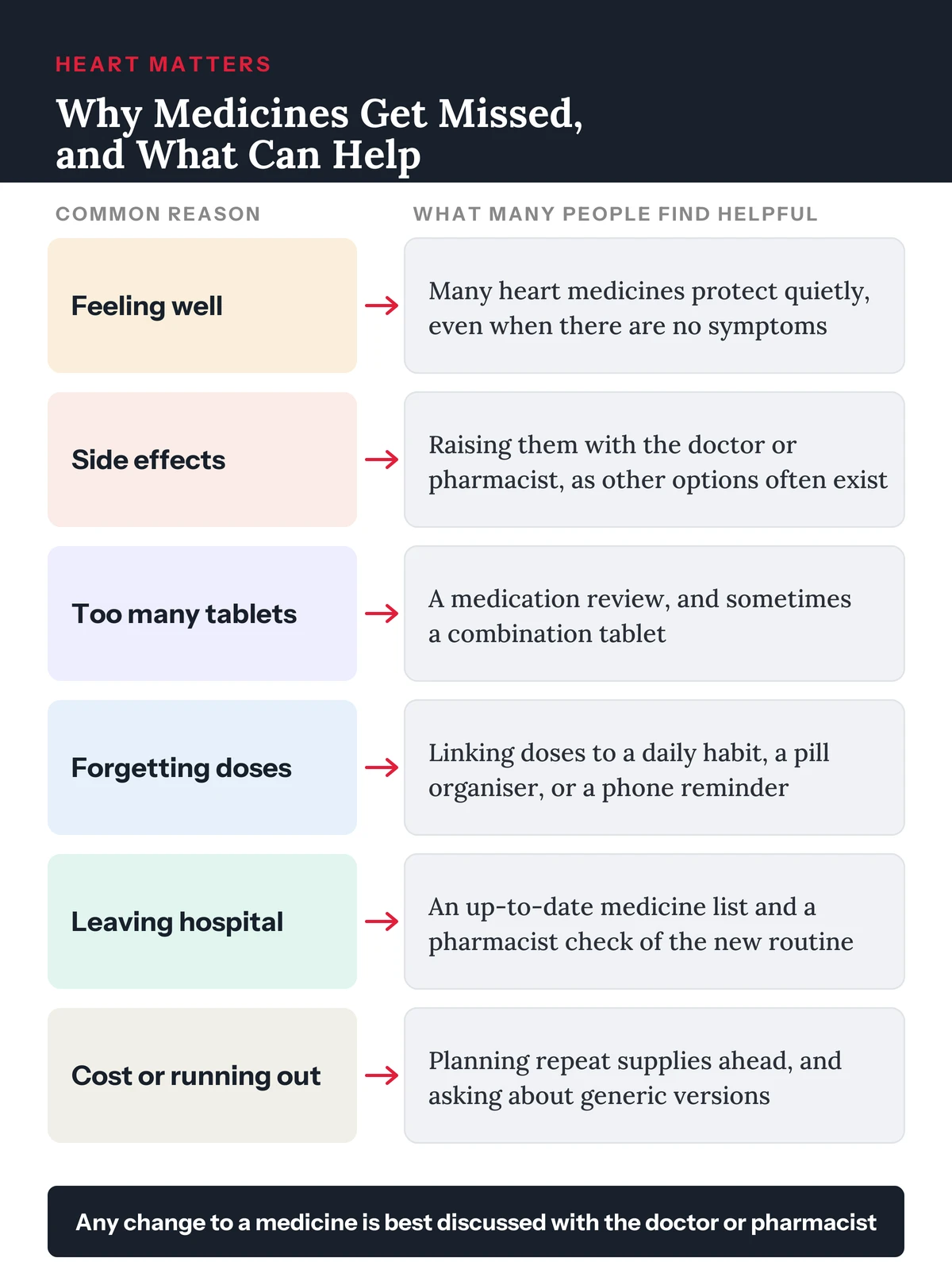
Infographic showing six common reasons heart medicines get missed, including feeling well, side effects, too many tablets, forgetting doses, leaving hospital, and cost, each paired with what many people find helpful
Common reasons medicines get missed, and what many people find helpful

What Happens When Heart Medicines Are Stopped

Stopping a medicine affects the body in different ways depending on the medicine. For some, the protection simply fades. For others, stopping suddenly can cause a rebound effect.

Antiplatelet medicines, such as aspirin, clopidogrel, and ticagrelor, prevent platelets from sticking together. When they are stopped, platelets become sticky again within days. After a stent, this raises the risk of a clot forming inside the stent, which can cause a heart attack. This is why the length of antiplatelet treatment is planned carefully, and why any pause around surgery or dental work is usually coordinated with the cardiologist. Whether, when, and how to stop is a decision for the prescribing doctor.

Beta-blockers slow the heart and reduce its workload. When they are stopped abruptly, the heart can speed up and become more sensitive to adrenaline, which may bring on palpitations, chest pain, or a rise in blood pressure. This is why the dose is usually reduced in stages rather than halted outright. There are some situations where a doctor may stop a beta-blocker straight away, and the decision rests with the prescribing doctor.

Statins and blood pressure medicines do not usually cause a sudden rebound, but their protective effect wears off over time once they are stopped. Cholesterol and blood pressure tend to drift back towards their earlier levels.

Practical Approaches Many People Find Helpful

There is no single system that suits everyone. The approaches below are ones that many people use, and the best choice depends on the person, their routine, and their medicines.

Linking doses to a daily habit

Tying a dose to something that already happens every day, such as breakfast, brushing teeth, or the evening news, is one of the most commonly used strategies. The habit acts as the reminder.

Pill organisers and blister packs

A weekly pill organiser with compartments for each day makes it easy to see whether a dose has been taken. Many pharmacies can also prepare medicines in sealed blister packs or sachets, sorted by day and time. These can be especially useful for people on several medicines, or for carers helping someone else.

Reminders

Phone alarms and medication reminder apps help some people, particularly when routines change. Others find a note on the fridge or a family member’s prompt works better.

An up-to-date medicine list

A written list of every medicine, including the dose and what it is for, is useful at every appointment and in an emergency. It is particularly valuable after a hospital stay, when medicines are often added, stopped, or changed. Many people keep a copy in their wallet or on their phone.

Planning repeat supplies

Running out is a common and avoidable reason for missed doses. Checking supplies a little ahead of time, and arranging repeat prescriptions before the last packet, helps keep treatment continuous.

Timing, Food, and Fitting Medicines Into the Day

Some medicines come with general guidance about when or how to take them. The details vary between medicines and between people, so the pharmacist or prescribing doctor is the best source of advice on any individual routine. Some common examples:

  • Aspirin is often taken with or after food, which can reduce stomach upset.
  • Fluid tablets (diuretics) are usually taken earlier in the day, so that extra trips to the toilet are less likely to disturb sleep.
  • For many statins, taking them consistently matters more than the exact time of day. The article on timing cholesterol-lowering medicines explains this in more detail.
  • For blood pressure medicines, a large trial of more than 21,000 people found no difference in heart attacks, strokes, or heart-related deaths between morning and evening dosing.

For most people, the best time to take a medicine is the time that fits their routine and is easiest to remember. Consistency usually matters more than the clock.

What About Missed Doses?

Almost everyone misses a dose at some point. What to do next depends on the medicine, how often it is taken, and how much time has passed. For some medicines, the missed dose is taken as soon as it is remembered. For others, it is skipped and the usual schedule continues. Doubling up is generally not recommended without advice.

Because the answer differs between medicines, a pharmacist or the prescribing doctor is the right person to ask. Many people find it helpful to ask this question once for each medicine, so they know in advance.

The Pharmacist’s Role

Pharmacists are often the most accessible health professionals, and their knowledge of medicines is extensive. They can explain what each medicine is for, check for interactions, and help with practical questions about timing, food, and missed doses.

Many pharmacies also offer a structured medication review. This involves looking across the whole list of medicines, including vitamins, supplements, and over-the-counter products, to make sure everything still makes sense together. Some things that seem unrelated, such as certain anti-inflammatory painkillers or cold and flu tablets, can affect blood pressure or interact with heart medicines.

Simplifying the Routine

A routine that is simpler is usually easier to keep. Doctors and pharmacists can often help with this in several ways:

  • Reviewing whether every medicine is still needed.
  • Moving doses to the same time of day where that is safe and suitable.
  • Using a combination tablet that contains two medicines in one.

A “polypill” takes this idea further by combining several heart medicines in a single tablet. In a large trial of older adults after a heart attack, a polypill containing aspirin, ramipril (an ACE inhibitor), and atorvastatin (a statin) improved how consistently people took their treatment. It also led to fewer major heart events compared with taking the same medicines separately. Polypills and combination tablets are not available everywhere, and they are not suitable for everyone, but they show how much a simpler routine can matter.

The best medicine routine is one that fits real life. If a routine is hard to follow, that is worth raising, because it can often be changed.

Side Effects and Worries Are Worth Raising

Quietly stopping a medicine because of a side effect or a worry is very common. Yet in many cases there is another option: a lower dose, a different medicine in the same family, or a change in timing. The ACE inhibitor cough is a good example, as switching to a related medicine called an angiotensin receptor blocker is a well-established solution for many people.

Doctors and pharmacists generally find it far more helpful to hear about a problem than to discover later that a medicine was stopped. An honest conversation is how a treatment plan gets adjusted to suit the person taking it.

For people who have recently had a heart event, the article on recovering after a heart attack explains how medicines fit into the wider picture of recovery.

Conclusion

Heart medicines protect quietly, and that protection depends on taking them consistently. Missing or stopping medicines is common, and the reasons are usually understandable: feeling well, side effects, complicated routines, cost, or simply forgetting.

Small supports such as routines, pill organisers, and an up-to-date medicine list help many people. Equally important is an open conversation with the pharmacist and doctor, who can often simplify a routine, answer questions about timing and missed doses, and find an alternative when a medicine is not agreeing with someone.

Related Reading

Beta-Blockers: Uses, Side Effects, and Precautions

Beta-blockers

Beta-blockers calm the heart by blocking adrenaline, and they treat far more than blood pressure. Here is what yours is doing, the side effects worth knowing about including vivid dreams, and why you must never stop one suddenly.

Statin Muscle Aches: When It’s the Drug and When It Isn’t

Statin Muscle Aches
Key Points

  • Muscle symptoms on statins are real for a significant number of people, and dismissing them is one of the fastest ways to lose a patient’s trust and their willingness to take any cholesterol treatment at all.
  • The first question is not which statin to try next. It is whether the statin was clearly indicated in the first place, and that means looking at overall cardiovascular risk rather than a single cholesterol number.
  • Rechallenge studies show that a large proportion of people who stopped a statin for muscle aches can tolerate one when it is reintroduced carefully, often at a lower dose or a different agent.
  • True statin-related muscle injury with markedly raised creatine kinase is uncommon. Serious rhabdomyolysis is rare.
  • Lower doses, alternative statins, and non-daily dosing schedules are all used in practice to keep people on treatment, and much of the benefit comes from plaque stabilisation and reduced arterial inflammation rather than the LDL number alone.
  • Stopping a statin without a plan is the outcome worth avoiding, because the risk it was managing does not go away.

Aches in the thighs. Heaviness climbing stairs that was not there last year. Calves that feel like they have been through a session at the gym on a day with no gym. When someone describes this to me a few weeks after starting a statin, I do not think they are imagining it, and I do not open with the trial data.

I open by asking why they are on it.

That question surprises people. They assume the conversation will be about swapping to a different tablet. Often the more useful conversation is one step earlier, and it changes what we do next.

Why the Indication Matters More Than the Side Effect

A large number of statin prescriptions are written quickly. A cholesterol result comes back above a threshold, a script is generated, and the patient leaves with a tablet and very little sense of what it is protecting them from. Nobody set out to do it badly. Consultations are short and a number on a page is an easy thing to act on.

The trouble is that a cholesterol level on its own is a poor guide to whether an individual needs treatment. What matters is absolute cardiovascular risk, which is built from age, blood pressure, smoking history, diabetes, family history, kidney function, and whether there is any established arterial disease. Newer markers add further detail, including inflammation in the artery wall and, for some, ancestry, since cardiovascular risk runs higher in South Asian and East Asian populations. Two people with identical LDL readings can have completely different reasons to take a statin, or not to.

So when someone comes to me with muscle symptoms, the first thing I want to establish is which category they are in.

Established cardiovascular disease

If someone has had a heart attack, a stent, bypass surgery, a stroke, or has known atherosclerosis on imaging, the case for lipid-lowering therapy is strong and the effort to find a tolerable option is worth making. Here the goal is to stay on treatment in some form, and abandoning it entirely is the worst of the available outcomes.

Primary prevention with genuinely elevated risk

Someone with no established disease but a high calculated risk, a strong family history, or an elevated lipoprotein(a) also has a solid reason to persist. A coronary calcium score can add useful information when the decision is genuinely uncertain, because it reflects calcified plaque already present in that person’s own arteries rather than an estimated percentage. It has real limitations, though. It involves a small dose of radiation, it does not detect the soft, non-calcified plaque that causes many events in younger people, and a score of zero does not guarantee low risk in every situation. It is a tie-breaker for borderline cases, not a routine test for everyone, and it is best interpreted alongside the rest of the risk picture.

Primary prevention on the strength of a number alone

And then there is the group where the statin was started because a cholesterol result looked high, in an otherwise low-risk person, without a risk assessment ever being done. This group exists. When one of them presents with disabling muscle aches, the honest answer may be that the medication is doing very little for them and the conversation should be about whether it is needed at all.

Before we work out which statin you can tolerate, we should agree on what the statin is for. Sometimes that answer alone settles the question.

What the Evidence Says About Statin Muscle Symptoms

This is where the picture gets genuinely interesting, and where I think the public conversation has become unhelpfully polarised.

In randomised trials, where neither the patient nor the doctor knows who is receiving the statin, the rate of muscle symptoms is only slightly higher in the statin group than the placebo group. In everyday practice, reported rates are far higher, somewhere between 10% and 25% depending on the study.

Two trials have looked at this directly. In the SAMSON study, participants who had previously stopped statins because of side effects took months of statin tablets, months of placebo tablets, and months of no tablets at all, without knowing which was which. Symptom scores were almost identical in the statin months and the placebo months, and much lower in the months with no tablet. The StatinWISE trial, using a similar design, reached a comparable conclusion.

It would be easy to read that as proof the symptoms are imaginary. That is the wrong lesson, and it is the reading that makes patients feel disbelieved.

What those trials actually show is that the act of taking a daily tablet, combined with the expectation of a side effect, produces real physical symptoms. This is the nocebo effect, and it is a genuine physiological phenomenon, not a character flaw. The pain is real. Its origin is more complicated than the drug molecule alone.

They also do not exclude the existence of a smaller group with true statin-associated muscle injury. That group exists, is a minority, and is identifiable. It is also worth knowing that many people who stop a statin because of side effects turn out to tolerate one when it is reintroduced carefully, often at a lower dose or as a different agent, though this is something to explore with a doctor rather than attempt alone.

Telling the Difference in the Clinic

There is no single test that settles it, but the pattern of symptoms carries a lot of information.

Feature More typical of statin-related myalgia Less typical, consider other causes
Distribution Symmetrical, large muscle groups, thighs, calves, shoulders One limb, one joint, or a small localised area
Timing after starting Within four to six weeks of starting or a dose increase Years into stable therapy with no dose change
Character Aching, heaviness, weakness, cramping Sharp, burning, tingling, or clearly joint-centred
Response to stopping Improves within two to four weeks No change after stopping
Creatine kinase Normal or mildly raised in most cases Markedly raised suggests true muscle injury and needs prompt review

Other causes deserve a proper look before the statin takes the blame. An underactive thyroid, vitamin D deficiency, polymyalgia rheumatica, undiagnosed inflammatory arthritis, and simple deconditioning all produce muscle symptoms. So does a recent increase in physical activity, which frequently coincides with starting a statin because both often follow the same health scare.

One question comes up in almost every one of these conversations, so it is worth addressing directly. Statins lower the body’s levels of coenzyme Q10, and because CoQ10 is involved in how muscles produce energy, the theory that topping it up might ease statin muscle aches is a reasonable one. The trouble is that trials testing this have been small and their results inconsistent, so the evidence does not clearly support it. It is not something to take instead of talking the symptoms through with your doctor, but it is a fair thing to raise. Our article on CoQ10 and ubiquinol looks at what the research does and does not show.

Drug interactions matter too. Some antibiotics, antifungals, certain calcium channel blockers, and grapefruit juice raise blood levels of particular statins. A medication review sometimes solves the problem without changing the statin at all.

The Options When Symptoms Are Real

Assuming the indication is sound and other causes have been excluded, there is far more room to manoeuvre than most people realise. Very few patients truly cannot tolerate any lipid-lowering therapy. None of the points below is something to start or change on your own. They are the questions worth putting on the table when you sit down with your doctor, so the conversation covers the full range of what is possible rather than jumping straight to stopping.

Ask about the dose

Most of the LDL reduction from a statin comes at the lower end of the dose range, so it is worth asking whether a smaller dose might ease symptoms while keeping much of the benefit.

Ask about a different statin

Statins differ in how the body processes them, and someone who reacts to one often does well on another. Occasionally even trying a different brand of the same statin is worth raising.

Ask about the frequency

Some cardiologists discuss non-daily schedules, such as alternate days, particularly with longer-acting statins. It is a conversation to have with a doctor, never a change to make alone.

Ask about a partner medication

Pairing a lower statin dose with a second medication such as ezetimibe can reach a similar result to a high dose alone, which is worth asking about.

Ask about non-statin options

For genuine intolerance in higher-risk patients, PCSK9 inhibitors and bempedoic acid work by different mechanisms, the latter designed to bypass muscle, and are worth discussing.

Ask why it was started

Before adjusting anything, it is fair to ask what your actual cardiovascular risk is and what the statin is protecting against, since that shapes every other decision.

Why non-daily dosing is worth understanding

The idea of taking a statin three times a week strikes many people as either a compromise or a fudge. It is neither, and the reasoning is worth explaining.

Some statins remain active in the body well beyond 24 hours, so the cholesterol-lowering effect does not disappear on the off days. More importantly, the benefit of these medications is not confined to the LDL number. Statins reduce inflammation within the artery wall, thicken the fibrous cap over existing plaque, and make that plaque less likely to rupture. Plaque rupture is the event that causes most heart attacks. Much of that stabilising effect is achieved at modest, sustained exposure.

This is not a guideline recommendation and it should never be self-initiated. It is a strategy some cardiologists, including me, discuss with individual patients when the alternative is no treatment at all. Some treatment, taken reliably, beats optimal treatment abandoned after three weeks.

A newer option for genuine intolerance

For people who truly cannot tolerate statins and remain at high risk, the options have widened. Alongside the injectable PCSK9 inhibitors, a newer oral tablet called bempedoic acid has become part of the conversation. It lowers cholesterol through a different pathway to statins, and because it is only activated in the liver rather than in muscle tissue, it is far less likely to cause the muscle aches that statins can. In 2025 the European cholesterol guidelines strengthened their recommendation for it in statin-intolerant patients on the back of a large trial showing it reduced cardiovascular events.

It is not a perfect substitute. It can raise uric acid levels and trigger gout in people prone to it, and in Australia its cost and subsidy situation is still settling, so it is worth asking your doctor about availability as well as suitability. But for someone who has genuinely exhausted the statin options, it is a meaningful addition rather than a last resort, and a reason not to conclude too quickly that nothing can be done.

Working Through It With Your Doctor

The most useful thing you can bring to that appointment is detail. When the symptoms started in relation to starting the tablet. Which muscles. Whether both sides are affected equally. Whether anything else changed at the same time, including exercise, other medications, or an illness.

From there, doctors often work through it in a structured way. That might involve a supervised period off the statin to see whether symptoms genuinely resolve, blood tests to check for other contributors, then a carefully planned reintroduction at a lower dose or with a different agent. A temporary, planned break is a diagnostic step rather than a decision to stop, which is why it is done with your doctor rather than on your own.

It is also reasonable to ask directly what your cardiovascular risk actually is, and what this medication is expected to do about it. If that question has never been answered properly, answering it may be the single most valuable part of the consultation. Our overview of cardiovascular risk factors is a reasonable place to start before you go.

Heart Matters Resource

When in Doubt, Get Checked Out

Severe muscle pain with dark urine, or weakness that makes it hard to rise from a chair, needs same-day medical assessment rather than a wait-and-see approach.

Read: When in Doubt, Get Checked Out →

Conclusion

Muscle symptoms on a statin are not a reason to be dismissed, and they are not a reason to walk away from cholesterol treatment altogether. They are a reason for a proper conversation about why the medication was started, what it is protecting against, and which of the many available adjustments fits the person in front of you.

The patients who do best are the ones who raise the problem early rather than quietly stopping the tablet and mentioning it a year later. If a statin is making you ache, say so, and ask what the alternatives are. There are usually more of them than you have been told.

Nothing here is a recommendation about your own treatment. It is a map of what the conversation can cover, so that when you sit down with your GP or cardiologist you can talk through your particular risk factors and circumstances. That discussion, grounded in your situation rather than a general article, is where the right decision for you is made.

References

  • Wood FA, Howard JP, Finegold JA, et al. N-of-1 Trial of a Statin, Placebo, or No Treatment to Assess Side Effects. New England Journal of Medicine 2020;383:2182-2184
  • Herrett E, Williamson E, Brack K, et al. Statin treatment and muscle symptoms: series of randomised, placebo controlled n-of-1 trials (StatinWISE). BMJ 2021;372:n135
  • Cholesterol Treatment Trialists’ Collaboration. Effect of statin therapy on muscle symptoms: an individual participant data meta-analysis of large-scale randomised double-blind trials. Lancet 2022;400:832-845
  • Newman CB, Preiss D, Tobert JA, et al. Statin Safety and Associated Adverse Events: A Scientific Statement From the American Heart Association. Arteriosclerosis, Thrombosis, and Vascular Biology 2019;39:e38-e81
  • Nissen SE, Stroes E, Dent-Acosta RE, et al. Efficacy and Tolerability of Evolocumab vs Ezetimibe in Patients With Muscle-Related Statin Intolerance (GAUSS-3). JAMA 2016;315:1580-1590

Related Reading

Vascepa and Vazkepa: What This Prescription Omega-3 Actually Does

Vascepa Vazkepa
Key Points

  • Vascepa and Vazkepa are two brand names for the same prescription medication, icosapent ethyl, a highly purified form of the omega-3 fatty acid EPA. The medication is sold as Vascepa in the United States and as Vazkepa across Europe, the United Kingdom, Australia and other markets. Neither is the same as an over-the-counter fish oil supplement.
  • It is prescribed as an add-on for people already taking a statin who have raised triglycerides and are at high risk of a heart attack or stroke. It is not a replacement for a statin.
  • The REDUCE-IT trial found it reduced the risk of serious cardiovascular events by 25% in this group, a result that changed guidelines in several countries.
  • The dose is two 998 mg capsules twice daily, four capsules a day in total, always taken with a meal. Food is essential for proper absorption.
  • The two side effects to know about are a small increased risk of atrial fibrillation and an increased tendency to bleed. Tell your doctor and pharmacist about every other medication you take. Never stop without speaking to your cardiologist first.

For many years, cardiologists recommended fish oil capsules to patients with high triglycerides, and the evidence was modest at best. Then in 2018 a major clinical trial changed the conversation.

The REDUCE-IT trial reported that a specific prescription omega-3 medication reduced the risk of heart attack, stroke, and cardiovascular death in high-risk patients already on statin therapy. The results prompted cardiologists to rethink how they managed this group. This article explains what the medication is, who it is for, how it works, and what to expect if you have been prescribed it.

What Are Vascepa and Vazkepa?

Vascepa and Vazkepa are two brand names for the same medication, icosapent ethyl, a highly purified, prescription-strength form of EPA, one of the omega-3 fatty acids found in oily fish. It was first approved in the United States, where the REDUCE-IT trial was run, and is sold there as Vascepa. In Europe, the United Kingdom, Australia and a number of other markets it is sold as Vazkepa. The active ingredient and the dose are identical, so everything in this article applies equally to both.

What makes this medication different from a standard fish oil supplement is that it contains only EPA, with no DHA, and it is manufactured to a far higher standard of purity. That distinction matters clinically, and we will come back to it in the comparison section below.

How Does It Work?

The medication lowers blood triglycerides, a type of fat that circulates in the bloodstream. At the full prescribed dose it typically reduces triglycerides by around 20 to 30%. The cardiovascular benefit seen in REDUCE-IT was larger than triglyceride lowering alone could explain, and researchers believe several additional mechanisms are involved.

Lowers triglycerides

Reduces this blood fat by about 20 to 30% at the full prescribed dose.

Reduces inflammation

EPA enters blood vessel walls, where it may cool the chronic inflammation that drives arterial plaque.

Stabilises plaque

May make existing fatty deposits more stable and less likely to rupture, the event that triggers most heart attacks.

Reduces platelet stickiness

Platelets are the cells that clump to form clots. Making them less sticky may reduce the risk of a dangerous blockage.

The precise contribution of each pathway is still being studied. You can read more about how inflammation drives heart disease in a separate article.

Who Is It Prescribed For?

This medication is not for everyone. It is mainly used to lower heart risk in people who are already taking a statin but still have raised triglycerides, and who are at high risk because they have already had heart trouble or have diabetes alongside other risk factors. In some countries it is also used to bring down very high triglyceride levels. It is taken alongside a statin, not instead of one.

The exact rules for who can be prescribed it differ from one country to another, and they change over time. So the only reliable answer to “is this right for me?” comes from your own doctor, who can weigh it against your personal situation. Always check with your cardiologist or GP before assuming it does or does not apply to you.

This is not a fish oil capsule from the supermarket. It is a purified, prescription medicine with trial evidence behind it, for a specific group of high-risk patients already on a statin.

Prof. Peter Barlis, Interventional Cardiologist

The REDUCE-IT Trial

The evidence behind this medication comes largely from one landmark clinical trial.

8,179
Patients across 11 countries
4.9
Years average follow-up
25%
Reduction in serious heart events vs placebo
2018
Published in the New England Journal of Medicine

All participants were on stable statin therapy with raised triglycerides. Roughly 70% had already had cardiovascular disease, while the rest had diabetes and additional risk factors. They were randomly assigned to receive either icosapent ethyl or a placebo, a dummy capsule with no active ingredient.

The result was a 25% reduction in serious heart events, a group that included heart attacks, strokes, cardiovascular deaths, and hospital admissions for severe chest pain. Put another way, several fewer people in every hundred had a serious heart event over about five years. In a population already at elevated risk, that is a meaningful difference.

25%
lower risk of serious cardiovascular events in high-risk patients on statin therapy, a result that prompted guideline updates in several countries.
REDUCE-IT trial, New England Journal of Medicine, 2018

How to Take It

The approved dose is two 998 mg capsules twice daily, four capsules a day in total, taken with meals. Food is not optional here. The medication is far better absorbed when taken with food, so the capsules should always be swallowed whole with or just after a meal, never crushed or chewed.

Morning
2 x 998 mg capsules
Take with your morning meal. Swallow whole. Do not crush or chew.
Evening
2 x 998 mg capsules
Take with your evening meal. Storing capsules in the fridge can reduce any fishy aftertaste.

This is a long-term medication whose benefits accumulate over time. If you miss a dose, take your next one as normal with your next meal, and do not double up. The dose and duration are individual, and only your cardiologist can advise what is right for you. Never stop taking it without speaking to your cardiologist first.

Side Effects to Know About

The medication is generally well tolerated, and most people take it without significant problems. Two effects deserve specific attention.

Atrial fibrillation

REDUCE-IT found a small increase in atrial fibrillation, the most common abnormal heart rhythm. The absolute increase was modest. Worth discussing with your cardiologist if you have a history of AF or palpitations.

Increased bleeding tendency

It reduces platelet stickiness, which can increase the tendency to bleed. In the trial, bleeding events were modestly more common than with placebo (around 12% versus 10%), and the risk was greater in people also taking blood-thinning medications such as aspirin, clopidogrel, or warfarin. Tell your doctor and pharmacist about every medication you take.

Other reported effects include constipation, swelling of the hands, feet, or legs, joint or muscle pain, gout, and a fishy aftertaste. Serious reactions are uncommon. Because this is a relatively new medicine, it remains under additional safety monitoring in many countries, and any side effects can be reported to your doctor or your national medicines regulator.

How It Differs From Standard Fish Oil

Many patients ask whether this is just an expensive fish oil capsule. It is not, and the difference is clinically important.

Vascepa / Vazkepa (prescription) Standard fish oil (over the counter)
Active ingredient EPA only, highly purified Mix of EPA and DHA, typically 30 to 40% omega-3
Manufacturing standard Pharmaceutical grade Supplement grade
Contains DHA No Yes
Effect on LDL cholesterol Neutral to slightly favourable DHA may raise LDL slightly
Cardiovascular trial evidence REDUCE-IT: 25% fewer serious heart events No comparable outcome data
Suitable for vegetarians No, fish-derived EPA and capsule shell Most are not, check labelling

The absence of DHA is deliberate. DHA may raise LDL cholesterol slightly, potentially offsetting some of the benefit, which may be part of why this medication performed differently from standard fish oil in trials. It is worth being clear about one practical point: because both the EPA and the capsule shell are fish-derived, the medication is not suitable for vegetarians, vegans, or people who avoid fish products for religious or cultural reasons, and there is currently no approved vegetarian alternative with the same evidence. If this applies to you, raise it with your cardiologist rather than simply stopping.

Cost and Availability

Because this is a prescription medication rather than a supplement, how much you pay depends heavily on where you live and how your healthcare system works. In some countries it is subsidised through a national scheme or covered by insurance for patients who meet specific criteria, which can reduce the cost substantially. In others it is paid for privately and can be expensive. Approval status and the exact eligibility rules also differ from country to country, and they change over time. The reliable approach is to ask your cardiologist or pharmacist about availability, eligibility, and cost where you live, rather than relying on a figure you read online.

Common Questions

Can I replace my statin with it? No. It works alongside a statin, not instead of one, and all the trial evidence comes from patients already on statin therapy.

Will it show up on a blood test? Yes. Your triglyceride level will fall, and your cardiologist will likely recheck your lipids a few months after starting to confirm it is working as expected.

How long until it works? The triglyceride-lowering effect appears within weeks, but the cardiovascular benefit builds over years of consistent use. This is a medicine for the long term, not a short course.

Heart Matters Resource

When in Doubt, Get Checked Out

If you have raised triglycerides and established heart risk, whether a medication like this fits your care is a conversation worth having. Your cardiologist can weigh it against the rest of your treatment plan.

Read: When in Doubt, Get Checked Out →

Conclusion

For a specific group of patients, those already on a statin with raised triglycerides and significant heart risk, the REDUCE-IT evidence shows that icosapent ethyl, whether dispensed as Vascepa or Vazkepa, can reduce the chance of a serious cardiovascular event. It is not a treatment for everyone, and it is not a substitute for the rest of your care.

If you have been prescribed it, take it consistently with meals, keep your pharmacist informed about all your other medications, and attend your regular blood test appointments. That is what gives this medication the best chance of working well for you.

And if you have read this wondering whether it might help you, the most useful next step is simply to ask. Whether this medication is suitable for you depends on your own health, your other medicines, and your level of risk, and only a doctor who knows your history can make that call. Always check with your cardiologist or GP before starting, stopping, or changing any treatment.

Related Reading

Furosemide (Frusemide) Explained

furosemide, frusemide

Key Points

  • Furosemide is a powerful diuretic, a water or fluid tablet, used to remove excess fluid from the body in conditions such as heart failure, kidney disease and liver disease.
  • It works quickly and effectively, and is one of the most widely prescribed medications in cardiovascular medicine.
  • The most noticeable effect is a significant increase in urine output, which is the intended action of the medication.
  • Furosemide is typically taken in the morning, and sometimes again at midday if a second dose is needed. Taking it too late in the day can cause disruptive overnight urination.
  • The dose varies considerably between individuals. Some people need small doses while others require much larger amounts to achieve the same effect.
  • Regular monitoring of kidney function and electrolytes is an important part of long term furosemide use.

If you have been prescribed furosemide, you are in very good company. It is one of the most commonly used medications in cardiology and general medicine, and for good reason. It is highly effective at doing something that is genuinely important for many heart conditions: removing excess fluid from the body.

This article explains what furosemide is, why it is prescribed, what to expect when taking it, and what patients often find most surprising about this medication.

What Is Furosemide?

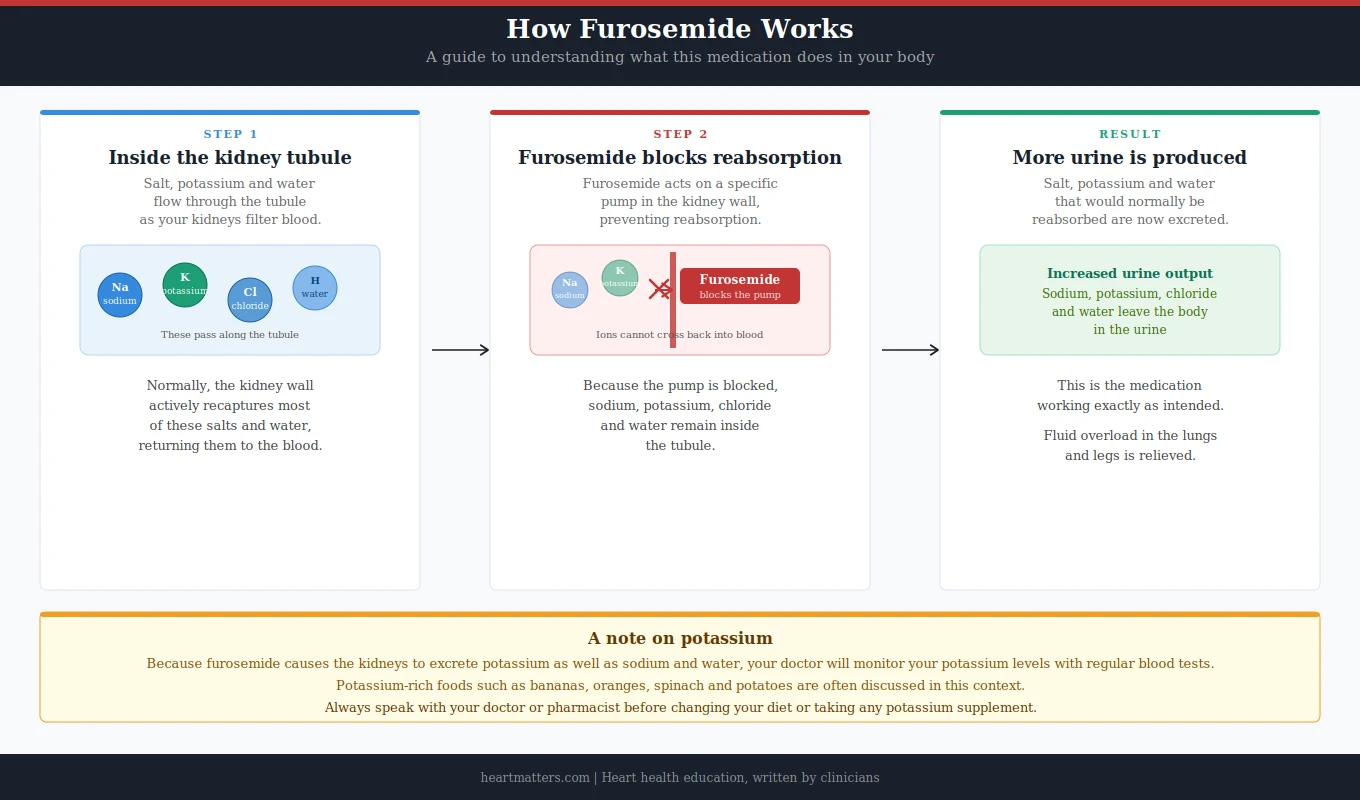
Furosemide is a diuretic, commonly known as a water or fluid tablet. It works by acting on the kidneys, specifically on a part of the kidney called the loop of Henle, which is why furosemide and medications like it are also called loop diuretics.

Its job is to tell the kidneys to excrete more salt and water into the urine than they otherwise would. The result is a significant increase in urine output, which reduces the total amount of fluid in the body. This is not a side effect, it is the intended action of the medication.

How furosemide works in the kidney, a three step diagram showing sodium, potassium and water being blocked from reabsorption and passing into urine
How furosemide works in the kidney tubule

Why Is It Prescribed?

Furosemide is prescribed whenever excess fluid has accumulated in the body and needs to be removed. This most commonly occurs in:

Heart failure. When the heart is not pumping as efficiently as it should, fluid can back up and accumulate in the lungs, the abdomen, and the legs. This congestion causes breathlessness, swollen ankles, and fatigue. Furosemide is a cornerstone of heart failure treatment because it directly addresses this fluid overload.

Kidney disease. Damaged kidneys do not excrete fluid as effectively, leading to fluid retention that furosemide can help manage.

Liver disease. Liver conditions such as cirrhosis can cause large amounts of fluid to accumulate in the abdomen, a condition called ascites. Furosemide is often used alongside another diuretic called spironolactone in this setting.

High blood pressure. Furosemide is occasionally used for blood pressure control, though other medications are more commonly chosen for this purpose.

Names Around the World

Furosemide is known by a number of different names depending on where you are and whether you are taking the generic or a branded version.

Generic name. Furosemide is the name used in Australia, the United Kingdom, the United States, Europe and most of the world. In some countries, and on older Australian and British prescriptions, it may be spelled frusemide. Both refer to exactly the same medication.

Common brand names include:

  • Lasix, the most widely recognised brand globally, used in Australia, the United States, the United Kingdom and many other countries
  • Frusid, used in Australia
  • Uremide, available in Australia
  • Frusehexal, available in Australia
  • Diural, used in some European countries
  • Seguril, used in Spain
  • Lasilix, used in France

Furosemide or Frusemide? They Are the Same Medication

If your doctor says frusemide, your old prescription says frusemide, or you have always known it by that name, you are not mistaken. Frusemide was the official approved name in Australia, the United Kingdom and most Commonwealth countries when the medication was first introduced in the 1960s.

In 2003 the United Kingdom and Australia officially adopted the international name furosemide, in line with the World Health Organization. Changing what an entire generation of clinicians had been saying and writing for decades takes considerably longer than a regulatory update, and you will hear both names used interchangeably in hospitals and clinics to this day.

If you travel internationally and need to continue your medication, the generic name furosemide will be understood by pharmacists in most countries, even if the brand name differs.

Available Formulations and Doses

Furosemide is available in several different forms, each suited to different clinical situations.

Tablets are the most commonly prescribed form for ongoing outpatient treatment. The standard tablet strengths available in Australia include:

  • 20mg, often used as a starting dose or for mild fluid retention
  • 40mg, the most commonly prescribed strength for heart failure and fluid management
  • 500mg, a high strength tablet sometimes known as Lasix 500. This strength is generally reserved for patients with advanced heart failure, significant diuretic resistance, or severe kidney disease, and is typically prescribed under the guidance of a cardiologist, heart failure specialist or nephrologist. It is not a first line dose and requires careful monitoring of kidney function and electrolytes.

Oral liquid preparations are available for patients who have difficulty swallowing tablets or who need a dose that falls between standard tablet strengths.

Intravenous and intramuscular injections are used in hospital settings when rapid or potent diuresis is needed. When someone is admitted with acute heart failure or severe fluid overload, furosemide given directly into a vein works within minutes and produces a much more immediate and powerful effect than the oral tablet. In hospital, furosemide can also be given as a continuous infusion through a drip when very large amounts of fluid need to be removed over a sustained period.

What to Expect When You Take It

The most immediate and noticeable effect of furosemide is a substantial increase in urination. This typically begins within 30 to 60 minutes of taking the medication and can produce a large volume of urine over several hours. For patients who are significantly fluid overloaded when they first start furosemide, the volume of urine produced can be quite striking.

This increase in urinary frequency and volume is not a problem. It is the medication working exactly as intended. The medical term for the passage of abnormally large volumes of urine is polyuria, and it is an expected feature of diuretic therapy, particularly in the early stages of treatment or after a dose increase.

As the excess fluid is removed from the body over days to weeks, the degree of diuresis typically settles to a more manageable level while the medication continues to prevent fluid from reaccumulating.

When to Take Furosemide

Timing matters with furosemide. Because the medication produces its diuretic effect within an hour of being taken, most doctors prescribe it to be taken in the morning. This way the period of increased urination occurs during waking hours rather than disrupting sleep.

When a larger total daily dose is needed, a second dose is typically prescribed at midday rather than in the afternoon or evening. Taking furosemide too late in the day means its peak diuretic effect will occur in the evening or overnight, which can significantly disrupt sleep with repeated trips to the bathroom.

If you are prescribed furosemide twice daily and find your sleep is being disrupted, it is worth discussing the timing of your second dose with your doctor. A simple adjustment in timing can make a considerable difference to quality of life without changing the total dose.

Why Doses Vary So Much Between Individuals

One of the things that surprises many patients is the wide range of doses that different people need. Furosemide doses can range from as little as 20 milligrams once daily to several hundred milligrams per day in some patients.

20mg → 500mg+
The range of daily furosemide doses used in clinical practice. The dose that is right for you depends on your kidney function, the severity of fluid overload, and how your body responds.

The reason for this variation is not simply about the severity of the underlying condition. Some people have what is called diuretic resistance, where the kidneys respond less efficiently to furosemide. This can occur in people with impaired kidney function, in those who have been on diuretics for a long time, and in some other clinical situations.

In these cases, larger doses are needed to achieve the same degree of fluid removal that a much smaller dose would produce in someone without resistance.

This is also why furosemide doses are sometimes changed over time. A dose that was very effective initially may need to be adjusted as circumstances change. Some patients find their dose increases during periods when their heart failure is less well controlled and then reduces again once things improve. This is entirely expected and is part of the way furosemide is used in clinical practice.

Monitoring While on Furosemide

Because furosemide affects the kidneys and the balance of electrolytes in the body, regular blood tests are an important part of long term treatment. The main things your doctor will monitor include:

Kidney function. Furosemide can sometimes reduce blood flow to the kidneys, particularly if the body becomes too dry from excessive diuresis. Regular checks ensure the kidneys are tolerating the medication well.

Potassium. Furosemide causes the kidneys to excrete potassium along with salt and water. Low potassium, called hypokalaemia, is one of the more common complications of long term furosemide use and can cause muscle cramps, weakness, and in more serious cases affect heart rhythm. Many patients on furosemide are also prescribed a potassium supplement or a potassium sparing diuretic such as spironolactone for this reason.

Sodium. Less commonly, furosemide can affect sodium levels, which your doctor will also keep an eye on.

What Patients Often Ask

Can I skip a dose if I am going out? This is one of the most common questions. Missing an occasional dose to manage a social commitment is understandable, but doing so regularly or skipping doses frequently can allow fluid to reaccumulate. It is worth having a conversation with your doctor about how to best manage furosemide around your lifestyle.

Will I always need it? This depends entirely on the underlying condition. Some patients take furosemide for a defined period and then stop. Others, particularly those with ongoing heart failure or chronic kidney disease, take it long term as part of their regular medication regimen.

What if I feel very thirsty or dizzy? These can be signs that the body has become too dry, sometimes called volume depletion. If you experience significant thirst, dizziness on standing, or a marked reduction in urine output, contact your doctor rather than simply drinking more fluid, as the dose may need adjustment.

The Importance of a Regular Medication Review

Furosemide does not work in isolation. Most people taking it are also prescribed several other medications for their heart, kidneys, or blood pressure, and many of these can interact with furosemide in ways that affect how the body responds.

A number of commonly prescribed medications can affect electrolyte levels, kidney function, or blood pressure when taken alongside furosemide. These include other blood pressure medications, certain pain relievers, some antibiotics, and a range of other cardiac medications. This is not a reason for concern, but it is a reason for awareness.

A regular medication review with your doctor and pharmacist is genuinely valuable for anyone taking furosemide long term. A pharmacist in particular is well placed to look across your entire medication list and identify any combinations that may warrant closer monitoring or a timing adjustment. This kind of review is not about finding problems, it is about making sure every medication you take is working as well as it possibly can.

It is also worth letting any new doctor, specialist or hospital team know that you are taking furosemide, particularly if you are prescribed a new medication, are unwell with vomiting or diarrhoea, or are preparing for a procedure. These are all situations where a temporary adjustment to your furosemide dose may be appropriate.

Heart Matters Resource

Ask About a Home Medicines Review

If you are taking furosemide alongside three or more other regular medications, you may be eligible for a Home Medicines Review with an accredited pharmacist, fully covered by Medicare. It is one of the most underused resources in Australian primary care and one of the most useful for people on long term cardiac medication.

Read: When in Doubt, Get Checked Out →

Conclusion

Furosemide is one of the most important and widely used medications in cardiovascular and kidney medicine. For many people it makes an enormous difference to daily comfort and quality of life, removing the excess fluid that makes breathing difficult and legs heavy.

If you are taking furosemide, the most important things to stay on top of are your regular blood tests, the timing of your doses, and an open conversation with your doctor or pharmacist whenever something changes. A medication review is not something to put off.

You are not alone in managing this. The team looking after you has prescribed furosemide many times and knows how to adjust it as your needs change. If something does not feel right, ask.

This article provides general information only and is not medical advice. Any decisions about your medication, dose or monitoring should be made in conversation with your cardiologist, GP or pharmacist.