













Heart Matters

Live Well

Your heart health is shaped as much by how you live as by any medication or procedure. The Live Well section covers the practical side of cardiovascular health — what to eat, how to move, how to manage stress, and the everyday habits that add up to a healthier heart. Written by cardiologists and health professionals, every article is designed to be genuinely useful, not overwhelming.

36 articles
All Articles
Greek Spinach Rice (Spanakorizo)
Live Well

Greek Spinach Rice (Spanakorizo)

Eggs and Cholesterol: What the Evidence Actually Shows
Live Well

Eggs and Cholesterol: What the Evidence Actually Shows

Keto Diet and Heart Health: What the Evidence Shows
Live Well

Keto Diet and Heart Health: What the Evidence Shows

Resistance Training and Your Heart: Why Lifting Matters More Than You Think
Live Well

Resistance Training and Your Heart: Why Lifting Matters More Than You Think

Beyond the Beat: What Is Geroscience and Why It Matters for Your Heart
Live Well

Beyond the Beat: What Is Geroscience and Why It Matters for Your Heart

Why Do I Feel My Heart Beating at Night? Understanding Nocturnal Palpitations
Live Well

Why Do I Feel My Heart Beating at Night? Understanding Nocturnal Palpitations

Omega-3 Delight: Heart-Healthy Air Fryer Salmon with Pumpkin Chips and Broccoli
Live Well

Omega-3 Delight: Heart-Healthy Air Fryer Salmon with Pumpkin Chips and Broccoli

Omega-3, Fish Oil, and Your Heart: What the Evidence Actually Says
Live Well

Omega-3, Fish Oil, and Your Heart: What the Evidence Actually Says

Walking and Your Heart: Why the Simplest Exercise Is Often the Best
Live Well

Walking and Your Heart: Why the Simplest Exercise Is Often the Best

More Articles
Live Well

Alcohol and the Heart: What the Evidence Actually Shows

Live Well

Oats and Heart Health — What the Evidence Actually Says

Live Well

Good Fats, Bad Fats — and Why the Story Is More Complicated Than You Think

Live Well

Heart-Healthy Greek Tzatziki

Live Well

You Don’t Need 10,000 Steps — Even Small Numbers Make a Difference to Your Heart

Live Well

Phytosterols – Nature’s Cholesterol Fighters

Live Well

Smoking and Your Heart: Understanding the Risks — and the Real Benefits of Cutting Down or Stopping

Live Well

Dietary Fiber and Your Heart: Why This Nutrient Deserves More Attention

Live Well

Fish Oil, Krill Oil and Cod Liver Oil — What You Need to Know

Explore Heart Matters
📋
Free Downloads

Patient Resources

Downloadable charts, guides and tools to help you track and understand your heart health.

Browse resources
📖
Reference

Heart Glossary

Plain-language definitions of heart and cardiovascular terms — from arrhythmia to valve disease.

Explore glossary
🫀
Patient Guide

When in Doubt, Get Checked Out

Know when to seek help and how to describe your symptoms confidently to your doctor.

Read the guide
From the Editor
Heart Stents: What You Need to Know
New Book 2026

Heart Stents: What You Need to Know

A comprehensive guide by Prof. Peter Barlis. Published by Wiley.

Buy on Amazon
1 2 3

Greek Spinach Rice (Spanakorizo)

heartmatters.com 2026 04 15T035208.262

A traditional Greek spinach and rice dish that’s simple, nourishing
and ready in 30 minutes. Wholesome Mediterranean comfort food that’s
as good for your heart as it is delicious.

Resistance Training and Your Heart: Why Lifting Matters More Than You Think

heartmatters.com 60
Key Points

  • Resistance training — any exercise that works muscles against a load — has well-established cardiovascular benefits including lower blood pressure, improved cholesterol, better insulin sensitivity, and reduced cardiovascular mortality.
  • It also supports muscle mass, bone density, balance, and metabolic health — benefits that become increasingly important with age and are not delivered by cardio exercise alone.
  • More muscle means a higher resting metabolic rate — the body burns more calories at rest, which supports weight management over the long term.
  • Resistance training does not need to be strenuous or gym-based — resistance bands, bodyweight exercises, and light weights at home are all effective and appropriate for older adults.
  • Most guidelines recommend resistance training at least two days per week alongside regular aerobic activity for cardiovascular benefit.
  • Anyone with existing heart disease or significant cardiovascular risk factors should discuss an exercise plan with their doctor before starting a new resistance training program.

When people think about exercise for heart health, they typically think about walking, cycling, or swimming — aerobic activities that raise the heart rate and get the blood flowing. These are genuinely important, and the evidence supporting them is strong. But there is a parallel and equally compelling body of evidence for resistance training — and it tends to get far less attention in cardiac health conversations than it deserves.

Resistance training is not just about building muscle or aesthetics. For older adults in particular, it is one of the most powerful tools available for cardiovascular health, metabolic function, bone strength, and physical independence. If you are not doing some form of it already, this article explains why it is worth starting — and how straightforward it can be.

What Is Resistance Training?

Resistance training — also called strength training or weight training — is any form of exercise that works your muscles against a resistance load. This includes:

Forms of Resistance Training

  • Free weights — dumbbells, barbells, kettlebells
  • Resistance bands — lightweight, portable, and excellent for older adults and beginners
  • Bodyweight exercises — squats, lunges, push-ups, wall sits — no equipment needed
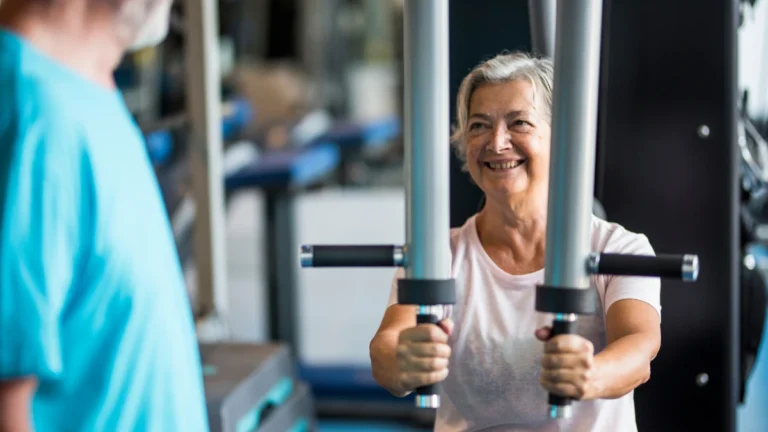
  • Weight machines — gym-based, useful for controlled movement with guided resistance
  • Everyday functional activities — carrying shopping, gardening, climbing stairs — all count as resistance work

The common thread is that the muscles are working against a force — and adapting over time to become stronger, more efficient, and more metabolically active. It does not need to be heavy, intense, or gym-based to be effective.

The Cardiovascular Benefits

The cardiovascular evidence for resistance training is robust and increasingly well recognised in clinical guidelines. Regular resistance training has been shown to:

Lower blood pressure — both systolic and diastolic blood pressure respond favourably to resistance training, with effects comparable to some medications in people with mild to moderate hypertension. The mechanism involves improved blood vessel elasticity and reduced peripheral vascular resistance.

Improve cholesterol and triglycerides — resistance training raises HDL cholesterol and reduces triglycerides, contributing to a more favourable lipid profile over time.

Improve insulin sensitivity and blood sugar control — muscle tissue is one of the primary sites of glucose uptake in the body. More muscle mass and better-conditioned muscle means more effective blood sugar regulation — directly relevant to cardiovascular risk given the strong link between insulin resistance and heart disease.

Reduce cardiovascular mortality — population studies have consistently found that people who engage in regular resistance training have lower rates of cardiovascular death, even after accounting for aerobic exercise levels. A landmark study found that even one to two sessions per week was associated with significantly reduced cardiovascular mortality compared to no resistance training.

Resistance training and aerobic exercise are genuinely complementary — they deliver overlapping but distinct cardiovascular benefits. The evidence increasingly supports doing both rather than choosing between them. For older adults especially, resistance training addresses risks that walking alone simply cannot.

Beyond the Heart — Why Muscle Mass Matters as We Age

This is where the case for resistance training becomes particularly compelling for older adults — and for anyone thinking about their long-term health and independence.

Sarcopenia — The Silent Loss of Muscle

From around the age of 30, adults begin to lose muscle mass at a rate of approximately 3–5% per decade — a process called sarcopenia. Without deliberate resistance training, this loss accelerates significantly after 60. The consequences extend well beyond strength — sarcopenia is associated with falls, fractures, loss of independence, metabolic decline, and increased cardiovascular risk.

Resistance training is the most effective intervention available for preserving and rebuilding muscle mass at any age. The body retains a remarkable capacity to respond to resistance training even well into the 70s and 80s — it is never too late to start and see meaningful benefit.

Bone Density

Resistance training places load on bones as well as muscles — stimulating bone remodelling and helping maintain bone density. This is particularly important for post-menopausal women, who face accelerated bone loss and higher fracture risk. Weight-bearing resistance exercises are among the most evidence-supported strategies for reducing osteoporosis risk and maintaining skeletal health into older age.

Metabolism and Weight Management

Muscle is metabolically active tissue — it burns calories at rest. More muscle mass means a higher resting metabolic rate, meaning the body consumes more energy even when not exercising. This is one of the reasons resistance training supports long-term weight management more effectively than cardio exercise alone — cardio burns calories during exercise, but resistance training raises the baseline metabolic rate that persists around the clock.

For anyone managing weight alongside cardiovascular risk factors, the combination of resistance training and a heart-healthy diet is considerably more effective than diet or cardio alone.

Balance, Coordination, and Fall Prevention

Falls are one of the leading causes of injury and loss of independence in older adults — and many falls are preventable. Resistance training improves leg strength, stability, and coordination, all of which contribute to better balance and reduced fall risk. This is a quality-of-life benefit that is difficult to achieve through any other single intervention.

2x
Per week — the minimum resistance training frequency recommended by most major cardiovascular and exercise guidelines for health benefit in adults
American Heart Association / World Health Organization Physical Activity Guidelines

How to Get Started — It Doesn’t Need to Be Complicated

One of the barriers to resistance training for older adults and cardiac patients is the perception that it involves heavy weights, gyms, and strenuous effort. None of that is necessary. Effective resistance training for cardiovascular and general health can be done at home, with minimal or no equipment, at a gentle pace, and still deliver meaningful benefit.

Simple Ways to Start Resistance Training

  • Resistance bands — inexpensive, lightweight, and available in varying resistance levels. Seated band exercises are appropriate even for people with limited mobility. Excellent starting point for anyone new to resistance training.
  • Bodyweight exercises — chair squats (sitting and standing from a chair), wall push-ups, calf raises, and step-ups require no equipment and can be done in any room. These are genuinely effective and appropriate for older adults.
  • Light dumbbells — a pair of 1–3kg dumbbells is sufficient for many upper body exercises. Bicep curls, shoulder presses, and lateral raises done with light weight and controlled movement are low-risk and beneficial.
  • Start with two sessions per week — two 20–30 minute sessions covering the major muscle groups (legs, back, chest, arms) is the evidence-based minimum. This is a very achievable starting point.
  • Focus on controlled movement — slow, deliberate movement through the full range of motion is more effective and safer than rushing through repetitions with heavier weight.
  • Progress gradually — the principle of progressive overload — gradually increasing resistance or repetitions over time — is what drives continued adaptation. Start easy and build over weeks and months.

Is Resistance Training Safe for People with Heart Disease?

For most people — including many with well-managed heart disease — resistance training is safe and beneficial. The key is appropriate intensity and good technique, and for anyone with existing cardiovascular conditions, starting with guidance from a doctor or cardiac rehabilitation professional is sensible.

Cardiac rehabilitation programs increasingly include resistance training as a standard component — the evidence for its safety and benefit in post-heart attack and post-procedure patients is well established. If you have had a heart attack, stent, bypass surgery, or significant heart failure, ask your cardiologist about whether a supervised cardiac rehabilitation program including resistance training is appropriate for you.

ⓘ  Before You Start — A Note for People with Heart Conditions

If you have existing heart disease, uncontrolled high blood pressure, significant heart failure, or have recently had a cardiac procedure, speak with your cardiologist or GP before beginning a new resistance training program. They can advise on appropriate intensity, exercises to modify or avoid, and whether a supervised program would be beneficial.

For most people with well-managed cardiovascular conditions, appropriately paced resistance training is not only safe but actively recommended. The goal is to find the right starting point for your individual circumstances.

Conclusion

Resistance training is one of the most evidence-supported and underutilised tools in cardiovascular prevention. Its benefits extend well beyond the heart — supporting muscle mass, bone density, metabolism, balance, and physical independence in ways that aerobic exercise alone cannot replicate. For older adults particularly, it is not an optional extra — it is a core component of healthy aging.

It does not need to be strenuous, expensive, or gym-based. Two sessions per week of gentle, progressive resistance work — with bands, bodyweight, or light weights — is enough to deliver meaningful benefit at any age. The body’s capacity to respond to resistance training never fully disappears, and starting at any point delivers real returns.

If you have been focusing on walking or cardio and have not yet incorporated any resistance work into your routine, this is worth raising with your doctor or physiotherapist. It may be one of the most valuable additions you can make to your heart health program.

More from Heart Matters

Why Do I Feel My Heart Beating at Night? Understanding Nocturnal Palpitations

heartmatters.com 2026 03 31T211026.847
Key Points

  • Palpitations felt at night — in bed, trying to fall asleep — are one of the most common cardiac complaints in clinical practice, and are very frequently benign.
  • In most cases, the palpitations are not exclusively nocturnal. They are occurring during the day too — but the quiet, still environment of lying in bed removes the distractions that mask them during waking hours.
  • Several factors genuinely increase cardiac awareness at night: reduced background stimulation, lying position, higher vagal tone, and the simple act of focusing attention on the body.
  • True nocturnal palpitations — those that wake you from sleep — deserve more attention than those felt while trying to fall asleep, as they may reflect a rhythm disturbance that is genuinely worse at rest.
  • Atrial fibrillation has a well-recognised nocturnal pattern and should be considered when palpitations are irregular, prolonged, or associated with breathlessness on waking.

One of the most common things patients tell me in clinic is that their palpitations only happen at night. They are fine all day — busy, active, not thinking about their heart at all — and then the moment they lie down and the house goes quiet, there it is. The thumping. The fluttering. The awareness of their own heartbeat in a way that feels impossible to ignore.

The explanation I give them almost always comes as a surprise: in the vast majority of cases, those palpitations are not exclusively nocturnal. They are happening during the day too. The difference is that during the day, life gets in the way — work, conversation, movement, noise — and all of that sensory activity competes with the signal coming from the chest. Lying still in a quiet bedroom removes every one of those distractions, and suddenly the heart’s activity fills the silence.

That understanding alone — that the night isn’t when the palpitations start, it’s when you finally notice them — is genuinely reassuring for most people. It doesn’t mean they shouldn’t be investigated. It means the symptom is far less alarming than it initially feels.

Why You Notice Your Heart at Night

The distraction effect

The human brain is remarkably good at filtering out sensory information it has decided is not important. During a busy day, the heartbeat — even an irregular or prominent one — competes with dozens of other inputs: visual, auditory, physical, cognitive. Most of the time, the brain filters the cardiac signal out entirely.

Lie down in a quiet room, turn the lights off, and remove every competing input. Now the cardiac signal has the field to itself. An ectopic beat — a premature contraction that has been occurring all day — now produces a thump that feels like the only thing in the universe. This is not a change in the heart. It is a change in what the brain is attending to.

The lying position

Lying on the left side in particular brings the heart closer to the chest wall. Many people find this position amplifies their awareness of cardiac activity — the heart feels louder, heavier, more prominent. This is purely mechanical, not a sign of cardiac disease. Lying on the right side or back often reduces the sensation considerably, which can be a simple and effective first measure for people troubled by nocturnal palpitations.

Vagal tone at rest

The parasympathetic nervous system — which slows the heart and governs its rest-state behaviour — is more active at night. Higher vagal tone at rest actually increases the likelihood of certain ectopic beats occurring. This is counterintuitive — you might expect that a slower, calmer heart would produce fewer symptoms — but the relationship between vagal tone and ectopic activity is well documented. Some people genuinely do have more ectopic beats at rest and at night, not just more awareness of them.

Anxiety and hypervigilance

For many people, the experience of noticing palpitations at night creates a feedback loop. The awareness triggers anxiety, anxiety activates the sympathetic nervous system, sympathetic activation increases cardiac sensitivity, and the palpitations become more prominent. The next night, the brain is already primed to listen for them. This cycle can make a benign and intermittent symptom feel constant and overwhelming — without any change in the underlying cardiac activity.

When a patient tells me they only get palpitations at night, my first question is always: “Are you sure they’re not happening during the day — or are you just not noticing them then?” Almost invariably, once they start paying attention, they find them during the day too. That doesn’t make the symptom less real. It makes it less exclusively nocturnal than it seemed — and usually less frightening once the explanation is understood.

When Nocturnal Palpitations Deserve More Attention

Palpitations that wake you from sleep

There is an important distinction between palpitations felt while lying awake trying to fall asleep — which fit the distraction model well — and palpitations that actually wake you from sleep. The latter is a more significant symptom. If the heart is disrupting sleep with sufficient force to pull you out of it, the rhythm disturbance is more substantial and warrants investigation with greater urgency.

Irregular or prolonged episodes

The brief thump of a single ectopic beat is very different from an episode of irregular rapid palpitations lasting minutes. If nocturnal palpitations are prolonged, irregular, or accompanied by breathlessness, lightheadedness, or chest discomfort, the probability of a meaningful arrhythmia — particularly atrial fibrillation — increases and investigation becomes more pressing.

Atrial fibrillation — a genuinely nocturnal pattern

AF has a well-recognised nocturnal predisposition — the high vagal tone of sleep can trigger AF episodes in susceptible individuals, a pattern called vagally-mediated AF. A person who experiences irregular palpitations that wake them at night, possibly with some breathlessness, and whose episodes seem to resolve by morning, may be having paroxysmal AF that is occurring predominantly during sleep. This pattern can be missed on a standard 24-hour Holter if an episode doesn’t happen to fall within the recording window — longer monitoring may be needed.

Sleep apnoea

Obstructive sleep apnoea — in which breathing repeatedly stops and restarts during sleep — is a significant cardiac risk factor that is dramatically under-diagnosed. The overnight oxygen drops and autonomic surges it produces are a recognised trigger for nocturnal arrhythmias, including AF and ventricular ectopics. Anyone with nocturnal palpitations and features of sleep apnoea — snoring, witnessed pauses in breathing, unrefreshing sleep, daytime sleepiness — should be assessed for sleep apnoea as part of the cardiac workup.

What Investigation Is Appropriate?

The starting point

A 12-lead ECG is always the first step — assessing baseline rhythm, heart rate, and any conduction abnormality. Thyroid function, electrolytes, and a full blood count exclude common reversible metabolic causes. An echocardiogram confirms whether the heart is structurally normal — the most important reassurance available to patients with palpitations.

Rhythm monitoring

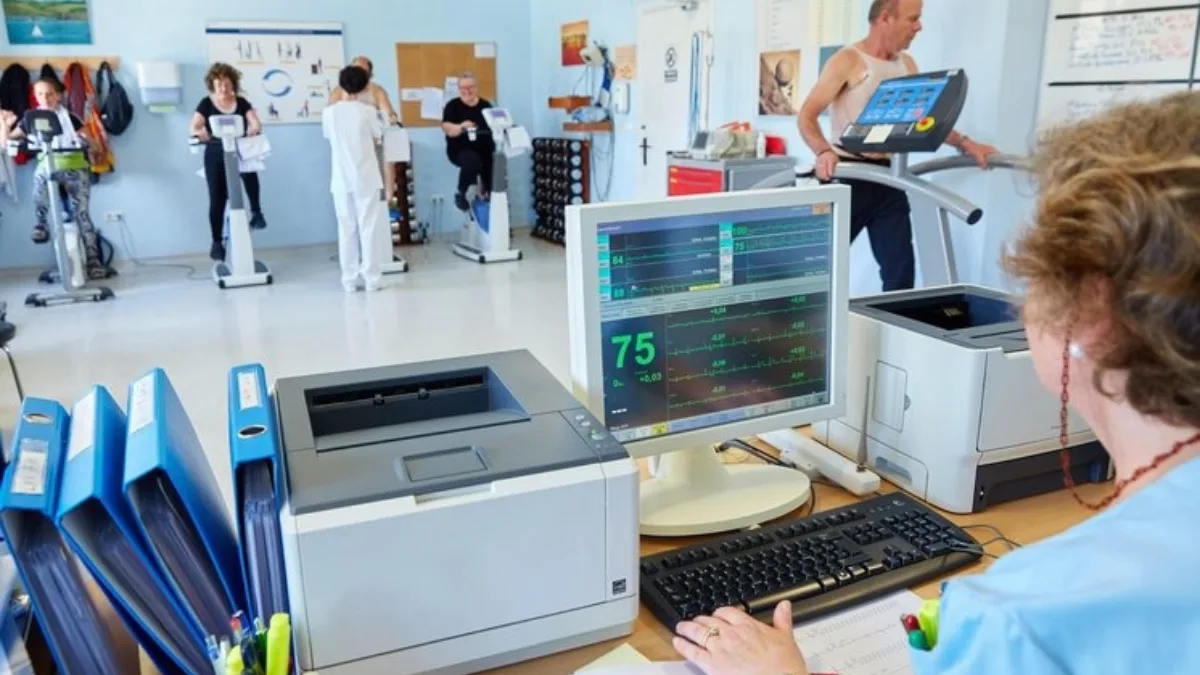
Capturing the heart rhythm during a symptomatic episode is the most valuable diagnostic step. A 24 to 48-hour Holter monitor is the standard starting point for frequent symptoms. For symptoms occurring every few days, a 7-day extended Holter or 30-day event monitor extends the capture window. For very infrequent but significant episodes — particularly those waking the patient from sleep — an implantable loop recorder may be considered.

If sleep apnoea is suspected, a sleep study is arranged alongside — not instead of — the cardiac assessment.

Questions worth asking at your next appointment

  • Could my nocturnal palpitations be ectopic beats I am simply more aware of at night — rather than a rhythm disturbance that only happens at night?
  • Is there a difference clinically between palpitations while falling asleep and palpitations that wake me from sleep?
  • Should I have a Holter monitor — and is 24 hours likely to be long enough to capture what I’m experiencing?
  • Could sleep apnoea be contributing to my nocturnal symptoms?
  • Is atrial fibrillation a possibility given the pattern of my episodes?

Heart Matters Resource

When in Doubt, Get Checked Out

Palpitations that wake you from sleep, feel irregular or prolonged, or are accompanied by breathlessness or dizziness deserve assessment. A Holter monitor and echocardiogram together provide the most useful diagnostic picture.

Read: When in Doubt, Get Checked Out →

Conclusion

Nocturnal palpitations are one of the most common cardiac symptoms I see — and one of the most frequently misunderstood. The night is not usually when the palpitations start. It is when the conditions finally exist for you to notice them.

For most people, understanding this changes everything. The symptom is the same — but it no longer feels like the heart is doing something sinister only during the night. It feels like a heart that has been quietly doing something all day that was finally audible in the silence.

That said, nocturnal palpitations do deserve investigation — particularly if they are waking you from sleep, feel irregular or prolonged, or are accompanied by other symptoms. The investigations are straightforward, and a normal result is one of the most genuinely reassuring outcomes in cardiology.

More from Heart Matters