Key Points
- Modern smartwatches can detect irregular heart rhythms, record a single-lead ECG, alert you to unusually high or low heart rates, and track heart rate variability. These are genuinely useful features, not marketing gimmicks.
- Atrial fibrillation detection is the most clinically important capability. AF is often silent and the watch may be the first thing to flag it. This is already changing how cardiologists find and diagnose the condition.
- A smartwatch ECG is a single-lead recording, equivalent to one view of your heart. A hospital ECG uses twelve leads. The watch cannot detect heart attacks, most structural problems, or many other arrhythmias.
- An alert from your watch is a prompt to see your doctor, not a diagnosis. A positive AF notification needs to be confirmed with a proper clinical ECG before any treatment is considered.
- False positives are common, particularly in younger people or those who move around during the recording. A notification does not mean you definitely have a heart problem.
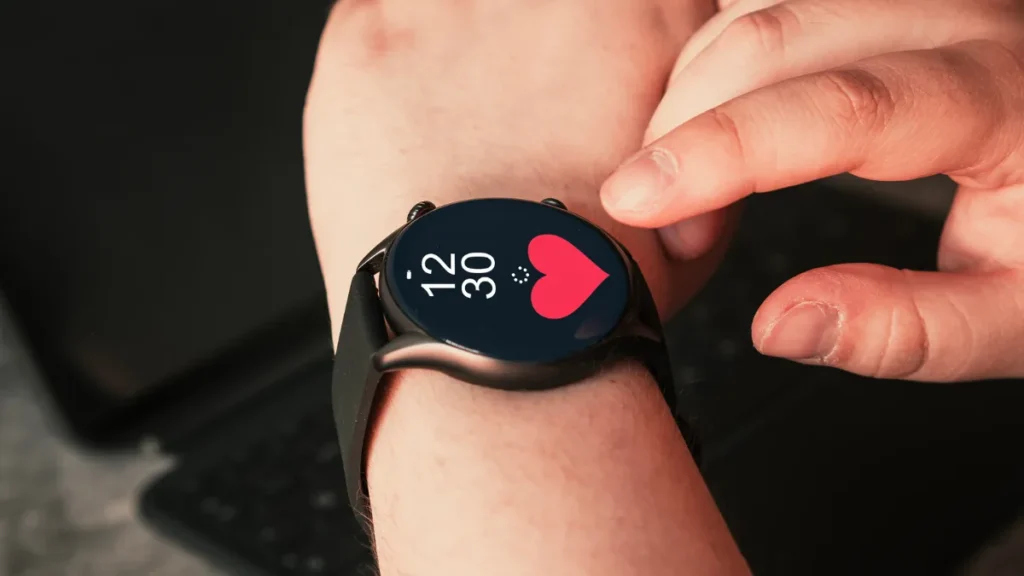
Barely a week passes in a modern cardiology clinic without a patient walking in with their wrist extended, watch face up, ready to show their cardiologist something the device has picked up. Sometimes it is a graph. Sometimes it is a notification. Sometimes it is a recording that looks, unmistakably, like atrial fibrillation.
This is new. And it matters.
Consumer wearables have crossed a threshold in recent years. The technology is no longer novelty. For certain conditions, in certain patients, a smartwatch genuinely picks up things that would otherwise have gone undetected for months or years. For other conditions, it raises alarms that turn out to be nothing. Understanding the difference is what this article is about.
What Can a Smartwatch Actually Measure?
The sensors inside a modern smartwatch are more capable than most people realise. Here is what they are actually doing.
Optical Heart Rate (PPG)
Green LEDs shine into your skin and a sensor measures how light reflects off blood vessels. Changes in blood flow with each heartbeat allow the watch to calculate your heart rate and detect irregularities in the rhythm.
Single-Lead ECG
When you place your finger on the watch crown or back panel, an electrical circuit is completed through your body. The watch records the electrical activity of your heart for 30 seconds, producing a trace similar to Lead I of a standard ECG.
Heart Rate Alerts
Most watches can alert you when your resting heart rate goes above or below thresholds you set. An unexpected heart rate above 120 or below 40 at rest is worth knowing about and worth mentioning to your doctor.
Heart Rate Variability (HRV)
HRV measures the variation in time between heartbeats. It is a marker of recovery, stress, and autonomic nervous system function. Useful for general wellbeing tracking, though not a direct measure of heart disease.
The AF Detection Story
Atrial fibrillation is the most common sustained heart rhythm disorder. It affects millions of people worldwide, its prevalence rises sharply with age, and it significantly increases the risk of stroke. It is also, critically, often completely silent.
Many people live with paroxysmal AF, meaning AF that comes and goes, for months or years before it is ever detected. The Stroke Foundation estimates that AF is responsible for around one in five strokes in Australia. It is only found when a routine ECG happens to catch it, or when a stroke occurs, or when someone puts on a smartwatch.
That last possibility is what has changed the clinical landscape.
participants enrolled in the Apple Heart Study, one of the largest cardiac screening studies ever conducted using consumer wearables to detect irregular pulse patterns suggesting atrial fibrillation
Perez MV et al. New England Journal of Medicine, 2019
The Apple Heart Study enrolled more than 400,000 participants and monitored them for irregular pulse patterns. Those who received a notification were sent a wearable ECG patch to confirm the finding. Of those who received notifications and wore the patch, 34 per cent had confirmed AF.
That sounds low. But consider the other side: these were people with no idea they might have AF, no symptoms, who would never have been referred for investigation without the watch. For those in whom AF was confirmed, the watch may genuinely have caught something that would otherwise have caused a stroke first.
The Fitbit Heart Study, published in 2021, found similar results. Using the optical sensor in Fitbit devices, the algorithm identified irregular rhythms in a large population, and those flagged were significantly more likely to have confirmed AF on subsequent testing.
I now see patients regularly who come in because their watch told them something was wrong with their heart rhythm. In several cases, it has been completely right. That is a genuinely new development in how we find atrial fibrillation.
The ECG on Your Wrist: What It Can and Cannot Do
The ECG feature on modern smartwatches is impressive technology. It is also frequently misunderstood.
A hospital 12-lead ECG records the electrical activity of your heart from twelve different angles simultaneously. It allows a cardiologist to assess rhythm, conduction, signs of previous heart attacks, and much more. A smartwatch ECG records from a single perspective for 30 seconds. Here is what that means in practice.
| The smartwatch ECG CAN detect | The smartwatch ECG CANNOT detect |
|---|---|
| Atrial fibrillation (irregular rhythm with absent P waves) | Heart attacks, including STEMI (requires multiple leads) |
| Normal sinus rhythm (reassuring during symptoms) | Most ischaemia or reduced blood flow to the heart |
| Some supraventricular arrhythmias if recorded during an episode | Most structural heart abnormalities |
| Obvious bradycardia (very slow heart rate) | Bundle branch blocks and conduction disorders reliably |
| Evidence prompting further investigation | A normal result does not rule out heart disease |
The most important line in that table is the last one. A normal ECG on your watch, recorded when you feel fine, does not mean your heart is healthy. It means your rhythm was normal at that moment, from that angle.
The Devices: What Each One Offers
Not all smartwatches are equal when it comes to cardiac monitoring. Here is where the main consumer devices currently stand.
When Your Watch Sends You an Alert: What to Do
This is where patients most often need guidance. An alert from your watch can feel alarming. Here is how to think about it.
You Have Received an Irregular Rhythm or AF Notification
Do not panic. A single notification, particularly in a younger person or one who was moving during the recording, has a meaningful false positive rate. It is a prompt to investigate, not a confirmed diagnosis.
Do not ignore it either. If your watch flags an irregular rhythm, particularly more than once, or if you also feel palpitations, breathlessness, or dizziness alongside it, contact your GP or cardiologist.
Save the recording. Export the ECG trace from your watch before your appointment if possible. Cardiologists can often see something useful in the raw trace even if the watch algorithm was uncertain.
A clinical ECG is needed for confirmation. No treatment for AF should begin based on a watch notification alone. A proper ECG, and in many cases a Holter monitor, is required to confirm the diagnosis and guide management.
The Limitations You Need to Understand
False positives are real. The optical sensor is susceptible to movement, a loose watch band, and poor skin contact. In younger, lower-risk populations, the majority of AF notifications may be false positives. Unnecessary anxiety and unnecessary investigations are real consequences.
False negatives also occur. Paroxysmal AF that comes and goes may simply not be happening at the moment you record. A normal reading does not mean AF is absent. Your cardiologist may still recommend a longer-duration cardiac monitor even after a normal watch ECG.
It cannot detect a heart attack. Chest pain or pressure that could represent a heart attack is a medical emergency. Call Triple Zero immediately. Do not try to record an ECG on your watch first.
It is not a substitute for clinical care. A smartwatch is a useful supplement to medical monitoring, not a replacement for it.
If You Think You Are Having a Heart Attack
Chest pain, pressure, tightness, pain spreading to the arm or jaw, sweating, or sudden severe breathlessness are potential symptoms of a heart attack. This is a medical emergency.
Call Triple Zero (000) in Australia immediately. Do not drive yourself to hospital. Do not attempt to record an ECG on your watch first. Time matters enormously and delays cost lives.
What Your Cardiologist Wants You to Know
Wear it consistently. Passive background monitoring is more valuable than on-demand recordings. Wearing it overnight, when resting heart rate is naturally lower, adds real diagnostic value.
Bring your data to appointments. Many watches allow you to export your heart rate history and ECG recordings. Having this at a consultation is genuinely useful.
Do not over-interpret every reading. A slight irregularity on one recording, a brief period of elevated heart rate during exercise, a single unusual-looking trace: these should be noted but not catastrophised. Context is provided by the clinical picture, not the watch alone.
Ask your cardiologist about dedicated ECG devices. If you have already been diagnosed with AF or another arrhythmia and your cardiologist wants you to monitor for episodes, a purpose-built ECG device may produce better-quality recordings. Your cardiologist can advise which approach suits your situation.
Conclusion
Can smartwatches detect heart problems? Yes, some of them, in some circumstances, with meaningful accuracy. The AF detection story in particular is genuinely compelling, and cardiologists are seeing its real-world impact every week.
But a smartwatch is not a cardiologist on your wrist. It is a screening tool with real limitations, a false positive rate that deserves respect, and a fundamental inability to diagnose the most time-critical cardiac emergencies.
Used well, with realistic expectations and a good relationship with a doctor who can contextualise what it finds, a modern smartwatch is a valuable addition to your heart health toolkit.