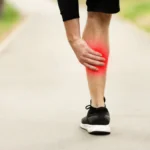
- Swelling that extends beyond the ankles into the calves and thighs is a more significant finding than ankle swelling alone and deserves prompt assessment.
- The most important cardiac cause is heart failure, a condition where the heart is not pumping as efficiently as it should, causing fluid to back up and accumulate in the legs.
- A blood clot in the leg veins, called a deep vein thrombosis or DVT, typically causes swelling in one leg rather than both, and requires prompt medical attention.
- Bilateral leg swelling that leaves an indentation when pressed, called pitting oedema, is a reliable sign of fluid overload from cardiac, kidney, or liver causes.
- Leg swelling that is new, rapidly worsening, or accompanied by breathlessness or chest pain warrants prompt assessment rather than a wait-and-see approach.
Swollen ankles are common and have many causes, some trivial, some important. But swelling that extends beyond the ankles into the calves, knees, or thighs is a different matter. That degree of fluid accumulation reflects a more significant underlying process, and in the context of cardiovascular disease it is a symptom that deserves attention.
The key questions are straightforward: Is the swelling in one leg or both? Does it pit, does pressing it leave an indentation? Is it accompanied by breathlessness, fatigue, or reduced exercise tolerance? And is it new, or has it been building gradually over days and weeks?
The answers to those questions usually point clearly toward the cause, and toward how urgently it needs to be assessed.
Why the Heart Causes Leg Swelling
How a struggling heart leads to fluid in the legs
Think of the heart as a pump with two sides working together. The right side collects blood returning from the body and sends it to the lungs to pick up oxygen. The left side receives that oxygenated blood and pumps it out to the rest of the body.
When either side of the heart is not pumping as strongly as it should, which is what happens in heart failure, blood begins to back up in the system. This backup raises the pressure in the veins returning blood from the legs. When that venous pressure rises high enough, fluid is pushed out of the blood vessels and into the surrounding tissue.
Gravity then does its work. That fluid settles at the lowest point of the body, the ankles and feet first, then rising into the calves and thighs as the pressure worsens. This is why heart-related leg swelling is almost always worse at the end of the day after hours upright, and often noticeably better in the morning after a night lying flat.
The pitting test, what it means
One of the most telling signs that leg swelling is fluid-related is what clinicians call pitting oedema. Press your thumb firmly into the swollen area for about five seconds, then release. If the indentation, the pit, remains for several seconds before the skin slowly returns to normal, that is pitting oedema. It confirms that the swelling is composed of excess fluid in the tissue rather than another type of swelling.
Non-pitting swelling, where the skin springs back immediately, suggests a different mechanism called lymphoedema, where the lymphatic drainage system rather than the venous system is the problem. Your doctor will assess this distinction on examination.
One Leg vs Both Legs, an Important Distinction
Bilateral leg swelling, both legs affected equally, points toward a whole-body cause: heart failure, kidney disease, liver disease, venous insufficiency, or medication side effects. The symmetry is the clue.
Swelling in one leg only, particularly if that leg is red, warm, or painful, is a different and more concerning situation. This pattern raises the possibility of a deep vein thrombosis, a blood clot that has formed in the leg veins. A DVT requires prompt medical attention because the clot can potentially dislodge and travel to the lungs. If you have one swollen leg with any of these features, contact your doctor or seek medical attention promptly rather than waiting for a routine appointment.
The Most Important Cardiac Cause, Heart Failure
What heart failure actually means
Heart failure does not mean the heart has stopped, it means the heart is not pumping as efficiently as it should, and cannot fully keep up with the body’s demands. It is a very common condition, particularly in older adults, and leg swelling is one of its most characteristic symptoms.
There are two main types. In the first type, the heart muscle has weakened and does not squeeze as powerfully as normal, so less blood is pushed forward with each beat, and fluid backs up. In the second type, the heart muscle pumps with normal force but has become stiff, it does not relax and fill between beats as well as it should, and pressures rise as a result. Both types produce the same visible consequence: fluid builds up, pressure rises in the veins, and that fluid settles in the legs.
The leg swelling of heart failure is typically soft and pitting, worst in the evening, and usually comes alongside other symptoms, breathlessness on exertion, fatigue, needing more pillows to sleep comfortably, or a reduced ability to do things that used to be easy. We have a dedicated article on heart failure and its treatment on Heart Matters that explains both types and their management in more detail.
Monitoring fluid at home, daily weighing
One of the most practical tools for anyone with heart failure is daily weighing. Fluid accumulates in the body before it becomes visible as leg swelling, so a weight gain of more than 2kg over two to three days is an early warning signal worth reporting to the clinical team, even before the legs look noticeably more swollen. Weighing at the same time each morning, before breakfast, gives the most reliable comparison from day to day.
When the right side of the heart is under particular strain
Sometimes the right side of the heart comes under particular pressure, not because of a weakened heart muscle, but because of elevated pressure in the lungs themselves. This can happen in people with longstanding lung disease such as COPD, or with a condition called pulmonary hypertension, where the blood vessels in the lungs become narrowed and the right side of the heart has to work much harder to push blood through them.
When the right side of the heart is strained in this way, the fluid congestion it produces tends to be more prominent, producing significant leg swelling, sometimes extending well above the ankles, and occasionally causing a sense of fullness or discomfort in the abdomen. If you have known lung disease and have noticed worsening leg swelling, this connection is worth raising specifically with your doctor.
Non-Cardiac Causes Worth Knowing
Not all leg swelling is cardiac, and part of the clinical assessment is working out which factor is the dominant contributor. Several other conditions commonly cause bilateral leg swelling and are always considered alongside cardiac causes.
Kidney disease reduces the body’s ability to excrete salt and water, producing fluid retention throughout the body including the legs. Liver disease reduces the production of a protein called albumin, which normally keeps fluid within the blood vessels, and when albumin levels fall, fluid leaks into the surrounding tissues. Venous insufficiency, where the valves in the leg veins are not working properly, produces chronic bilateral swelling that tends to worsen over years and is often accompanied by visible vein changes and skin discolouration around the ankles.
Several commonly prescribed medications cause leg swelling as a side effect, entirely unrelated to the heart’s pumping function. Amlodipine and other calcium channel blockers are among the most frequent culprits. NSAIDs, anti-inflammatory painkillers, can also cause fluid retention. If leg swelling developed or noticeably worsened after starting a new medication, that timing connection is worth raising specifically with your prescribing doctor.
| Pattern | Most likely cause | What to do |
|---|---|---|
| Both legs, pitting, worse at end of day | Heart failure, venous insufficiency, or medication side effect | Medical review, prompt if new or worsening |
| Both legs, with breathlessness and fatigue | Heart failure, may be worsening | Prompt cardiac review |
| One leg only, red, warm, or painful | Possible DVT, blood clot in leg vein | Prompt medical attention, do not wait for a routine appointment |
| Both legs, firm, non-pitting | Lymphoedema, lymphatic drainage problem | Medical review, GP or lymphoedema service |
| Rapid weight gain alongside leg swelling | Fluid overload, cardiac, kidney, or liver cause | Prompt medical review |
How Leg Swelling Is Investigated
The investigation of bilateral leg swelling typically begins with blood tests, including a BNP or NT-proBNP measurement, which is a direct signal from the heart about how hard it is working. An elevated BNP in someone with leg swelling strongly supports a cardiac cause and usually leads to an echocardiogram, an ultrasound of the heart that shows how well it is pumping and whether pressures are elevated. We have a dedicated article on BNP and NT-proBNP on Heart Matters that explains what this test measures and what the result means.
Kidney function, liver function, and albumin levels are checked alongside the cardiac markers. A chest X-ray may show fluid around the lungs or an enlarged heart. For one swollen leg where a DVT is suspected, a Doppler ultrasound of the leg veins is the most direct investigation, it uses sound waves to look at blood flow through the veins and identify any clot.
Treatment
Treatment follows directly from the cause. In heart failure, diuretics, water tablets, reduce fluid overload by helping the kidneys excrete the excess fluid. Many patients notice significant improvement in leg swelling within days of starting or adjusting diuretic therapy. The broader heart failure medication programme addresses the underlying pump function over time. We cover this in detail in our heart failure treatment article.
For medication-related swelling, the prescribing team may adjust the dose, substitute an alternative medication, or add a diuretic, depending on the clinical situation. For venous insufficiency, compression stockings prescribed by a healthcare professional reduce the pooling of fluid in the leg veins. For a DVT, anticoagulation, blood-thinning medication, is started promptly to prevent the clot from extending or dislodging.
- Could my leg swelling be related to my heart, and should I have a BNP test and echocardiogram?
- Could any of my current medications be contributing to the swelling?
- Should I be weighing myself daily, and what weight gain should prompt me to contact the team?
- Is my diuretic dose adequate given my current swelling?
- What symptoms alongside the swelling should prompt me to seek more urgent assessment?
Free Download, Heart Matters
Our Heart Health Risk Factor Checklist covers 12 cardiovascular risk categories, a useful tool to bring to any appointment where leg swelling is being investigated, to ensure the full cardiovascular picture is considered.
Heart Matters Resource
When in Doubt, Get Checked Out
Leg swelling that is new, worsening, or accompanied by breathlessness or fatigue deserves assessment. A BNP blood test and echocardiogram together answer the cardiac question efficiently, and a normal result is genuinely reassuring.
Conclusion
Leg swelling beyond the ankles is not a symptom to put off mentioning until the next routine appointment. It reflects fluid accumulation that has reached a meaningful degree, and in the context of heart disease, it is one of the body’s clearest signals that the heart is working harder than it should to maintain its output.
The most useful first distinction is simple: both legs or one leg? Both legs swelling symmetrically points toward a whole-body fluid problem, most commonly cardiac, that is very manageable once properly assessed and treated. One leg swelling with pain or redness is a different situation that warrants prompt attention.
Either way, leg swelling has a cause, and that cause is nearly always identifiable and treatable. Getting it assessed is the right first step.