Key Points
- Gout is caused by elevated uric acid (urate) in the blood, which forms crystals in joints, but uric acid also drives systemic inflammation that directly affects the heart and blood vessels.
- People with gout have a significantly higher risk of heart attack, stroke, and atrial fibrillation, the link is not coincidence but shared biology through inflammation and shared risk factors.
- Colchicine the medicine most associated with gout, has emerged as a genuinely exciting cardiovascular therapy. Clinical trials have shown it reduces the risk of heart attack and stroke in people with coronary artery disease.
- Colchicine is also the established treatment for pericarditis inflammation of the lining around the heart, and is highly effective at preventing recurrence.
- Managing gout well, through urate-lowering therapy with allopurinol or febuxostat diet, and lifestyle, may also reduce cardiovascular inflammation and risk.
- Some common heart medicines, particularly certain diuretics, can raise uric acid levels and worsen gout, an important interaction worth discussing with your doctor.
When most people think of gout, they picture a painful, swollen big toe, the classic image of a condition that has been caricatured throughout history as an affliction of excess. But gout is far more than a joint problem, and over the past decade the connection between gout, uric acid, and cardiovascular disease has become one of the more compelling areas in preventive cardiology.
More striking still is what happened when researchers turned their attention to colchicine the ancient gout remedy derived from the autumn crocus, and asked whether its anti-inflammatory properties might protect the heart. The results have been significant enough to change clinical practice.
What Is Gout?
Gout is the most common form of inflammatory arthritis. It occurs when uric acid a natural breakdown product of substances called purines found in many foods and produced by the body, accumulates in the blood at levels too high for the body to clear efficiently.
When urate levels remain elevated over time, needle-shaped crystals called monosodium urate crystals can form and deposit in joints and surrounding tissues. The immune system recognises these crystals as foreign and mounts an intense inflammatory response, producing the sudden, excruciating attacks of pain, redness, warmth, and swelling that characterise acute gout.
The big toe is the most commonly affected joint, a phenomenon called podagra but gout can affect any joint, including the ankle, knee, wrist, and elbow. Left untreated over many years, gout can cause permanent joint damage and the formation of chalky urate deposits called tophi.
The Cardiac Connection, More Than a Coincidence
Gout and cardiovascular disease share a striking number of risk factors, hypertension, obesity, kidney disease, diabetes, and excessive alcohol intake all raise uric acid levels and independently increase heart disease risk. For a long time it was assumed the cardiovascular association was entirely explained by these shared risk factors.
The evidence now suggests something more direct is happening.
Uric acid is not simply a passive marker of cardiovascular risk, it appears to actively drive inflammation in blood vessel walls, promote oxidative stress, impair endothelial function, and contribute to the formation and instability of atherosclerotic plaque. The joint and the artery are experiencing the same inflammatory biology from different angles.
| Cardiovascular Risk | What the Evidence Shows |
|---|---|
| Heart attack (myocardial infarction) | People with gout have approximately 60% higher risk of heart attack compared to those without gout, even after adjusting for traditional risk factors |
| Stroke | Elevated uric acid is associated with increased stroke risk, particularly ischaemic stroke |
| Atrial fibrillation | Gout is independently associated with a higher risk of AF, uric acid crystal deposition and inflammation may affect cardiac electrical function |
| Heart failure | Hyperuricaemia (elevated uric acid) is associated with worse outcomes in heart failure, and diuretics used to treat heart failure can raise uric acid further |
| Cardiovascular mortality | Patients with gout have higher rates of cardiovascular death, the majority of gout-related mortality is from cardiovascular rather than articular disease |
Managing Gout, and Why It Matters for the Heart
Effective gout management is not just about preventing painful flares, it is about reducing the chronic urate burden and the systemic inflammation that comes with it. This has direct cardiovascular relevance.
Lifestyle and Diet
Certain dietary changes can meaningfully reduce uric acid levels. Purines the precursors to uric acid, are found in high concentrations in red meat, organ meats, shellfish, and beer. Reducing these helps. Staying well hydrated supports uric acid excretion through the kidneys. Fructose found in sweetened drinks and fruit juice, raises uric acid and should be limited. Interestingly, dairy products and vitamin C have been shown to reduce uric acid levels modestly.
Weight loss, if relevant, is one of the most effective ways to reduce uric acid over time, and of course carries independent cardiovascular benefit.
Urate-Lowering Therapy, Allopurinol and Febuxostat
For patients with recurrent gout, typically defined as two or more attacks per year, or gout with tophi, joint damage, or renal stones, urate-lowering therapy (ULT) is recommended. The goal is to bring serum urate below a target level (typically below 0.36 mmol/L) and keep it there long-term, allowing crystals to gradually dissolve.
| Allopurinol | Febuxostat | |
|---|---|---|
| Mechanism | Blocks xanthine oxidase, the enzyme that converts purines to uric acid | Same mechanism, more selective xanthine oxidase inhibitor |
| Starting dose | 50–100mg daily, titrated slowly upward | 80mg daily, may increase to 120mg |
| Kidney considerations | Dose must be adjusted in kidney disease, important safety point | Can be used at standard doses in mild-moderate kidney disease |
| Cardiovascular note | Generally considered cardiovascularly safe; some data suggesting possible benefit | The FAST trial found non-inferiority to allopurinol overall, but febuxostat should be used with caution in patients with established cardiovascular disease, discuss with your doctor |
| Key point | First-line treatment, do not stop during a gout flare once established | Alternative when allopurinol is not tolerated or ineffective |
An important practical point: starting urate-lowering therapy can paradoxically trigger a gout flare in the early weeks, as crystal deposits begin to dissolve and shift. This is expected and does not mean the treatment is not working. Prophylactic low-dose colchicine is typically prescribed alongside ULT for the first three to six months to prevent this.
A Note on Heart Medicines and Uric Acid
Heart Medicines That Can Affect Uric Acid
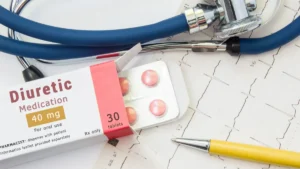
- Thiazide diuretics (e.g. hydrochlorothiazide, indapamide), commonly prescribed for blood pressure, they reduce uric acid excretion through the kidneys and are one of the most common causes of drug-induced hyperuricaemia and gout. If you develop gout while on a thiazide, discuss alternatives with your doctor.
- Loop diuretics (e.g. furosemide), used in heart failure, they also raise uric acid levels, and gout is a recognised complication in heart failure patients on long-term furosemide.
- Losartan (an ARB), interestingly, this is one of the few antihypertensive medicines that actually lowers uric acid. In patients with hypertension and gout, losartan is often a preferred option for this reason.
- Low-dose aspirin even at cardioprotective doses (75–100mg), aspirin can reduce uric acid excretion. This is rarely a reason to stop aspirin in secondary prevention, but worth noting in patients with recurrent gout.
- SGLT2 inhibitors (e.g. empagliflozin, dapagliflozin), these newer heart failure and diabetes medicines increase uric acid excretion and reduce gout risk, providing an additional benefit in patients with both conditions.
Colchicine, From Gout Remedy to Cardiac Medicine
Colchicine has been used for over 3,000 years, originally derived from the autumn crocus plant (Colchicum autumnale). Its use in gout dates to ancient Egypt. It works by disrupting the inflammatory cascade, particularly by inhibiting the assembly of the NLRP3 inflammasome a key driver of the sterile inflammation seen in both gout and atherosclerosis.
This shared inflammatory mechanism is what made cardiologists ask the pivotal question: could colchicine protect the heart?
Colchicine in Pericarditis
Pericarditis inflammation of the pericardium, the sac surrounding the heart, causes sharp chest pain that typically worsens with deep breathing or lying flat and improves sitting forward. Colchicine has been the established treatment for pericarditis for over a decade, strongly supported by the COPE and ICAP trials.
The standard regimen for acute pericarditis is 0.5mg twice daily (for patients over 70kg) or 0.5mg once daily (under 70kg or those who experience gastrointestinal intolerance) for three months alongside an NSAID. For recurrent pericarditis, treatment may extend to six months or beyond.
Colchicine halves the rate of pericarditis recurrence, a finding consistent enough across multiple trials to make it a guideline recommendation worldwide.
Colchicine in Coronary Artery Disease, The Major Trials
The cardiovascular application of colchicine is newer, and the results have been striking enough to change practice.
| Trial | Population | Finding |
|---|---|---|
| COLCOT (2019) | 4,745 patients within 30 days of a heart attack, on standard therapy | Low-dose colchicine 0.5mg daily reduced the composite of cardiovascular death, cardiac arrest, heart attack, stroke, and urgent revascularisation by 23% compared to placebo |
| LoDoCo2 (2020) | 5,522 patients with stable coronary artery disease | Colchicine 0.5mg daily reduced major cardiovascular events by 31% compared to placebo over a median of nearly 3 years |
These results led to low-dose colchicine receiving regulatory approval for cardiovascular risk reduction in several countries, and it is now listed in major cardiology guidelines as an option for patients with established coronary artery disease who remain at elevated risk despite optimal medical therapy.
Side Effects of Colchicine
What to Expect
- Gastrointestinal symptoms the most common side effect, including diarrhoea, nausea, abdominal cramping, and bloating. Taking colchicine with food reduces this significantly. In the cardiovascular trials, gastrointestinal intolerance was the main reason patients stopped the medicine.
- Muscle aches uncommon at the low doses used in cardiovascular practice but more common at higher doses used for acute gout.
- Avoid grapefruit juice grapefruit interferes with the enzyme that breaks down colchicine and can significantly increase blood levels.
- Drug interactions certain medicines including some antibiotics (clarithromycin, erythromycin), antifungals, and statins can increase colchicine levels. Always inform your doctor and pharmacist of all medicines you are taking.
- Kidney and liver disease dose reduction or avoidance is needed. Colchicine can accumulate to toxic levels in patients with significantly impaired kidney or liver function.
- Not recommended in pregnancy colchicine should generally be avoided in pregnancy unless specifically advised by a specialist.
Who Might Benefit From Colchicine?
Based on current evidence and guidelines, colchicine is worth discussing with your cardiologist or GP if you fall into any of the following groups:
Patients Who May Benefit
- Patients with recent acute coronary syndrome or heart attack who remain at elevated cardiovascular risk despite optimal statin therapy, antiplatelets, and other standard medicines
- Patients with stable coronary artery disease and ongoing elevated inflammatory markers or residual risk
- Patients with acute or recurrent pericarditis where colchicine is now standard of care
- Patients with both gout and heart disease where colchicine addresses both conditions simultaneously
Conclusion
The story of gout and the heart is one of medicine’s more unexpected chapters, and colchicine’s journey from ancient gout remedy to evidence-based cardiovascular therapy is one of the more satisfying developments in recent cardiology.
The underlying message is important: inflammation is not just the mechanism of joint pain it is a central driver of heart disease. Conditions and medicines that modify inflammation, including gout management and colchicine, are increasingly recognised as having genuine cardiovascular relevance.
If you have gout and heart disease, or if you have had a heart attack and your cardiologist has mentioned colchicine, understanding the connection between these two conditions may help you feel more confident in your treatment plan. As always, decisions about adding or changing medicines should be made in partnership with your healthcare team.