- Olive oil is one of the most thoroughly studied foods in heart nutrition, with consistent evidence linking regular use to lower rates of heart disease, stroke, and cardiovascular death.
- Two things drive the benefit: the monounsaturated fat oleic acid, and a rich set of polyphenols and antioxidants that calm inflammation and help protect the lining of your blood vessels.
- The type and quality of the oil genuinely change the outcome. Extra-virgin oil keeps far more polyphenols than refined or light varieties, and only oils above a set polyphenol level qualify for Europe’s official heart-related health claim.
- Benefit shows up at modest amounts. In one large study, around half a tablespoon a day was linked to a 19% lower risk of cardiovascular death, especially when it replaced butter, margarine, or mayonnaise.
- Olive oil is still calorie-dense, at roughly 120 calories per tablespoon. The aim is to make it your main cooking and dressing fat in place of less healthy options, rather than pouring it on top of everything else.
Pour two oils both labelled “olive oil” into a glass and they can look almost identical. Taste them and the difference is obvious. A good extra-virgin oil is fruity and green, with a bitter edge and a peppery sting at the back of the throat. A cheaper refined oil is smooth, mild, and largely silent. That sting is not a flaw. It is the taste of the polyphenols, the same compounds that carry much of the oil’s benefit for your heart.
This is the part of the olive oil story that often gets lost. The evidence linking olive oil to better heart health is genuinely strong, but it is strongest for the oils that still contain those active compounds. As a cornerstone of the Mediterranean diet and a versatile kitchen staple, extra-virgin olive oil is one of the simplest and most enjoyable upgrades you can make to how you eat. The trick is choosing well and using it as a replacement for less healthy fats, not as an extra.
What Makes Olive Oil So Good for the Heart?
Monounsaturated fat and oleic acid
Olive oil is mostly oleic acid, a monounsaturated fat that makes up roughly 70 to 80% of its total fat. Monounsaturated fats have a well-established effect on the blood fats that matter for heart health. When they take the place of saturated fat, they tend to lower LDL cholesterol and triglycerides, and can modestly improve HDL, the protective kind. This is close to the opposite of what saturated fat tends to do, which is a central reason that swapping butter, lard, and heavily processed fats for olive oil in cooking has a measurable payoff. If you want the fuller picture on fat types, our guide to good fats and bad fats is a useful companion piece.
Monounsaturated fat is also more stable when heated than polyunsaturated fat. Combined with its natural antioxidants, that makes a good extra-virgin oil a genuinely capable cooking oil, not only a finishing one, contrary to what some popular nutrition claims suggest.
Polyphenols and antioxidants, the deeper benefit
What sets extra-virgin olive oil apart from other sources of monounsaturated fat, and from lower-grade olive oils, is its high polyphenol content. Polyphenols are plant compounds with anti-inflammatory and antioxidant properties, and olive oil contains several worth knowing by name: oleocanthal, oleuropein, and hydroxytyrosol.
These compounds support the heart in a few connected ways. They reduce oxidative stress, the cellular wear and tear that drives the artery-narrowing process known as atherosclerosis. They help protect LDL cholesterol from oxidation, and oxidised LDL is considerably more damaging to artery walls than the ordinary kind. They support the endothelium, the thin inner lining of your blood vessels that governs blood flow and vessel tone. And they have been shown to modestly help with blood pressure and blood vessel responsiveness. This polyphenol fraction is largely stripped out of refined and light olive oils, which is exactly why the grade you choose matters.
Much of what makes the Mediterranean diet so consistently good for the heart comes back to the quality of the fat at its centre. Used as the everyday cooking and dressing fat, a good extra-virgin olive oil is one of the most evidence-backed dietary choices available.
What the Evidence Shows
The heart evidence for olive oil is unusually deep for a single food. The landmark PREDIMED trial, one of the largest dietary intervention studies ever run, randomised more than 7,000 people at high cardiovascular risk to one of three eating patterns: a Mediterranean diet topped up with extra-virgin olive oil, a Mediterranean diet topped up with nuts, or a lower-fat control diet. The extra-virgin olive oil group, who used around three to four tablespoons a day, had a significantly lower rate of major cardiovascular events, including heart attack and stroke, than the control group.
One point worth being upfront about, since it comes up often: the original 2013 PREDIMED paper was retracted and republished in 2018 after the researchers found problems with how some participants had been randomised. The corrected analysis reached essentially the same conclusion, and several later reanalyses have supported it. It remains one of the most cited pieces of evidence in the field.
Importantly, PREDIMED was not testing olive oil as a supplement. It was testing it as a daily staple used generously across cooking, dressing, and dipping. That is the real-world setting in which the oil earns its keep.
More recent work has strengthened the picture in a different population. A 2022 study in the Journal of the American College of Cardiology followed more than 90,000 adults in the United States for 28 years, a place where olive oil intake is generally much lower than in Spain. Those with the highest intake, more than half a tablespoon a day, had about a 19% lower risk of dying from cardiovascular disease, and a similar reduction in overall mortality, compared with people who rarely used it. Just as telling for how you should use it, replacing around 10 grams a day of margarine, butter, mayonnaise, or dairy fat with the same amount of olive oil was linked to lower mortality. Benefit, in other words, does not require a Mediterranean-sized pour. It rewards the swap.
Extra-Virgin Versus Other Olive Oils, and Why It Matters
Not all olive oil is equal, and the gap between grades is not marketing. It is the difference between an oil that still carries its polyphenols and one that has had most of them processed out.
| Type | Processing | Polyphenol Content | Best Use |
|---|---|---|---|
| Extra-virgin olive oil | Cold pressed, unrefined | High, the most beneficial | Dressings, dipping, low to medium heat cooking, finishing |
| Virgin olive oil | Minimal processing | Moderate | Everyday cooking |
| Refined olive oil | Heat and chemical processing | Low, most polyphenols removed | Higher heat cooking only |
| Light olive oil | Heavily refined, lighter colour and flavour | Very low | Not recommended as a primary choice |
Extra-virgin olive oil is made by pressing olives mechanically, without heat or chemical treatment, which preserves the full range of polyphenols and antioxidants. “Light” olive oil, worth clearing up, refers to a lighter colour and flavour, not fewer calories. It is heavily refined and among the lowest in polyphenols, so it is the grade to skip for everyday use.
There is a useful, non-marketing way to gauge quality. In 2011, after reviewing the evidence, European food safety regulators approved a specific health claim: that olive oil polyphenols help protect blood fats from oxidative damage. The catch is that the claim can only be used for oils containing at least 5 mg of hydroxytyrosol and its related compounds per 20 grams, which works out to roughly a daily tablespoon and a half. Many supermarket oils do not reach that level. A robustly bitter, peppery extra-virgin oil is your everyday clue that the polyphenols are actually there.
A Note on Moderation and Calories
Olive oil is unambiguously good for the heart, and it is also calorie-dense. A tablespoon carries around 120 calories, and it is easy to use more than you notice when you are cooking and dressing food with a generous hand. This does not mean measuring every drop, but it is worth keeping half an eye on the total, particularly if you are managing your weight alongside other heart risk factors.
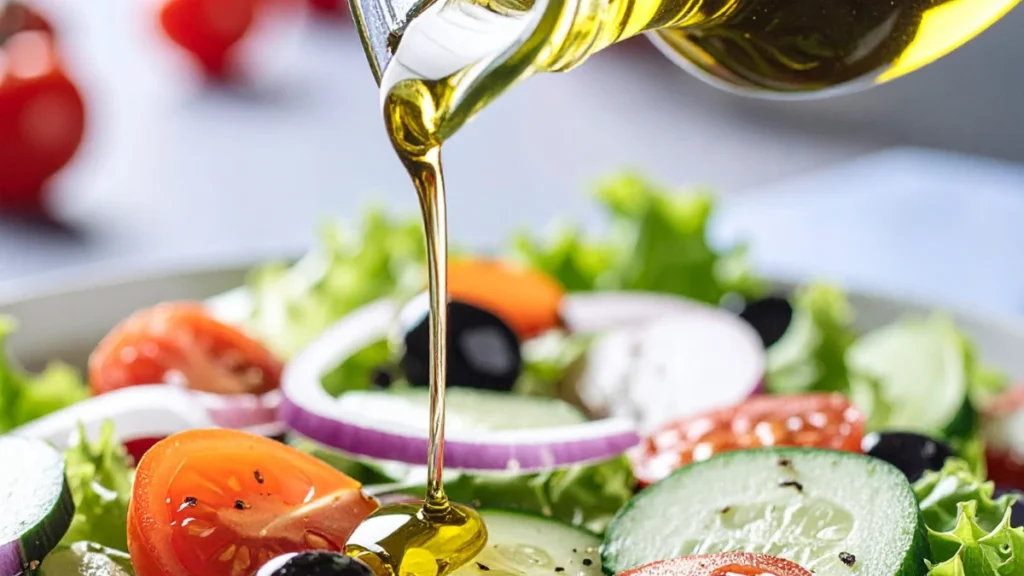
The most useful way to think about it is as a replacement rather than an addition. Olive oil on bread in place of butter. Olive oil in the pan in place of vegetable oil. A homemade olive oil dressing in place of a bottled one. Used this way, it delivers real benefit without meaningfully lifting your overall calorie intake, which is exactly the pattern the 2022 substitution findings point to. Poured on top of a diet that is already rich in other fats, the maths becomes far less favourable.
Simple Ways to Use More Olive Oil
- Swap butter for olive oil when sautéing vegetables, cooking eggs, or reaching for a bread dip. Good extra-virgin oil on sourdough with a pinch of sea salt needs no improvement.
- Make your own dressing. Extra-virgin olive oil, lemon juice or red wine vinegar, a little Dijon mustard, and salt. It takes about 30 seconds and beats most bottled dressings comfortably.
- Finish dishes with a drizzle. A little good extra-virgin oil over roasted vegetables, grilled fish, or soup right before serving adds flavour and nutritional value at the same time.
- Roast your vegetables in it. Tossing vegetables in olive oil before roasting gives better flavour, better texture, and a better nutritional result than roasting them dry.
- Stir it through legumes. A generous glug over lentils, chickpeas, or white beans lifts the dish and adds a healthy fat alongside the fibre and protein.
- Store it properly. Light and heat degrade the polyphenols, so keep the bottle dark and away from the stove, and use it within a few months of opening for the best quality.
Conclusion
Extra-virgin olive oil is one of the most evidence-backed foods in heart nutrition, and one of the most enjoyable to use. Its combination of monounsaturated fat and polyphenols delivers a range of cardiovascular benefits supported by both the underlying biology and large studies, from the PREDIMED trial to more recent work in populations that eat far less of it.
The two things to hold onto are quality and role. Choose a real extra-virgin oil, the kind with a bit of bite, and use it as your main fat in place of less healthy options, with the awareness that its calories still count. Done that way, it is one of the simplest, most sustainable, and most genuinely pleasurable habits you can build for your heart.
As with everything in the Live Well section, this is not about perfection or restriction. It is about making consistently better choices, building habits that last because you enjoy them, and understanding why they matter. Olive oil earns its place at the centre of that approach.