Key Points
- Clopidogrel (Plavix, Iscover) is an antiplatelet medicine that prevents dangerous blood clots from forming inside arteries, particularly after a heart attack, stroke, or coronary stent placement.
- It is usually prescribed alongside aspirin as dual antiplatelet therapy (DAPT) for a defined period after a cardiac event or procedure, then often continued long-term as a single agent.
- Unlike ticagrelor, clopidogrel needs to be converted into its active form by the liver, meaning its effect can vary between individuals due to genetic differences in liver enzyme activity.
- It is generally well tolerated with fewer side effects than some other antiplatelets, and may be better suited for patients with stomach sensitivity when taken alongside a proton pump inhibitor (PPI).
- Never stop clopidogrel suddenly without speaking to your cardiologist first. Stopping abruptly significantly increases the risk of a serious clot, particularly around a stent.
Clopidogrel is one of the most widely prescribed heart medicines in the world. If you have had a heart attack, a stroke, a coronary stent, or have been diagnosed with peripheral arterial disease, there is a good chance you have been, or will be, prescribed it.
It is a medicine that does an important but largely invisible job: preventing the blood from clotting where it should not. Understanding why you are taking it, how it works, and what to be aware of can help you feel more confident about your treatment.
What Is Clopidogrel?
Clopidogrel is an antiplatelet medicine it works by reducing the ability of platelets (small cells in the blood) to stick together and form clots. Platelets are essential for stopping bleeding when you injure yourself, but inside narrowed or stented arteries they can cause dangerous blockages.
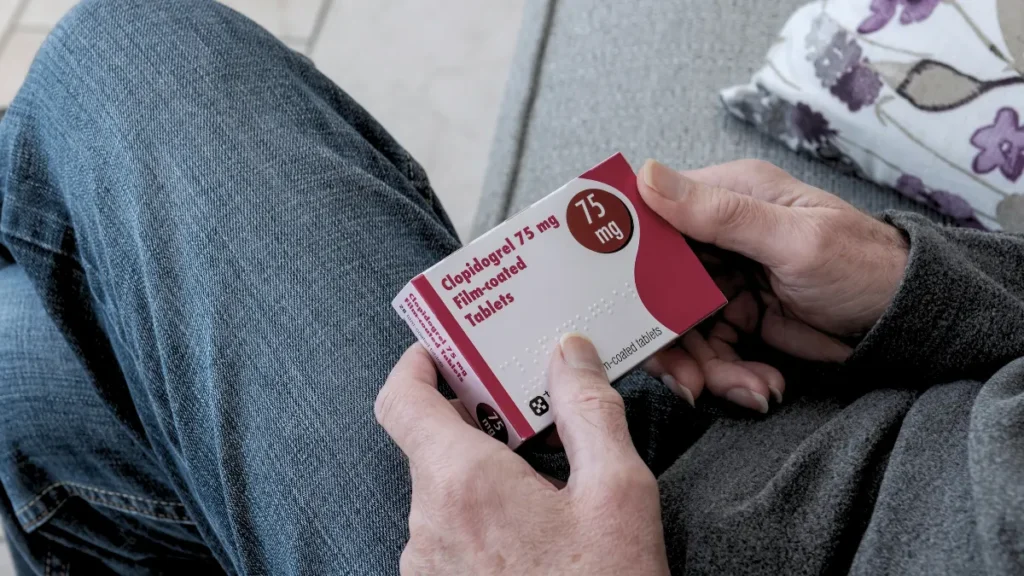
Clopidogrel is commonly sold under the brand names Plavix and Iscover. It is taken as a 75mg tablet once daily, with or without food.
How Does It Work?
Clopidogrel blocks a receptor on the surface of platelets called P2Y₁₂. When this receptor is activated, it causes platelets to become sticky and clump together. By blocking it, clopidogrel reduces this stickiness and lowers the risk of clots forming inside arteries.
One important feature of clopidogrel is that it is a prodrug meaning it is not active when swallowed. It needs to be converted into its active form by an enzyme in the liver called CYP2C19. This matters clinically because some people carry a genetic variation that makes this conversion less efficient, resulting in a weaker antiplatelet effect. In these patients, doctors may consider an alternative such as ticagrelor or prasugrel instead.
Clopidogrel does its most important work quietly and invisibly, reducing the chance that a clot will form where it could cause a heart attack or stroke. Taking it consistently every day is what keeps that protection in place.
What Is It Used For?
| Condition | Why Clopidogrel Is Used | Typical Duration |
|---|---|---|
| After a coronary stent (PCI) | Prevents clot formation around the stent while it heals into the artery wall | 6–12 months DAPT (with aspirin), then often clopidogrel alone long-term |
| After a heart attack (ACS) | Reduces risk of a second event by keeping arteries open | Up to 12 months DAPT, then reassessed |
| After an ischaemic stroke or TIA | Prevents further clots in cerebral blood vessels | Long-term, often indefinitely |
| Peripheral arterial disease (PAD) | Reduces clot risk in the arteries supplying the legs | Long-term |
| Coronary artery disease (stable) | Long-term secondary prevention in patients who cannot tolerate aspirin | Long-term |
Clopidogrel vs Ticagrelor, What Is the Difference?
Patients are sometimes switched between clopidogrel and ticagrelor, or asked why they have been prescribed one rather than the other. The key differences are worth understanding.
| Clopidogrel (Plavix) | Ticagrelor (Brilinta) | |
|---|---|---|
| Activation | Prodrug, converted by liver enzyme (CYP2C19) | Direct acting, no conversion needed |
| Speed of action | Slower onset | Faster and more consistent |
| Reversibility | Irreversible, effect lasts 7–10 days after stopping | Reversible, effect fades within 3–5 days |
| Genetic variability | Yes, reduced effect in some patients | No, consistent effect regardless of genetics |
| Dosing | 75mg once daily | 90mg twice daily |
| Breathlessness side effect | No | Yes, common in early weeks |
| Gastric tolerability | Generally better tolerated | Similar |
| Typical use | Long-term secondary prevention, lower-risk stent patients, stroke/TIA, PAD | Higher-risk ACS patients, recent heart attack or stent |
The choice between clopidogrel and ticagrelor is always individualised, based on your cardiovascular risk, bleeding risk, other medications, and tolerance. Your cardiologist will have considered all of these factors.
Clopidogrel and Stomach Protection
Because clopidogrel is often prescribed alongside aspirin, and both medicines can increase the risk of stomach irritation or bleeding, many patients are also prescribed a proton pump inhibitor (PPI) such as omeprazole or pantoprazole, to protect the stomach lining.
One practical note: some studies have suggested that omeprazole in particular may slightly reduce the effectiveness of clopidogrel by competing for the same liver enzyme (CYP2C19). If you are on both, your doctor may consider switching to pantoprazole or esomeprazole instead, which have less interaction. This is worth raising at your next appointment if you have not already discussed it.
Side Effects
Side Effects to Be Aware Of
- Easy bruising more bruising than usual is expected and not dangerous in itself.
- Nosebleeds or bleeding gums mild and usually manageable with gentle pressure.
- Prolonged bleeding from cuts apply firm pressure for longer than usual. Cuts will still heal.
- Stomach upset or indigestion taking clopidogrel with food usually helps. Discuss a PPI with your doctor if this is persistent.
- Diarrhoea or loose stools usually mild and settles with time.
- Headache occasionally reported, typically mild.
- Serious bleeding rare but important to recognise. See below for when to seek urgent help.
- Thrombotic thrombocytopenic purpura (TTP) a very rare but serious blood disorder. Symptoms include unusual bruising, confusion, fever, or darkened urine. Seek immediate medical attention if these occur.
When to Seek Urgent Medical Attention
Go to Emergency Immediately If You Notice:
- Vomiting blood or coffee-ground material
- Black, tarry, or blood-stained stools
- Coughing up blood
- A wound that will not stop bleeding despite prolonged firm pressure
- Sudden severe headache, vision changes, face drooping, arm weakness, or speech difficulty
- Sudden chest pain, particularly if you have recently stopped clopidogrel
If You Need Surgery or a Procedure
Because clopidogrel significantly affects platelet function, it needs to be managed carefully before any surgical or invasive procedure. Its effect lasts for the lifetime of the platelets, approximately 7 to 10 days after the last dose.
In most cases, clopidogrel is stopped 5 to 7 days before a planned procedure to allow adequate platelet recovery. However, this decision requires careful coordination between your cardiologist and the surgical team, particularly if you have a recent stent, where stopping antiplatelet therapy carries its own risk. Never stop clopidogrel before a procedure without first discussing it with your cardiologist.
Conclusion
Clopidogrel is a well-established and widely trusted antiplatelet medicine that plays a vital role in reducing the risk of heart attacks, strokes, and stent-related clotting. For most patients it is well tolerated, simple to take, and highly effective when used consistently.
The most important thing to remember is not to stop it suddenly without medical guidance, and to inform any treating clinician, including your dentist and any surgeon, that you are taking it before any procedure.
If you have questions about clopidogrel, how long you should continue it, or whether it is the right antiplatelet for your situation, your cardiologist is always the best person to ask.