- Artificial intelligence is already being used in cardiology, quietly and carefully, in ways that are genuinely improving patient care.
- AI does not replace your cardiologist. It gives them better tools, more time, and sharper information to make decisions with you.
- From reading ECGs to analysing intracoronary imaging, planning complex procedures, and assessing heart valves, AI is being applied across almost every area of heart medicine.
- Neural networks are already shortening the time taken to analyse complex imaging, making procedures faster and more accurate.
- The goal is the same as it has always been: getting the right treatment to the right patient.
If you have heard the term artificial intelligence, or AI, mentioned in the context of medicine, and been unsure whether to find it exciting or unsettling, you are not alone. The term carries a lot of weight in public conversation, and not always in reassuring directions.
So let us be clear about something from the outset. The AI being developed and applied in cardiology is not about replacing doctors, or making decisions by algorithm, or removing the human relationship at the heart of medicine.
It is about giving cardiologists better tools. Tools that can process more information more quickly, spot patterns that are difficult for the human eye to detect, and help ensure that every patient benefits from the full weight of accumulated medical knowledge, not just the experience of the individual clinician in front of them.
As one of the leading figures applying AI to cardiovascular research and daily clinical practice, my view is clear. AI is here to help improve workflow, and that efficiency creates more face-to-face time with patients. Not less.
What Do We Actually Mean by AI in Cardiology?
AI is a broad term that encompasses several different technologies. In cardiology, the most relevant are machine learning, where a computer learns to recognise patterns by analysing large amounts of data, and deep learning, a more sophisticated version that can analyse complex images such as heart scans with remarkable accuracy.
Neural networks, modelled loosely on the structure of the human brain, sit at the heart of many of these systems. They are capable of identifying patterns in imaging data at a speed and consistency that no human analyst could match.
These are not futuristic concepts. They are already in use in hospitals and catheterisation laboratories around the world, often in ways that patients would not notice. They run quietly in the background, helping clinicians interpret information faster and more accurately than would otherwise be possible.
Speaking at the 2026 European Association of Percutaneous Cardiovascular Interventions Summit in Munich, I described AI as transforming cardiology at a pace that is genuinely unprecedented, having been at the forefront of applying machine learning to some of the largest datasets in coronary disease research, including the SYNTAX trial, which followed 1,800 patients for 10 years.
But alongside that enthusiasm, I was equally clear about the caution required. To trust an AI estimation more than clinical expertise, we have to be certain it has been proven in outcomes studies. Progress, but never at the expense of safety. That balance, genuine excitement tempered by rigorous caution, is precisely what patients should expect from the doctors leading this field.
Where Is AI Already Making a Difference?
The clearest way to understand where AI sits in modern cardiology is to follow the journey a patient takes, from the moment a problem is first suspected through to the treatment decision and beyond. At every stage of that journey, AI is already at work.
Stage 1: before you ever reach a specialist
AI is already working before most patients know they have a problem. Tools trained on millions of ECG recordings can now detect patterns associated with heart attacks, irregular rhythms, and structural heart disease with accuracy that matches experienced clinicians. Some of these tools are built into smartwatches and portable devices, bringing ECG analysis into patients’ own homes.
In resource-limited parts of the world, AI-powered digital stethoscopes and portable devices are allowing patients in communities without specialist cardiologists to be assessed and triaged to a standard that previously required a fully equipped hospital. A patient who would once have waited months to see a specialist, or never seen one at all, can now have their heart rhythm analysed, their valve function assessed, and their cardiovascular risk stratified using tools that fit in a small case.
This matters more than almost any other application of AI in medicine. The burden of cardiovascular disease falls most heavily on low- and middle-income countries, precisely the places with the fewest cardiologists, the least access to imaging equipment, and the longest distances between patients and the hospitals that could help them.
AI does not fix those structural problems. But it does mean that a community health worker in a rural clinic, equipped with a smartphone and a portable ECG device, can now make a triage decision that would previously have required a trained cardiologist. The technology does not replace the specialist. It extends their reach to places they cannot physically be.
Stage 2: investigating your heart
Once a problem is suspected, you will be referred for tests. This is where AI is already embedded most deeply in clinical practice.
Computed tomography coronary angiography, or CTCA, uses X-ray technology to produce detailed images of the coronary arteries. AI and machine learning are now being used to interrogate these datasets far beyond what conventional analysis could achieve. The presence, extent, and characteristics of plaque can be assessed with a granularity that helps your clinical team make better-informed decisions before you ever reach the procedure room.
The echocardiogram, the ultrasound of the heart, is one of the most widely used diagnostic tools in cardiology. Machine learning algorithms can now assist in assessing heart valve function with impressive accuracy. What is particularly striking is that the benefit is greatest for less experienced operators. A sonographer early in their training, using an AI-assisted system, can achieve diagnostic accuracy that would previously have required years of experience.
In some centres, robotic echocardiography systems guided entirely by AI are now acquiring images without a sonographer needing to hold the probe at all, opening up access to high-quality cardiac imaging in areas where specialist staff are scarce.
Stage 3: planning your procedure
When treatment is needed, AI is transforming how your clinical team prepares. Computational fluid dynamics, or CFD, combines your imaging data with mathematical modelling of blood flow to simulate how blood actually moves through your coronary arteries, and how different treatment strategies will change that flow. The procedure can effectively be planned and rehearsed virtually before it is performed.
This goes further still with what might be called a digital twin: a precise virtual replica of your specific heart and coronary anatomy, built from your own imaging data. Different treatment approaches can be tested on this model, complications anticipated, and the optimal strategy identified, all before you enter the operating theatre.
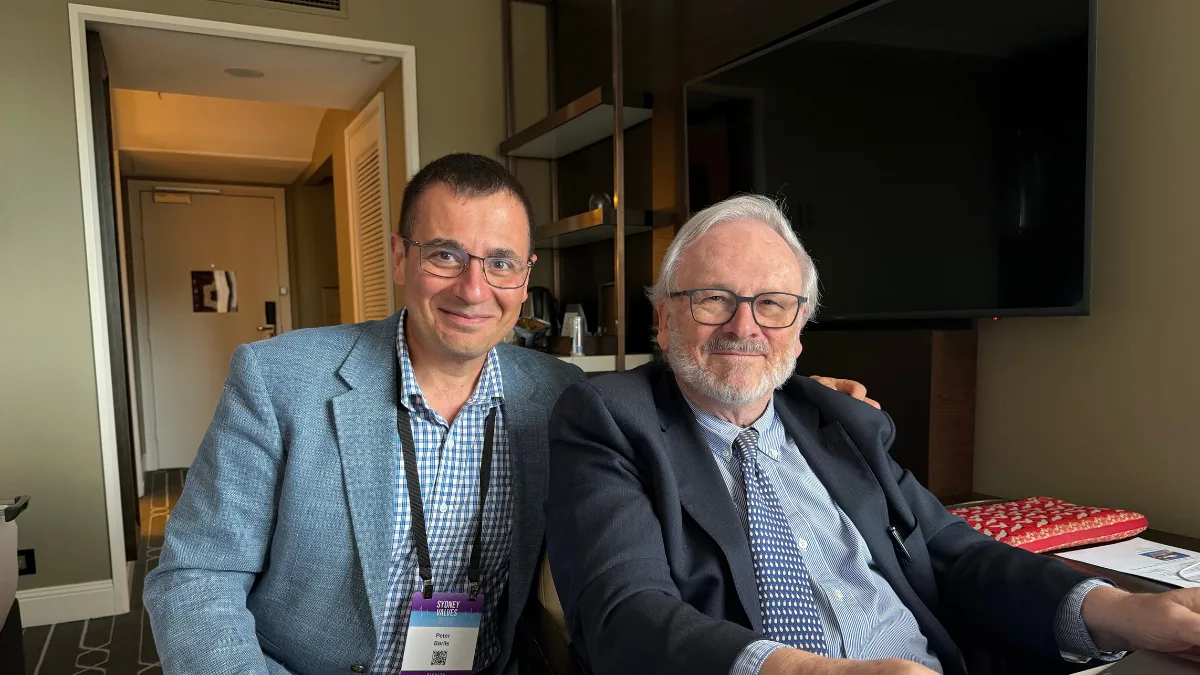
I am actively collaborating with Professor Peter Barlis and his team, and at the Peter Barlis Laboratory we have been using AI to simulate blood flow at bifurcation points, the branching junctions where blockages are most technically challenging to treat, with the goal of improving precision and safety for each individual patient.
“Where is AI most useful in cardiology? Preplanning. Planning is everything.”
Prof. Patrick Serruys, Interventional Cardiologist
Stage 4: in the procedure room
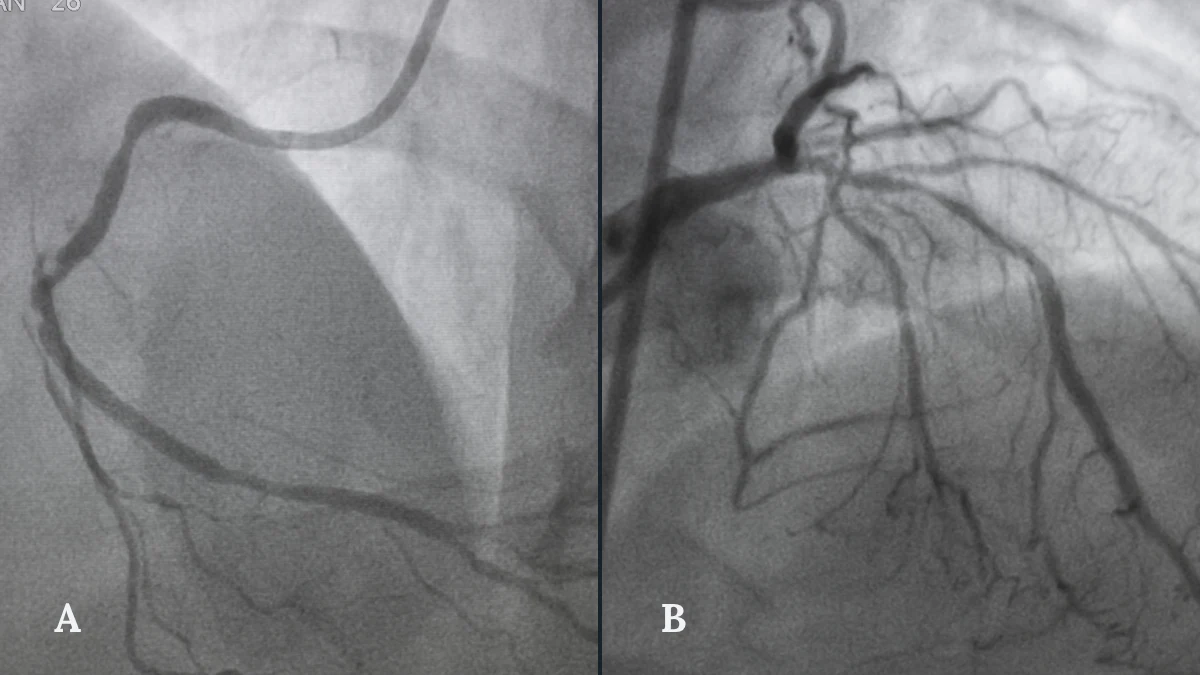
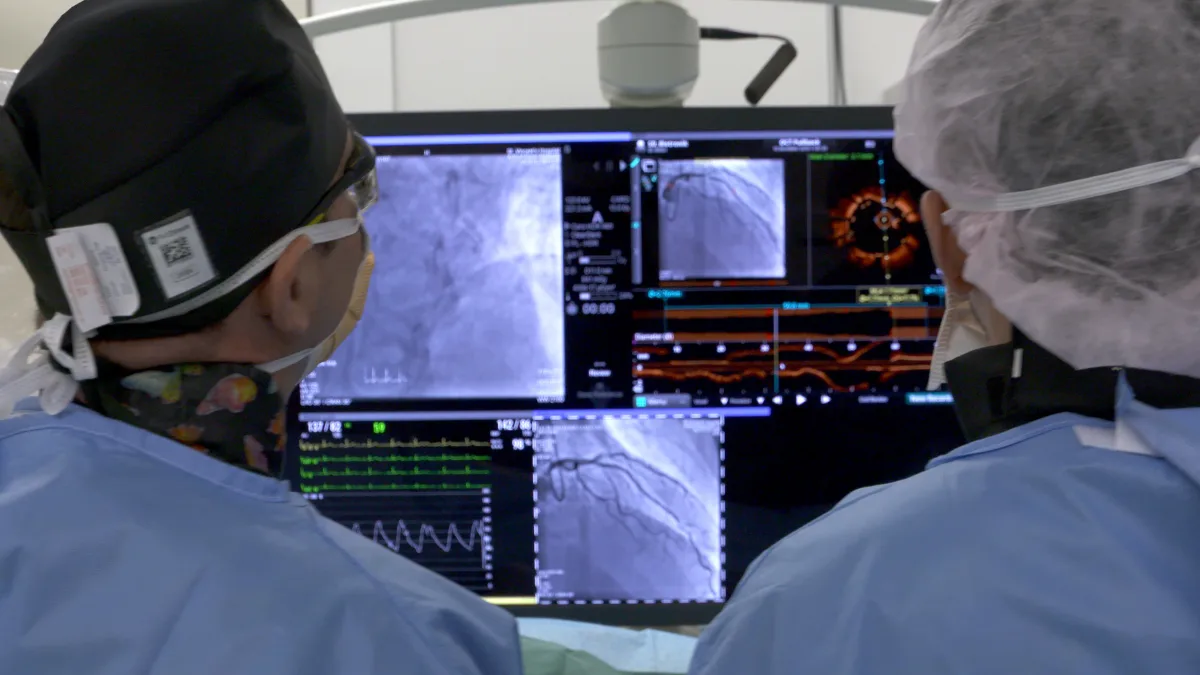
Once you are in the catheterisation laboratory, AI is present in real time. Intracoronary imaging techniques such as optical coherence tomography (OCT) and intravascular ultrasound (IVUS) look inside the coronary arteries during procedures and generate large amounts of imaging data. Neural networks can now analyse this data at a speed that would have been unimaginable a decade ago. They characterise plaque, identify high-risk features, and predict the result of a stenting procedure, all in the time it takes to complete the procedure itself.
AI is also reading the angiogram in real time as your cardiologist works, automatically measuring the degree of narrowing, the length of the blockage, and the appropriate stent size. A randomised clinical trial has shown that AI-guided angiography analysis produces results comparable to the most detailed imaging techniques available. This is AI genuinely in the room, providing an objective second opinion at the most critical moment of the procedure.
Stage 5: choosing your treatment
Perhaps the most directly relevant application of AI for patients is in the decision between stenting and bypass surgery. Rather than a broad population-based recommendation, machine learning models applied to the SYNTAX trial dataset were able to distinguish meaningfully between patients who looked similar on the surface but whose predicted outcomes differed significantly depending on which treatment they received.
Research Spotlight
The blood tests that turned out to matter more than anyone realised
When the SYNTAX trial dataset was analysed using machine learning, two findings stood out. C-reactive protein, a blood test that measures inflammation, and haemoglobin levels, which reflect anaemia, both emerged as powerful predictors of long-term outcomes after heart treatment. Neither had featured prominently in conventional cardiology risk scoring.
A further surprise was gamma-glutamyl transferase, a liver enzyme routinely measured in blood tests but not traditionally associated with heart outcomes. The machine learning model identified it as a significant predictor of 10-year outcomes. I was initially sceptical, but the finding held up in external validation across thousands of additional patients. It turns out this enzyme is a marker of oxidative stress, which does have a meaningful impact on plaque build-up and heart function.
These are not exotic tests. They are measurements taken routinely in almost every patient undergoing cardiac assessment. What AI revealed is that information we were already collecting was telling us more than our existing models were capturing.
What This Means for You
Not one answer for everyone. A different answer for each person.
When the machine learning model was applied to individual patients in the SYNTAX dataset, it identified three distinct groups. For some patients, stenting and bypass surgery were predicted to produce essentially the same outcome, genuine clinical equipoise, where patient preference should play a larger role in the decision. For others, it predicted a clear advantage for bypass surgery. And for a smaller group, stenting was the stronger option.
The goal is not to have an algorithm make the decision. It is to give your heart team better information so that when they sit down with you to discuss your options, the recommendation they make is as precisely tailored to your specific situation as possible.
The quieter wins: less paperwork, more conversation
One of the less dramatic but genuinely meaningful applications of AI in medicine is the reduction of administrative burden. Cardiologists, like all doctors, spend a significant portion of their working day on documentation, dictating notes, completing forms, and reviewing records. AI-assisted tools can take notes during consultations, generate clinical summaries, and help organise information so that less time is spent on administration and more time is available for the patient in the room.
There is also a more personal dimension that is rarely discussed: what AI means for the conversation between you and your doctor. When a cardiologist tells you that an AI algorithm has analysed your scan, or that a machine learning model has helped inform the recommendation for stenting over surgery, you deserve to understand what that means and who is ultimately responsible for the decision.
The answer to that last question has not changed. Your cardiologist is responsible. AI informs; it does not decide. The shared decision between you and your clinical team remains at the centre of your care, and no algorithm changes that.
AI and Your Heart Team
One of the most important things to understand about AI in cardiology is that it does not work in isolation, and it was never designed to. The Heart Team model, where your cardiologist and cardiac surgeon review your case together before making a recommendation, is precisely where AI adds the most value. The scoring tools, the imaging analysis, the risk predictions, all of this information is brought to that meeting, discussed, and weighed alongside things that no algorithm can measure: your preferences, your circumstances, your priorities.
Traditionally, a Heart Team meeting has centred on reviewing your angiogram images on a screen, measuring segments of arteries by eye, and debating the best approach based on accumulated experience.
AI is transforming this in a concrete and visible way. Machine learning can now process your coronary imaging data and assess your arterial anatomy with a speed and precision that was not previously possible, producing accurate measurements of vessel segments, identifying the location and extent of blockages, and predicting how different stenting or bypass strategies are likely to perform in your specific anatomy.
Extended reality takes this further still. Building on work developed at the CORRIB Research Centre at the University of Galway, coronary imaging data can now be converted into a three-dimensional hologram that the entire Heart Team can explore together before any procedure begins. Rather than looking at flat images on a screen, your cardiologist and cardiac surgeon can examine a three-dimensional model of your coronary arteries, rotate it, fly through it, and measure it in precise detail. The intervention can be planned virtually before you have entered the operating theatre or the catheterisation laboratory.
This has been demonstrated in real surgical cases, including the planning of complex multi-vessel bypass operations, where holographic measurements guided decisions about which vessels to bypass and which grafts to use.
The conversation that follows is still deeply human. The decision that emerges from it is still yours to make, with your team, together. What AI and extended reality change is the quality and precision of the information on the table when that conversation happens.
What AI Cannot Do, and Why That Matters
It is just as important to be clear about the limitations of AI in cardiology as it is to acknowledge its promise. Leading clinicians in this field are the first to make this point.
AI models are trained on data from past patients. They are powerful at identifying patterns within that data, but they cannot handle what they have never seen, and they require retraining as medical knowledge evolves. A model trained predominantly on data from one type of patient population may perform less well when applied to a different population. This is why external validation across diverse groups is essential before any AI tool is used in clinical practice.
There are also important questions about data privacy, about the transparency of AI decision-making, and about ensuring that the benefits of these tools are available equitably, not just to patients in well-resourced healthcare systems.
One of the most honest concerns in this field is what researchers call the black box problem. Many AI models can tell you what conclusion they have reached, but cannot easily explain how they reached it. A neural network that identifies a high-risk plaque on a CT scan may do so with impressive accuracy, but it cannot always show the clinician its reasoning in the way that a human expert can. Different AI platforms applied to the same imaging data can sometimes reach different conclusions.
Understanding where AI is reliable, where it is uncertain, and where it requires human oversight is not a weakness of the technology. It is the essential work of responsible implementation.
Perhaps most importantly: AI does not know you. It does not know that you are frightened, or that you have a strong preference for a less invasive approach, or that your recovery will be shaped by circumstances that no dataset could capture. That knowledge belongs to your cardiologist, your cardiac surgeon, and your clinical team. The human relationship at the centre of medicine, the conversation, the trust, the shared decision, is not something that any algorithm replaces.
What This Means for You as a Patient
If you are a cardiac patient today, or if someone you love is, the most reassuring thing I can say is this. The cardiologists caring for you are not waiting passively for AI to arrive. They are actively using and evaluating these tools, carefully, with the same rigour they apply to any new treatment or technology.
The ECG you had may have been read with the assistance of an AI algorithm. The scan images of your heart may have been processed by software that flags findings for a radiologist or cardiologist to review. The risk assessment your team carried out before recommending treatment may have drawn on scoring tools developed using machine learning on large patient datasets. The intracoronary images taken during your procedure may have been analysed by neural networks that helped guide exactly where and how a stent was placed.
None of this happened instead of your doctor’s judgement. It happened alongside it, giving them better information, faster, so that the decision they made with you was as well-informed as possible.
That is what AI in cardiology is for. Not to alarm. Not to replace. Simply to help the people caring for your heart do their jobs a little better, and to give you, as a patient, the benefit of everything medicine has learned.
Conclusion
AI in cardiology is not a glimpse of some distant future. It is already in the room with you, in the ECG software that flagged your rhythm, in the imaging analysis that helped your team measure your arteries, in the risk scoring that informed your treatment plan. None of it has changed who is responsible for your care, and none of it has removed the human conversation at the heart of medicine.
What it has done is sharpen the information your cardiologist works with, shorten the time between question and answer, and extend the reach of expert care to places it could not previously go. The realistic futures, as I often put it, are arriving faster than anyone anticipated. The question is no longer whether AI will reshape how we care for patients with heart disease. It already has. The question is how thoughtfully, how rigorously, and how equitably we carry that forward.
References
- Serruys PW. AI in Cardiovascular Imaging and Interventions: Boon or Bane? Presented at the EAPCI Summit, Munich, February 2026. Reported by TCTMD.
- Ninomiya K, Serruys PW et al. Can Machine Learning Aid the Selection of Percutaneous vs Surgical Revascularization? Journal of the American College of Cardiology, 2023;82:2113 to 2124.
- Serruys PW et al. 10 Years of SYNTAX: Closing an Era of Clinical Research After Identifying New Outcome Determinants. JACC: Asia, 2023.
- American Heart Association Scientific Advisory on AI in Cardiovascular Medicine, 2025.
Related Reading
- Coronary Artery Bypass Grafting (CABG): What to Expect
- Heart Stent Unboxing: Inside the Technology That Opens Blocked Arteries
- The CT Coronary Angiogram (CTCA): A Patient’s Guide
- The ECG: What It Shows and Why It Matters
- Echocardiogram: The Heart Ultrasound Explained
- Understanding Troponin: A Vital Marker in Cardiology
- Understanding Your Cardiovascular Risk Factors