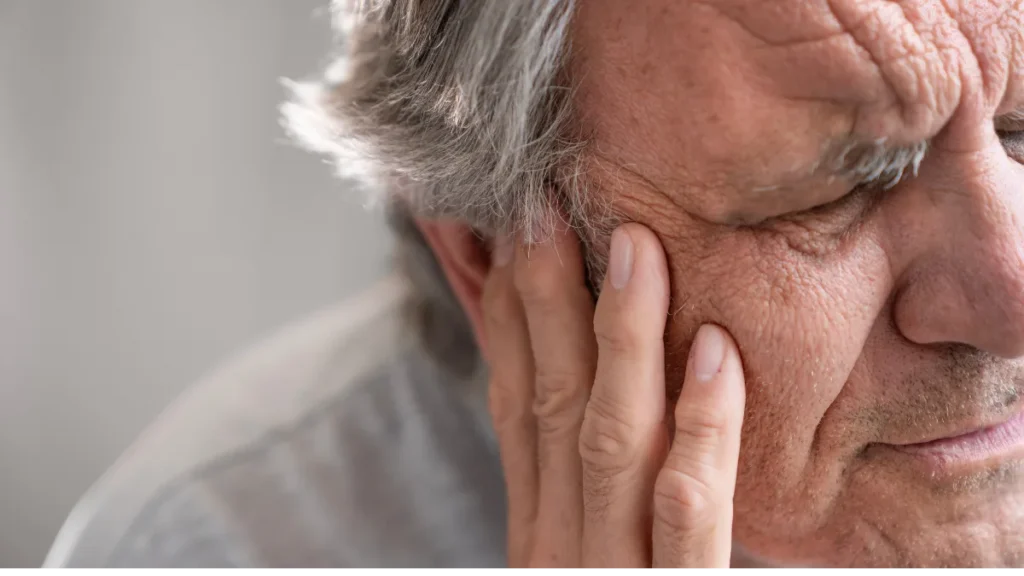
- Waking up with a headache, particularly a dull pressure across the forehead or behind the eyes that improves within an hour of getting up, is a recognised symptom of obstructive sleep apnoea.
- Sleep apnoea causes repeated drops in blood oxygen overnight, raising carbon dioxide levels and dilating blood vessels in the brain, producing the characteristic morning headache.
- Sleep apnoea is dramatically under-diagnosed and is a significant independent cardiovascular risk factor, associated with hypertension, atrial fibrillation, heart failure, and increased risk of heart attack and stroke.
- The classic features, loud snoring, witnessed pauses in breathing, waking unrefreshed, and daytime sleepiness, are well known, but morning headache is a symptom many people don’t connect to their sleep.
- Treatment of sleep apnoea with CPAP reduces cardiovascular risk, improves blood pressure control, and dramatically reduces the burden of atrial fibrillation in susceptible individuals.
A headache on waking is not something most people think of as a cardiac symptom. But for patients with undiagnosed obstructive sleep apnoea, it is one of the most consistent morning experiences they have, and one of the most reliably overlooked clues to a condition that significantly affects heart health.
Sleep apnoea sits at the intersection of sleep medicine and cardiology in a way that is only now being fully appreciated. It is not merely a snoring problem or a sleep quality issue. It is a condition that repeatedly stresses the cardiovascular system throughout the night, raising blood pressure, triggering arrhythmias, promoting inflammation, and increasing the long-term risk of serious cardiac events.
Recognising morning headaches, and the broader pattern of symptoms that surrounds them, as a potential signal of sleep apnoea is a genuinely useful piece of cardiovascular self-awareness.
What Is Sleep Apnoea?
The mechanism
Obstructive sleep apnoea (OSA) occurs when the muscles supporting the soft tissues of the throat relax during sleep, causing the airway to partially or completely collapse. Breathing stops, for seconds to over a minute, until the brain registers the oxygen drop and rouses the person just enough to restore airway tone. Breathing resumes with a snort or gasp, and the cycle repeats, sometimes hundreds of times per night.
The person is rarely aware of the awakenings. From the outside, the pattern is witnessed pauses in breathing followed by choking or gasping. From the inside, sleep feels unrefreshing, the morning brings heaviness and fatigue, and the day unfolds in a fog of tiredness that coffee does not fix.
Why it causes morning headaches
Each apnoea episode causes a drop in blood oxygen and a rise in carbon dioxide. Elevated CO2 is a potent dilator of blood vessels in the brain, producing increased cerebral blood flow and intracranial pressure. This is the mechanism of the morning headache: a dull, pressure-like ache, typically across the forehead or behind the eyes, that improves within an hour of being upright and awake as the overnight CO2 accumulation is cleared by normal breathing.
This pattern, headache on waking that resolves within an hour of getting up, is one of the most specific morning headache patterns for sleep apnoea. It is distinctly different from migraine, tension headache, or the headache of high blood pressure.
The Cardiovascular Consequences
Hypertension
Sleep apnoea is one of the most common causes of treatment-resistant hypertension, high blood pressure that remains elevated despite multiple medications. The repeated overnight oxygen drops and autonomic surges produce sustained elevation in sympathetic nervous system activity that carries over into daytime. Many patients with difficult-to-control blood pressure see meaningful improvement once sleep apnoea is identified and treated.
Atrial fibrillation
The relationship between sleep apnoea and AF is one of the most clinically important in cardiology. OSA is an independent risk factor for AF, and the overnight oxygen drops and autonomic surges it produces are a recognised trigger for nocturnal AF episodes. Patients with AF and untreated sleep apnoea have significantly higher AF recurrence rates after cardioversion or ablation. Treating the sleep apnoea is now considered part of comprehensive AF management.
Heart failure and coronary disease
The repeated surges in sympathetic activity, inflammation, and oxidative stress produced by untreated sleep apnoea accelerate atherosclerosis and increase the risk of heart attack and heart failure over time. Sleep apnoea is also a significant independent predictor of cardiovascular events, separate from and additive to the conventional risk factors.
Recognising the Pattern
The classic presentation of sleep apnoea is well known, loud snoring, witnessed pauses in breathing, waking with a gasp or choking sensation, unrefreshing sleep, and significant daytime sleepiness. But many patients with significant OSA do not present with all of these features. The symptom pattern can be subtler, and the morning headache is one of the features that frequently goes unrecognised as part of the picture.
A useful self-assessment is the Epworth Sleepiness Scale, a simple questionnaire that scores the likelihood of dozing in eight everyday situations. A score above 10 is considered suggestive of significant daytime sleepiness and warrants further assessment. But even a normal Epworth score does not exclude sleep apnoea, some patients with significant oxygen drops overnight do not report excessive daytime sleepiness.
I ask about sleep apnoea features routinely in patients with hypertension, AF, and heart failure, because it is so common and so undertreated in these groups, and the cardiovascular impact of treating it is meaningful. A patient who tells me their partner complains about their snoring, that they wake with a headache most mornings, and that they feel exhausted regardless of how long they sleep, that patient needs a sleep study, not just more antihypertensive medication.
— Prof. Peter Barlis, Interventional Cardiologist
Diagnosis and Treatment
Sleep study
The diagnosis of sleep apnoea is made by a sleep study, either a home-based portable monitor worn overnight or a formal in-laboratory polysomnography. The test measures breathing patterns, oxygen saturation, heart rate, and sleep staging. Results are reported as the Apnoea-Hypopnoea Index (AHI), the number of breathing events per hour. Mild OSA is an AHI of 5 to 15; moderate 15 to 30; severe above 30.
CPAP, continuous positive airway pressure
CPAP is the most effective treatment for moderate to severe OSA. A mask worn during sleep delivers a gentle continuous flow of air that acts as a pneumatic splint, keeping the airway open throughout the night. Most patients notice improvement in sleep quality, morning headaches, and daytime energy within days of starting treatment.
The cardiovascular benefits of CPAP are well documented, reductions in blood pressure, improvements in AF burden, and better cardiac outcomes in patients with established heart disease. Compliance is the main challenge, patients who use CPAP consistently gain the most benefit.
- Could my morning headaches be related to sleep apnoea, and should I have a sleep study?
- My blood pressure has been difficult to control, could untreated sleep apnoea be contributing?
- I have AF, is sleep apnoea assessment part of my management plan?
- My partner says I snore heavily and sometimes stop breathing, what should I do about this?
- If I start CPAP, how long before I would expect to notice a difference in my cardiovascular readings?
Heart Matters Resource
When in Doubt, Get Checked Out
If you regularly wake with a headache, feel unrefreshed regardless of sleep duration, or your partner mentions snoring or pauses in your breathing, raising this with your doctor is worth doing. The sleep study is simple, and the cardiovascular benefit of treating sleep apnoea is real.
Conclusion
A morning headache that clears within an hour of getting up is an easy symptom to ignore, attribute to poor sleep, or mask with paracetamol. But in someone with snoring, unrefreshing sleep, and daytime fatigue, or in someone with difficult-to-control blood pressure or recurrent AF, it is a symptom worth taking seriously.
Sleep apnoea is common, significantly under-diagnosed, and meaningfully treatable. Its cardiovascular consequences, hypertension, AF, increased cardiac risk, are real and addressable. A sleep study is one of the lowest-barrier, highest-yield investigations in cardiovascular medicine, and for the right patient it can change the management conversation entirely.
If the pattern in this article resonates, raise it with your doctor. The investigation is simple. The benefit of getting it right is significant.