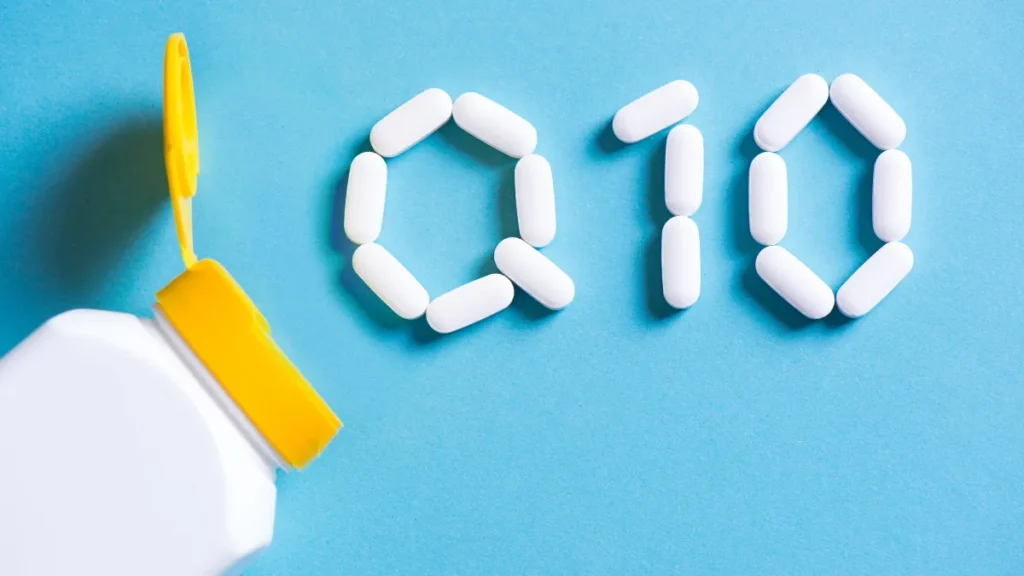
- CoQ10 (Coenzyme Q10) is a natural compound made by the body and found in small amounts in food. It plays a central role in energy production inside cells, particularly in the heart.
- Statin medications, widely prescribed to lower cholesterol, can reduce the body’s production of CoQ10. For people experiencing muscle aches or fatigue on statins, a supervised trial of CoQ10 is one option worth discussing with your doctor.
- The evidence is mixed. A small early trial reported less muscle pain in people taking CoQ10, but larger studies and pooled analyses since have not consistently found a benefit. CoQ10 may help some people; it will not help everyone.
- There is no good evidence that CoQ10 prevents heart attacks or strokes in the general population, and it is never a substitute for established heart medications.
- Ubiquinol, the active form of CoQ10, is marketed as better absorbed but costs more. The evidence for a meaningful difference is limited, so standard CoQ10 is a sensible default for most people. A time-limited trial of 6 to 8 weeks, rather than indefinite use, is a reasonable approach.
- CoQ10 has a mild blood-thinning effect and can interact with warfarin, DOACs, antiplatelet medications, blood pressure treatments, and diabetes treatments. This matters for the many cardiac patients already on a blood thinner, so always speak with your doctor before starting it.
Walk down the supplement aisle of almost any pharmacy and you will find CoQ10 on the shelf, often at a price that makes you pause. It is one of the more widely taken supplements, particularly among people on cholesterol-lowering statins, and unlike many of its neighbours on that shelf, it has a plausible biological rationale for one specific group of patients. A plausible mechanism, though, is not the same as proven benefit, and the gap between the two is exactly what this article covers.
If you are taking a statin medication and experiencing muscle aches or unusual fatigue, you may already have come across CoQ10 as a possible remedy. It is worth understanding what it is, what the evidence actually shows, and how to decide whether it makes sense for your situation.
What Is CoQ10 and What Does It Do?
Coenzyme Q10, or CoQ10 for short, is a fat-soluble compound produced naturally by the body and found in small amounts in certain foods, particularly fatty fish and organ meats. It plays a central role in producing ATP, the molecule that provides energy to cells. The heart, with its constant high energy demands, has one of the highest concentrations of CoQ10 of any organ in the body.
CoQ10 also acts as an antioxidant, helping protect cells from oxidative damage. This is the kind of cellular stress associated with ageing, inflammation, and chronic disease.
The body naturally produces less CoQ10 as we age, and certain medications, most notably statins, can further reduce production. This is the starting point for much of the interest in CoQ10 supplementation.
Where does ubiquinol fit in?
Ubiquinol is simply the active, reduced form of CoQ10. When you take a standard CoQ10 supplement (ubiquinone), your body converts it to ubiquinol before using it. Taking ubiquinol directly skips that conversion step, and it is often described as better absorbed, particularly in older adults. It is worth knowing that much of the evidence for this comes from the supplement industry, and independent researchers are more cautious about whether the difference matters in practice. The one clear trade-off is cost: ubiquinol supplements are typically more expensive.
| CoQ10 (Ubiquinone) | Ubiquinol | |
|---|---|---|
| What it is | The standard, oxidised form | The active, reduced form, ready to use immediately |
| Absorption | Well absorbed when taken with food; the body converts it to ubiquinol | Marketed as better absorbed, though independent evidence for a real-world difference is limited |
| Cost | More affordable | Typically two to three times more expensive |
| Who it may suit | Most people, and a sensible default if cost matters | Anyone who has tried standard CoQ10 without effect or prefers the active form |
| Evidence base | Most clinical trials have used this form | Growing evidence but fewer large trials to date |
For most people, standard CoQ10 (ubiquinone) is a perfectly reasonable and more cost-effective choice. Ubiquinol is often marketed as better absorbed, particularly in older adults, but the evidence for a meaningful real-world difference is limited, and much of it comes from the supplement industry itself. If cost is a consideration, standard CoQ10 is a sensible starting point. If you have tried it without effect, or you simply prefer the active form, ubiquinol is a reasonable alternative. If you are unsure, a quick conversation with your pharmacist or doctor is the best guide.
CoQ10 and Statins: The Connection That Matters Most
Statins are among the most widely prescribed medications in cardiovascular medicine, and with good reason. The evidence for their ability to reduce heart attack and stroke risk is robust and well established. However, muscle-related symptoms are one of the most commonly reported side effects, ranging from mild aching to more noticeable weakness or fatigue. These symptoms lead some patients to reduce their dose or stop their statin altogether, which carries real cardiovascular consequences.
The mechanism behind statin-related muscle symptoms is not fully understood. One contributing factor is that statins block the same biochemical pathway the body uses to produce CoQ10. Taking a statin gradually lowers CoQ10 levels, and lower CoQ10 in muscle cells may contribute to the aching and fatigue some patients experience.
Most statin-related muscle symptoms can be managed with dose adjustment, a change of statin, or a change in timing. There is almost always a path forward.
What does the evidence show?
A small clinical trial published in the American Journal of Cardiology in 2007 examined CoQ10 for statin-related muscle symptoms. Patients experiencing muscle pain on statins were randomly assigned to receive either CoQ10 (100mg per day) or vitamin E for 30 days. The group taking CoQ10 reported a reduction in muscle pain, which sounds encouraging on its own, but the result needs to be read in context. This was a small study run over only 30 days, and it compared CoQ10 against vitamin E rather than an inactive tablet, which is not a neutral comparison.
More importantly, larger studies since have been inconsistent, with several trials and pooled analyses finding no clear benefit of CoQ10 for statin muscle symptoms. Part of the difficulty is that these symptoms often settle with time, or improve on an inactive tablet alone, which can make any supplement look more effective than it truly is. One promising early trial is not the same as a proven treatment, and the honest position is that the evidence remains mixed.
The fair summary is this: CoQ10 might help some people with statin-related muscle symptoms, it will not help everyone, and it should not be expected to. What makes it a reasonable conversation with your doctor is not strong proof of benefit, but the combination of a plausible mechanism, a good safety record, and the alternative (stopping a statin) carrying real risk.
Never stop a statin without speaking to your doctor
Muscle aches and fatigue on statins are genuinely experienced by some patients and deserve to be taken seriously. However, stopping a statin without medical guidance can significantly increase cardiovascular risk, particularly for people who have already had a heart attack, stent, or bypass surgery.
If you believe your symptoms may be related to your statin, the right step is to raise it with your cardiologist or GP. Options include adjusting the dose, switching to a different statin, changing when you take it, or trialling CoQ10 alongside the current medication. For some people, a non-statin cholesterol medication such as ezetimibe may also be part of the conversation. Never stop a prescribed statin without discussing it with your doctor first.
CoQ10 in Heart Failure
There is a separate and reasonably well-developed body of evidence looking at CoQ10 in heart failure, a condition where the heart is not pumping as efficiently as it should. CoQ10 levels are often lower in people with heart failure, and studies have suggested that supplementation may modestly improve symptoms, including exercise capacity and leg swelling.
The Q-SYMBIO trial, one of the larger studies in this area, found improvements in symptoms and a reduction in major cardiovascular events in heart failure patients who took CoQ10 over two years compared to placebo. The result was encouraging, but the trial was relatively small by cardiology standards, and its findings have not been confirmed by a larger study. Heart failure guidelines do not currently recommend CoQ10 as part of standard treatment, and it is never a substitute for the established medications used in heart failure management.
If you have heart failure and are curious about CoQ10, this is very much a conversation to have with your cardiologist as part of a broader treatment discussion, rather than something to start independently.
CoQ10 and Blood Pressure
Some earlier studies suggested CoQ10 might lower blood pressure, but the overall evidence is mixed, and more recent, higher-quality reviews have found little or no meaningful effect. If CoQ10 has any influence on blood pressure, it is likely to be modest at best.
Blood pressure management requires a comprehensive approach involving lifestyle, diet, and, where appropriate, medication. CoQ10 is not a replacement for any of these.
Practical Considerations Before Starting CoQ10
CoQ10 supplements are widely available but can be expensive, particularly ubiquinol. Here are the six things worth knowing before you start.
Choose the right form
Standard CoQ10 suits most people and is the cheaper option. Ubiquinol is marketed as better absorbed, but independent evidence for a real difference is limited.
Take it with a meal
CoQ10 is fat-soluble and absorbs far better with food that contains some fat. Taking it with dinner is a practical habit.
Know the studied dose
For statin muscle symptoms, 100mg daily is the most studied dose. The right dose and duration for you is individual, so confirm it with your doctor.
Trial it, don’t drift
A 6 to 8 week trial shows whether it is helping. If symptoms have not improved, continuing indefinitely at significant cost may not be warranted.
Generally well tolerated
Mild digestive upset is the most commonly reported side effect. Serious adverse effects are uncommon at standard doses.
Check for interactions
CoQ10 has a mild blood-thinning effect and can interact with warfarin, DOACs, antiplatelet therapy, and blood pressure and diabetes medications. Check with your doctor or pharmacist first.
The interaction picture deserves particular mention, because it is where the “innocuous supplement” perception can be misleading. CoQ10 appears to have a mild blood-thinning effect of its own, and many cardiac patients are already on medication that thins the blood. The classic caution is with warfarin: CoQ10 has a chemical structure related to vitamin K and there have been reports of it reducing warfarin’s effect, though the evidence is limited.
Just as relevant today is the large number of patients taking a DOAC such as apixaban or rivaroxaban, or dual antiplatelet therapy (often shortened to DAPT) after a stent or heart attack. DAPT combines two blood-thinning medications, usually aspirin plus a second agent such as clopidogrel or ticagrelor. Adding a supplement with its own mild effect on bleeding to medication that is already reducing the blood’s ability to clot is not something to do casually. The added risk from CoQ10 is likely to be small, but “likely small” is not the same as “nothing,” and it is precisely the kind of judgement that should be made by the doctor who knows your full medication list, not decided at the pharmacy shelf.
The practical rule is simple. If you take warfarin, a DOAC, dual antiplatelet therapy (DAPT), or any other blood thinner, do not start CoQ10 without your cardiologist or doctor knowing.
Food Sources of CoQ10
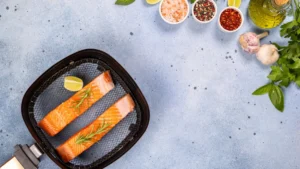
CoQ10 is found in food, though in amounts too small to rely on for a therapeutic effect. The best dietary sources are organ meats (heart, liver, kidney), fatty fish such as sardines and mackerel, beef, and peanuts. For most people, the dietary contribution to CoQ10 levels is modest, which is why supplementation is the practical route when there is a clinical reason to raise levels.
Heart Matters Resource
When in Doubt, Get Checked Out
If muscle aches, fatigue, or any new symptom is troubling you on a statin, do not stop the medication and hope for the best. A short appointment with your GP or cardiologist can sort out the cause and keep your heart protected.
Conclusion
It is worth stepping back to the bigger picture. For the vast majority of people, a balanced diet does far more for the heart than any single supplement, and it remains the best source of the vitamins, minerals, and other nutrients the body needs. The supplement aisle can give the impression that good health is something you buy in a bottle, but the evidence keeps pointing back to the same foundations: what you eat, staying active, not smoking, and taking the medications your doctor has actually prescribed.
CoQ10 sits within that context. It is not a cure, there is no good evidence it prevents heart attacks or strokes, and the evidence for its benefits overall is modest and mixed. For people experiencing muscle symptoms on statins it may be worth a properly supervised trial over 6 to 8 weeks, with the clear understanding that it helps some people and not others, and with the cost of ubiquinol in particular factored in. As with all supplement decisions, your doctor or cardiologist is the right starting point. They can assess whether CoQ10 is appropriate for your situation and help you weigh it against the other options available.
Related Reading
- Statins: What Patients Ask Me Most
- The Timing of Cholesterol-Lowering Medications: Does Nighttime Dosing Make a Difference?
- Omega-3, Fish Oil, and Your Heart: What the Evidence Actually Says
- Vitamins D3 and K2: What Do They Actually Do for Your Heart?
- Magnesium and Your Heart: Why This Mineral Deserves More Attention
- Understanding Your Cardiovascular Risk Factors