- HCM is the most common inherited heart condition, and the majority of people with it live completely normal, full lives.
- Many people are diagnosed incidentally, with no symptoms at all. The condition exists on a wide spectrum.
- The heart muscle is thickened, not weakened. This is an important distinction that shapes how the condition is managed.
- Mavacamten is a significant recent advance: the first medication targeting the underlying mechanism of obstructive HCM.
- Because HCM is inherited, first-degree relatives can be offered screening. This is an opportunity for early identification, not a cause for alarm.
- With proper monitoring and the right team, the outlook for most people with HCM is genuinely good.
If you have just been told you have hypertrophic cardiomyopathy, the first thing worth knowing is this: most people with HCM live completely normal lives.
That is not always what it feels like in the days after diagnosis. The words “thickened heart muscle”, “genetic condition”, and “arrhythmia risk” can sound alarming. Some patients come to clinic having spent a night searching online and arriving at the worst possible interpretation of what they found.
The reality is more reassuring than that. HCM is common, well understood, and the treatments available today (including some genuinely exciting recent advances) mean that the outlook for most people is excellent. Here is what it actually means.
What Is HCM?
The basics
Hypertrophic cardiomyopathy is a genetic condition in which the heart muscle grows thicker than normal. The key word here is thickened, not weakened. In most people with HCM, the heart pumps strongly. The issue is that the thickened muscle is stiffer, and in some people it can partially obstruct blood flow leaving the heart.
The thickening most often affects the wall between the two lower chambers, the interventricular septum. At a microscopic level, the muscle fibres are arranged in a disorganised pattern rather than the normal parallel alignment. This is what creates the small but real risk of abnormal heart rhythms that makes monitoring so important.
Who gets HCM?
HCM is the most common inherited heart condition, affecting roughly 1 in 500 people. Most people do not know they have it until it shows up on an ECG or echocardiogram, often during investigation of something entirely unrelated.
It follows an autosomal dominant inheritance pattern, meaning each child of an affected parent has a 50% chance of inheriting the gene mutation. This is why family screening matters, and why it is best approached as a protective measure rather than a source of anxiety.
People are estimated to have HCM, making it the most common inherited heart muscle condition.
European Society of Cardiology HCM Guidelines
Obstructive vs Non-Obstructive HCM
One of the first things your cardiologist will establish is whether your HCM is obstructive or non-obstructive, and the distinction matters for treatment.
| Type | What it means | How common |
|---|---|---|
| Obstructive HCM | Thickened muscle partially blocks blood flow out of the heart, worsens with exertion | Around two-thirds of patients |
| Non-obstructive HCM | No significant blockage. Management focuses on symptoms and arrhythmia monitoring | Around one-third of patients |
Obstructive HCM is more likely to cause symptoms and has more specific treatment options available, including a newer medication called mavacamten, discussed below.
What Does HCM Feel Like?
Many people feel nothing at all
A substantial proportion of people with HCM have no symptoms whatsoever. Their diagnosis is a finding to monitor and manage, not a condition that limits their daily life in any meaningful way.
When symptoms do occur
The most common symptoms are breathlessness during exertion, chest discomfort, palpitations, dizziness, and fatigue. These reflect the combination of the stiffer ventricle, the outflow obstruction during exercise, and a higher rate of arrhythmias, particularly atrial fibrillation.
Fainting or near-fainting during physical activity is a symptom that is generally treated as needing prompt evaluation. It does not automatically mean something serious is happening, but it is the kind of symptom that prompts a same-week appointment rather than waiting.
Symptoms do not reliably tell you how significant your HCM is. Some people with considerable thickening feel perfectly well. Others with modest changes have troublesome symptoms. This is exactly why regular monitoring matters, rather than waiting to see how you feel.
Professor Peter Barlis, Interventional Cardiologist
What Are the Risks?
Atrial fibrillation
AF is more common in people with HCM than in the general population. When it occurs, it carries a higher stroke risk than AF in an otherwise normal heart, which is why anticoagulation is usually recommended.
Ventricular arrhythmias
The disorganised muscle architecture in HCM can create electrical instability in the ventricles. In a small number of patients, particularly younger people and competitive athletes, this can trigger a dangerous arrhythmia. Identifying who is at higher risk, and protecting them with an ICD if needed, is one of the most important jobs of specialist HCM care.
This risk is real, but it is low in most patients, and it is something a specialist team actively assesses and monitors for.
Heart failure
A minority of patients develop heart failure over time, either from progressive stiffening of the ventricle or, rarely, a transition to a weakened, dilated heart. This is uncommon, but it is why long-term follow-up matters even when you feel well.
How HCM Is Assessed
The main investigations your cardiologist will use are straightforward and non-invasive for the most part.
Assessment Methods in HCM
Echocardiogram
Measures muscle thickness, identifies obstruction, and assesses mitral valve function. The cornerstone of HCM assessment.
Cardiac MRI
Provides detail on the pattern and extent of fibrosis (scarring), an important contributor to arrhythmia risk assessment.
Holter Monitor
Extended heart rhythm recording to detect arrhythmias that may not appear on a standard ECG.
Exercise Test
Evaluates symptoms and blood pressure response to exertion. An abnormal response is one of the risk markers assessed.
Genetic Testing
Identifies the causative mutation and allows family members to be tested directly, without needing full imaging first.
ECG
Often the first investigation to raise suspicion of HCM. Characteristically abnormal even when symptoms are absent.
Treatment Options
Medication
Beta-blockers are the usual first step. They slow the heart rate, reduce the force of contraction, and lessen outflow obstruction during exertion. Calcium channel blockers such as verapamil are an alternative for those who do not tolerate beta-blockers well.
For those with persistent obstruction and symptoms despite standard treatment, disopyramide, an older antiarrhythmic with useful properties in this setting, can be added.
Mavacamten: A Genuine Advance
The most exciting recent development in HCM treatment is mavacamten, the first medication designed to directly target the underlying mechanism of obstructive HCM. Rather than managing symptoms indirectly, it works by inhibiting cardiac myosin, the protein whose overactivity drives the obstruction in the first place.
Clinical trials have shown meaningful reductions in outflow gradient, better exercise capacity, and improved quality of life. It has now received regulatory approval in several countries for patients with symptomatic obstructive HCM who remain significantly limited despite conventional therapy.
Professor Peter Barlis explains HCM and the role of mavacamten in this short video:
Procedures
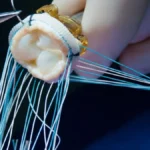
For patients with severe obstruction that does not respond to medication, two procedural options exist. Surgical septal myectomy, in which a portion of the thickened muscle is carefully removed, is the gold standard at experienced centres with an excellent long-term track record. Alcohol septal ablation is a catheter-based alternative that uses a small amount of alcohol to create controlled scarring in the obstructing muscle, suitable for selected patients who are not ideal surgical candidates.
ICD: Protecting Against Sudden Arrhythmia
For patients identified as being at elevated risk of ventricular arrhythmia, an implantable cardioverter-defibrillator (ICD) may be recommended. The device monitors heart rhythm continuously and delivers a life-saving shock if a dangerous arrhythmia is detected. We have a separate article on implantable cardiac devices if you want to read more.
Not everyone with HCM needs an ICD. The decision involves careful risk stratification that takes into account the degree of hypertrophy, arrhythmia findings on monitoring, family history, exercise blood pressure response, and the extent of fibrosis on cardiac MRI.
Exercise and Daily Life
The older advice to avoid all sport and strenuous exercise has been significantly refined. Most people with HCM can engage in moderate regular physical activity safely, and the physical and psychological benefits of exercise are real and worth protecting.
What is generally advised against is high-intensity competitive sport, particularly if you have significant obstruction, documented arrhythmia, or other risk features. The right level of activity for you specifically is a conversation worth having directly with your cardiologist.
Staying well hydrated matters. Dehydration worsens obstruction. Alcohol in significant amounts is also generally limited.
Family Screening
Because HCM is inherited, all first-degree relatives (parents, siblings, and children) are usually offered screening. This typically means an ECG and echocardiogram, and genetic testing where a mutation has been identified.
The way to frame this with families is as good news, not a threat. The majority of relatives will not be affected. Those who are will benefit enormously from knowing early, before any complications arise, rather than finding out the hard way.
- Do I have obstructive or non-obstructive HCM, and how significant is the gradient?
- What is my assessed risk of ventricular arrhythmia, and would an ICD be considered for me?
- What level of exercise and activity is safe for me specifically?
- Should my family members be screened, and has a genetic mutation been identified in my case?
- Am I a candidate for mavacamten, or for a procedure to reduce the obstruction?
Heart Matters Resource
When in Doubt, Get Checked Out
For people living with HCM, new or worsening symptoms such as chest discomfort, breathlessness, palpitations, or fainting are situations where prompt assessment is the usual clinical approach, rather than waiting for the next scheduled appointment.
Conclusion
A diagnosis of HCM can feel like a lot to take in. But the most important thing to hold onto is this: most people with HCM live full, active, normal lives, and the treatments available today are better than they have ever been.
The key is being under the care of a team experienced in HCM, making sure your family is appropriately screened, and having honest conversations about what your individual risk profile means for how you live and how you are monitored.
Knowledge is protective in this condition more than most. You are in a better position knowing than not knowing, and you now have enough understanding to ask the right questions at your next appointment.