- Cardiac monitoring devices range from 24-hour Holter monitors to implantable loop recorders that record for up to three years, chosen based on how frequently symptoms occur.
- The key question is simple: how often do your symptoms happen? The answer determines which device gives the best chance of capturing the rhythm at the moment symptoms occur.
- A normal standard ECG during a symptom-free period does not rule out an arrhythmia, it simply means the arrhythmia was not occurring at that moment.
- Modern implantable loop recorders are tiny, inserted under local anaesthetic in under 20 minutes, and transmit data automatically, most patients forget they are there.
- For patients who have had a stroke with no identified cause, extended monitoring is increasingly used to detect paroxysmal atrial fibrillation, which may be the underlying cause, over months to years.
One of the most frustrating experiences in cardiology, for patients and clinicians alike, is the normal ECG in someone who has been having significant palpitations, dizziness, or unexplained fainting.
The ECG is normal because the arrhythmia is not happening right now, in this clinic, during this 10-second recording. It was happening last Tuesday at 3pm when you were sitting at your desk. And it may happen again next week. But if we only ever look during the quiet moments, we will never find it.
The solution is prolonged monitoring, and the right device depends on one simple question: how often do your symptoms occur?
Matching the Device to the Symptom Frequency
Think of cardiac monitoring as a ladder. Each rung extends the monitoring window further, designed for progressively less frequent symptoms. The goal at every level is the same: capture the heart rhythm at the moment symptoms occur and establish whether an arrhythmia is responsible.
| Device | Duration | Best for | Invasive? |
|---|---|---|---|
| 24-hour Holter | 1 day | Daily or near-daily symptoms | No |
| 48–72 hour Holter | 2–3 days | Symptoms every few days | No |
| 7-day extended Holter | 7 days | Symptoms once or twice weekly | No |
| 30-day event monitor | Up to 30 days | Symptoms weekly or fortnightly | No |
| Implantable loop recorder (ILR) | Up to 3 years | Infrequent symptoms; unexplained fainting; cryptogenic stroke; suspected paroxysmal AF | Minor, local anaesthetic, 15–20 min |
The External Devices
Holter monitors, 24 hours to 7 days
The Holter monitor is the standard starting point, a compact recorder connected to adhesive chest electrodes that records every heartbeat continuously. It captures roughly 100,000 beats over 24 hours and is highly effective for frequent arrhythmias.
Modern patch-style monitors, adhesive devices worn directly on the skin with no external wires or box, have made extended Holter monitoring up to 7 days considerably more comfortable and practical than older multi-lead recorders. Most people adapt within an hour and forget they are wearing one.
We have a dedicated Holter article in this section covering what to expect in full detail.
30-day event monitor
For symptoms occurring weekly or fortnightly, a 30-day event monitor extends the capture window significantly. These devices either record continuously and store events automatically when the algorithm detects an arrhythmia, or are activated by the patient when symptoms occur, storing the surrounding rhythm data and transmitting it to the clinic via mobile network or app.
This is particularly useful for palpitations or near-fainting occurring less than weekly but too frequently for an implantable device to be necessary.
The Implantable Loop Recorder
What it is
For infrequent but potentially serious symptoms, particularly unexplained fainting, cryptogenic stroke, or suspected very infrequent atrial fibrillation, the implantable loop recorder (ILR) provides continuous coverage for up to three years.
The device is approximately 4cm long, roughly the size of a small USB stick, and is inserted just under the skin of the chest in a brief procedure under local anaesthetic. The incision is tiny. Most patients are home within an hour. Once healed, the device is invisible and unfelt.
How it works day to day
The ILR records continuously and automatically logs significant arrhythmic events, pauses, very slow rates, very fast rates, irregular rhythms, without the patient needing to do anything. Many modern devices transmit data wirelessly overnight to a secure server, alerting the clinical team to significant findings automatically.
The patient also has a handheld activator to trigger a manual recording when they experience symptoms, so both automatic detections and symptom-triggered recordings contribute to the diagnostic picture.
What to Expect, Implantable Loop Recorder (ILR)
Procedure duration
15–20 minutes. Day procedure, home the same day.
Preparation
Usually no fasting required. Local anaesthetic only, no general anaesthesia or sedation needed.
Comfort
The area is numbed before a small incision is made and the device inserted. Some tenderness at the site for a few days. The device is not felt once healed.
Ongoing monitoring
Records continuously for up to 3 years. Many ILRs transmit data wirelessly overnight, the clinical team is alerted automatically to significant rhythm events.
Activities
No restrictions on exercise, sport, or daily activity. MRI is generally compatible with modern ILRs, confirm with your device clinic before any scan.
Removal
Removed when the monitoring period is complete or a diagnosis is made, another brief local anaesthetic procedure.
When Is an ILR the Right Choice?
Unexplained fainting
Recurrent unexplained syncope is one of the most compelling indications for an ILR. When a patient faints repeatedly and extensive investigation, ECG, Holter, echo, tilt table testing, fails to identify a cause, the ILR provides continuous coverage of any subsequent episode.
A fainting spell that coincides with a prolonged pause, complete heart block, or ventricular arrhythmia on the ILR recording immediately changes management, often indicating a need for a pacemaker or ICD. Without the ILR, that diagnosis may never be made.
Cryptogenic stroke, finding the hidden AF
A stroke with no identified cause despite thorough investigation, called a cryptogenic stroke, occurs in up to a third of all stroke patients. In many of these, paroxysmal atrial fibrillation occurring silently and intermittently is the underlying cause. Clots form in the left atrium during AF episodes and travel to the brain.
Paroxysmal AF may occur so infrequently that short-term Holter monitoring fails to capture it. Long-term ILR monitoring has been shown to detect AF in a significant proportion of cryptogenic stroke patients over one to three years of follow-up, a detection that changes management to anticoagulation and substantially reduces the risk of a second stroke.
The ILR has genuinely changed the investigation of unexplained fainting and cryptogenic stroke. Patients who spent years without a diagnosis, sometimes written off as having neurological or psychological symptoms, are now receiving diagnoses and the treatments that go with them. That is a meaningful advance for a group of patients who were previously left without answers.
Your Smartphone as a Monitoring Tool
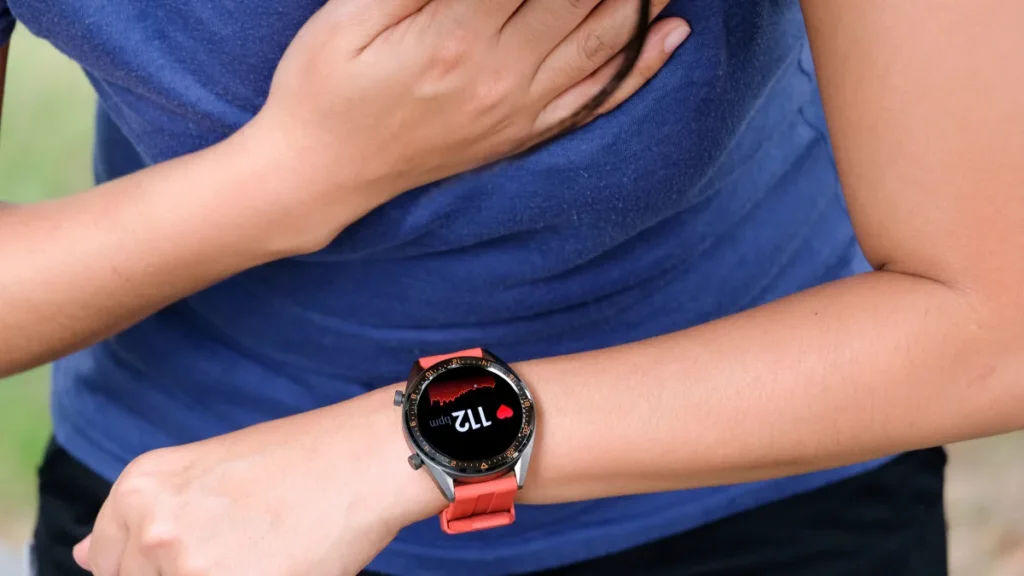
It is worth noting that consumer devices, particularly smartwatches with ECG capability such as the Apple Watch, can play a useful supplementary role in cardiac rhythm monitoring. A single-lead ECG recorded during a symptomatic episode, while not equivalent to a formal Holter or medical-grade recording, can provide supporting evidence of an arrhythmia that helps guide further investigation.
If you experience palpitations and have access to a smartwatch with ECG functionality, recording during an episode and sharing it with your cardiologist is worthwhile, even if it does not replace formal monitoring.
- My symptoms happen about once a week, is a 24-hour Holter long enough, or should I have extended monitoring?
- I’ve had a Holter and it was normal, does that mean my palpitations are definitely not cardiac?
- What is an implantable loop recorder and would I be a candidate for one?
- I had a stroke with no identified cause, should I be having long-term cardiac monitoring?
- Can I use my smartwatch ECG as supporting evidence alongside formal monitoring?
Heart Matters Resource
When in Doubt, Get Checked Out
Unexplained fainting, particularly recurrent, should always be investigated thoroughly. If short-term monitoring has not provided an answer, extended monitoring options are available and may provide the diagnosis that changes everything.
Conclusion
A normal ECG during a symptom-free period does not mean nothing is wrong, it means the arrhythmia was not present at that moment. The right monitoring device gives it a fair chance to reveal itself, matched to how often your symptoms actually occur.
From a 24-hour Holter to a three-year implantable recorder, the tools available today mean that most arrhythmias can eventually be captured, and that patients who have spent years without a diagnosis no longer need to remain without one.
If you feel your monitoring has not yet matched the frequency of your symptoms, that is a conversation worth having with your cardiologist.