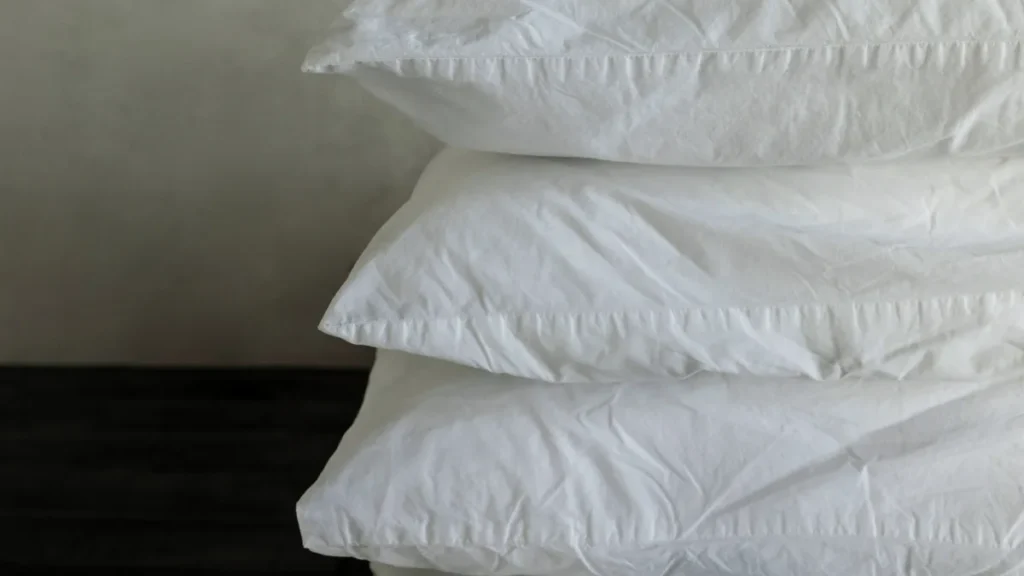
- Breathlessness when lying flat, which doctors call orthopnoea, is a specific cardiac symptom rather than a comfort preference or a normal part of getting older.
- The usual mechanism is fluid. Lying down moves fluid from the legs back into the central circulation, raising pressure in the lungs. Sitting up relieves it, which is why people reach for extra pillows.
- The number of pillows someone needs is a genuinely useful clinical measure, and a rise from one to two to three over months tells a story about what is happening inside the heart.
- Waking suddenly from sleep gasping for air, known as paroxysmal nocturnal dyspnoea, is a more severe form of the same problem and warrants prompt assessment rather than waiting.
- Heart failure is the most common cause, but valve problems, lung conditions and sleep apnoea can produce similar patterns, and telling them apart is straightforward with the right tests.
Most people do not notice it happening. One pillow becomes two. Two becomes three. At some point lying completely flat starts to feel uncomfortable, then slightly breathless, then not worth attempting. It gets filed away as a sleeping preference, or a bad back, or simply getting older.
In cardiology it is none of those things. How many pillows a person sleeps on is one of the first questions I ask when assessing someone for heart failure, and the answer often tells me more than the examination that follows.
The medical term is orthopnoea. What it describes is breathlessness that comes on, or gets worse, when lying flat, and that eases on sitting up.
Why You Might Need More Pillows Than You Used To
When you are upright, gravity holds a certain amount of fluid in your legs and lower body. Less blood returns to the heart at any given moment, and the pressure inside the heart and lungs stays manageable.
Lying down removes that effect. Fluid that was pooled in the legs shifts back into the central circulation within minutes. More blood arrives at the heart, pressure rises, and if the heart is already struggling to keep up, that pressure pushes fluid into the lung tissue.
The lungs become stiffer and less efficient at moving oxygen, and the result is breathlessness. Sitting up reverses it, which is why the relief is often immediate and why people work out the pillow solution long before anyone puts a name to the problem.
A healthy heart handles this shift without difficulty. It is only when the heart is under strain that lying flat tips things from manageable into symptomatic.
What the Number of Pillows Tells a Cardiologist
One pillow is normal. Two may mean nothing at all, or may be the beginning of something. Three or more, or being unable to lie flat, generally means pressures inside the heart are meaningfully raised.
Cardiologists write “three-pillow orthopnoea” in notes precisely because it is a useful shorthand. It sounds unglamorous, but the trajectory is what matters. Someone who used one pillow last year and needs three now has a story that a single measurement cannot capture.
Needing three or more pillows to sleep, or being unable to lie flat at all, is a recognised clinical finding that generally prompts cardiac assessment.
A change over time matters more than any single number
It is worth asking yourself the question directly, because the change happens slowly enough to be invisible. How many pillows did you sleep on a year ago? Have you stopped lying flat entirely? Do you sleep in a chair some nights?
Waking Up Suddenly Short of Breath
There is a more dramatic version of the same problem, and it has a distinct pattern worth recognising.
A person falls asleep normally, then wakes an hour or two later acutely breathless, often with a sense of suffocation or panic. They sit bolt upright, sometimes get out of bed, sometimes go to an open window. Over fifteen to thirty minutes of sitting up, the breathlessness settles.
Doctors call this paroxysmal nocturnal dyspnoea, usually shortened to PND. It happens because fluid has been redistributing gradually during sleep, and at a certain point the pressure crosses a threshold.
It is a more significant finding than gradual orthopnoea and generally means treatment needs reviewing. Anyone experiencing it would reasonably seek assessment promptly rather than waiting to mention it at a routine appointment.
When the pillow count has quietly climbed from one to three, things have usually been worsening for a while, even when the person felt they were managing.
Prof. Peter Barlis, Interventional Cardiologist
What Causes It
Heart failure is the most common explanation, and it applies to both main types: the kind where the heart pumps weakly, and the kind where it pumps normally but has become stiff and fills poorly. Both raise the filling pressures that lying flat then worsens.
Valve problems can do the same. A narrowed or leaking mitral valve raises pressure in the left side of the heart and back into the lungs by exactly the same mechanism. Orthopnoea appearing in someone with known valve disease often signals that the valve has become significant enough to need attention.
Fluid around the lungs, either from heart failure itself or another cause, produces positional breathlessness for mechanical reasons.
Lung conditions and sleep apnoea can produce overlapping symptoms. Obstructive sleep apnoea in particular causes night-time breathing disturbance that can be mistaken for a cardiac cause, and the two frequently coexist.
Carrying significant excess weight restricts the chest mechanically when lying down. This is a real cause, though cardiac explanations are usually looked for first because they are more consequential if missed.
What Usually Accompanies It
Orthopnoea rarely arrives alone, and the other symptoms help make sense of it.
Swollen ankles that are worse by evening and better by morning follow the same fluid physiology in reverse. Weight that climbs by a kilo or two over a few days is fluid rather than fat, and is one of the earliest warning signs. Tiredness out of proportion to activity is common, and so is breathlessness on ordinary exertion such as stairs.
Any of these alongside the pillow problem strengthens the case for a cardiac cause considerably.
How It Is Investigated
A BNP or NT-proBNP blood test is usually the starting point. It measures a substance the heart releases when its walls are stretched by raised pressure, and it is reliably elevated when the cause is cardiac. A normal result in someone with these symptoms points fairly strongly elsewhere.
An echocardiogram is the key imaging test. It shows how well the heart is pumping, how stiff it is, whether the valves are working, and gives an estimate of the pressures inside.
A chest X-ray can show fluid in or around the lungs. Where sleep apnoea is suspected, a sleep study may be arranged alongside rather than instead of the cardiac tests.
How It Is Treated
Orthopnoea is a symptom, so treatment means addressing whatever is causing it.
Where fluid overload is the problem, diuretics relieve congestion relatively quickly, and many people notice they can lie flatter within days of a dose being adjusted. It is one of the more satisfying responses in cardiology, because the improvement is obvious to the person experiencing it.
Longer term, the combination of medicines used in heart failure works on the underlying problem rather than the fluid alone, and improves both symptoms and outcomes over months and years.
Where a valve is responsible, the presence of symptoms such as orthopnoea is one of the factors that shifts the balance towards repair or replacement, since valve intervention is often timed by symptoms rather than by measurements alone.
What Is Worth Raising
The most useful thing to bring to an appointment is the trajectory rather than today’s state. How many pillows a year ago, how many now, and whether the change has been gradual or recent.
Whether you have woken from sleep breathless, and how often, is worth stating plainly because it changes the urgency. So is any ankle swelling, any recent weight gain over days rather than weeks, and whether ordinary activity has become harder.
Where a diagnosis is already established, whether the current diuretic dose still matches the symptoms is a reasonable question, as is what change should prompt a call to the heart failure team rather than waiting for the next review.
Conclusion
Needing extra pillows is one of those changes that arrives so gradually it never gets questioned. It is not a preference, not a normal feature of ageing, and not something to work around with more cushions.
What it usually reflects is fluid that the heart is no longer clearing as easily as it once did, and that is a problem with a name, a set of tests, and treatment that works. The gap between noticing the pillows and mentioning them to a doctor is often months, and it does not need to be.
Related Reading
- Shortness of Breath and the Heart: When Breathlessness Is a Cardiac Signal
- Demystifying Heart Failure: HFrEF, HFpEF and HFimpEF
- Swollen Legs and the Heart: What the Swelling Is Telling You
- What Is a BNP Test? Understanding This Key Heart Failure Marker
- Cardiac Fatigue: When Tiredness Is More Than Being Tired
- Obstructive Sleep Apnoea and the Heart
- The Echocardiogram: What It Shows and Why It Matters