- Blood pressure is one of the most important numbers in heart health, and one of the easiest to monitor at home.
- High blood pressure usually has no symptoms, so regular monitoring is the only reliable way to know where you stand.
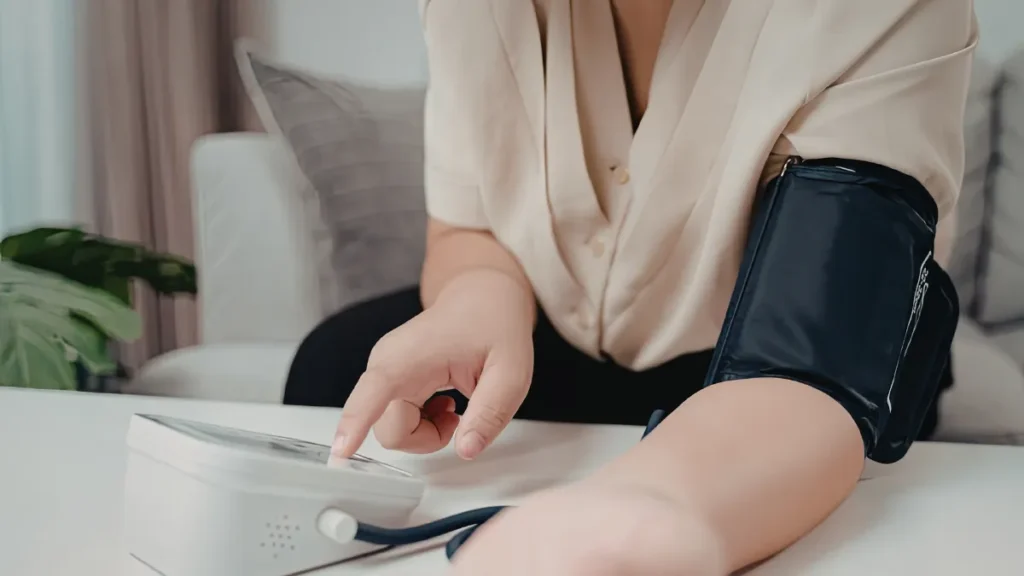
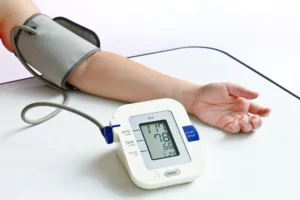
- A digital upper arm monitor is the most accurate and practical choice for home use.
- Technique matters as much as the number. Sitting quietly, positioning the cuff correctly, and taking multiple readings all improve accuracy.
- A log of home readings gives your doctor a far more useful picture than a single measurement taken in the clinic.
Blood pressure is one of those numbers most of us know we should keep an eye on, but far fewer of us actually do. It is easy to understand why. High blood pressure rarely makes itself known through symptoms. You cannot feel it rising, and you cannot tell from how you feel whether it is well controlled.
That is precisely why monitoring matters. Whether you have been diagnosed with high blood pressure, are managing your cardiovascular risk factors, or are simply curious, knowing how to measure your blood pressure correctly is one of the most empowering things you can do for your heart.
What Is Blood Pressure?
Blood pressure is the force your blood exerts against the walls of your arteries as your heart pumps. Every reading gives you two numbers, written as one over the other.
| Number | What it measures |
|---|---|
| Systolic (top number) | The pressure in your arteries when your heart beats and pumps blood out |
| Diastolic (bottom number) | The pressure in your arteries when your heart is resting between beats |
Both numbers matter. A reading of 120/80 mmHg is read as “120 over 80”, and both figures tell your doctor how hard your heart and arteries are working. If any of these terms are new to you, our Heart Glossary explains systolic, diastolic, hypertension, and mmHg in plain language.
If you prefer to see it explained visually, this short video is an excellent starting point.
Understanding Your Blood Pressure Reading
Blood pressure is measured in millimetres of mercury (mmHg) and falls into categories that help guide whether any action is needed. These categories are a useful reference, but always interpret your numbers in conversation with your doctor, who will consider your full health picture.
| Category | Systolic | Diastolic |
|---|---|---|
| Normal | Less than 120 | Less than 80 |
| Elevated | 120–129 | Less than 80 |
| Hypertension Stage 1 | 130–139 | 80–89 |
| Hypertension Stage 2 | 140 or higher | 90 or higher |
| Hypertensive Crisis | Over 180 | Over 120 |
One useful detail for home monitoring: readings taken at home tend to run slightly lower than readings taken in a clinic. A home average of 135/85 mmHg or higher is generally considered raised (roughly equivalent to 140/90 measured at the doctor’s office). Your doctor can confirm the target that applies to you.
A reading above 180/120 needs attention. Rest quietly for a few minutes and measure again. If it remains that high, contact your doctor promptly. If it comes with symptoms such as chest pain, severe headache, breathlessness, weakness, or changes in vision, call Triple Zero (000) without delay.
Choosing a Blood Pressure Monitor
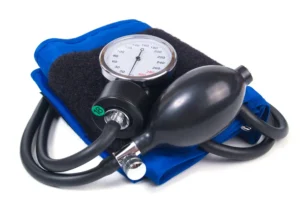
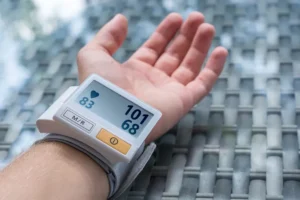
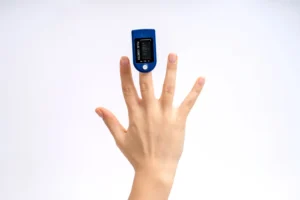
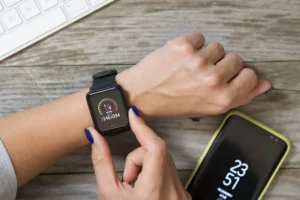
The best monitor is the one you will actually use, and that fits your budget and daily routine. If purchasing a device is not practical, regular checks with your GP or practice nurse are an excellent alternative. Here is a guide to the main types available.
How to Measure Your Blood Pressure Correctly
How you take the reading matters as much as the reading itself. Small errors in technique can shift a result by 10–15 mmHg, which is enough to change how it is interpreted. Follow these steps every time.
Step by Step
1. Prepare
Sit quietly for at least 5 minutes. Avoid caffeine, exercise, and smoking for 30 minutes beforehand.
2. Position
Sit with your back supported, feet flat on the floor, and your arm resting on a surface at heart level.
3. Apply the cuff
Place the cuff on your bare upper arm, just above the elbow. It should be snug but not tight. You should be able to slide two fingers underneath.
4. Measure
Press start and stay still and silent. Talking or moving during the measurement can raise the result.
5. Repeat
Take two or three readings, one minute apart. Record all of them and use the average.
6. Record
Note the date, time, and readings. Measuring at the same time each day gives the most consistent picture. Our monitoring chart makes this easy.
The patients who manage their blood pressure best measure it regularly at home and bring the log to appointments. A pattern over weeks tells us far more than a single clinic reading.
Tips for Accurate Readings
Blood pressure often differs slightly between your two arms. When you first start monitoring, take readings on both. If one arm is consistently higher, your doctor will usually suggest using that arm from then on. Whichever arm you settle on, use the same one every time, because consistency matters more than the choice itself.
A small difference between arms is normal. A consistent difference of more than 10 to 15 mmHg in the top (systolic) number is worth mentioning to your doctor. It can occasionally be a sign of narrowing in the artery that supplies one arm, and it is a simple thing to check at a routine appointment.
Make sure the cuff is the right size for your arm. Most monitors come with a standard adult cuff, but larger and smaller cuffs are available, and a poorly fitting cuff is one of the most common causes of misleading readings. If you get an unexpectedly high or low result, rest for a few minutes and repeat rather than acting on a single number.
White coat hypertension, where blood pressure rises in a clinical setting due to anxiety, is surprisingly common. Home monitoring over several days gives a far more representative picture of your true blood pressure than a one-off reading at the GP. And remember that daily habits move the numbers too: regular movement (even modest step counts help), a Mediterranean style of eating, and other simple changes can lower blood pressure naturally.
Heart Matters Resource
Our blood pressure monitoring chart lets you record your readings over time and bring a clear, organised log to your next appointment. It is one of the most useful things you can share with your doctor. You will find it in Your Heart Toolkit.
Questions to Ask Your Doctor or Nurse
If you are monitoring your blood pressure at home, here are some questions worth raising at your next appointment.
- What target blood pressure should I be aiming for, given my age and other health conditions?
- I have been measuring at home and here are my readings. Does this change anything about my management?
- Should I be measuring at a specific time of day, and does it matter which arm I use?
- My readings are consistently different between my two arms. Is that something you should look into?
- My readings vary quite a bit. Is that normal, and at what point should I be concerned?
- Are there lifestyle changes that would make a meaningful difference to my blood pressure at this stage?
Conclusion
Monitoring your blood pressure at home is one of the simplest and most effective things you can do for your long-term heart health. It costs very little, takes only a few minutes, and gives you and your doctor genuinely useful information that a single clinic reading cannot provide.
The numbers themselves are only part of the picture. What matters is the pattern over time, and what that pattern tells your healthcare team about how best to support you. If you are unsure about your readings, or you see numbers that concern you, reach out to your GP or practice nurse. That is exactly what they are there for.
Related Reading
- High Blood Pressure: Why Monitoring Matters and What Your Numbers Mean
- How to Lower Blood Pressure Naturally
- A Twice-Yearly Injection for High Blood Pressure: What the Research Shows
- Understanding Your Cardiovascular Risk Factors
- The Mediterranean Diet and Your Heart
- Morning Headaches and Your Heart: The Sleep Apnoea Connection