Key Points
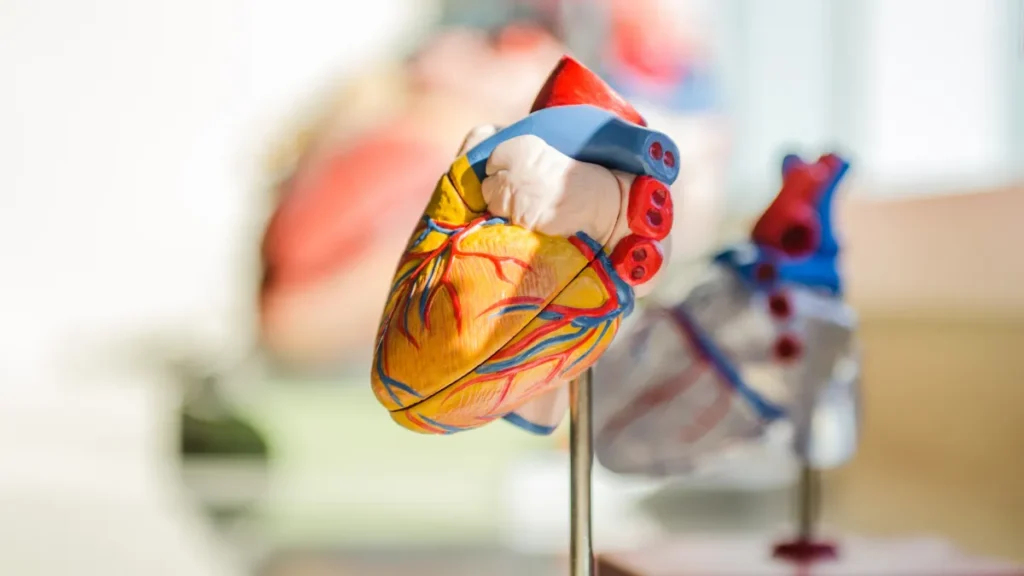
- The heart is a muscular pump about the size of a fist, beating around 100,000 times every day to keep blood moving through the body.
- It has four chambers, two upper chambers called atria and two lower chambers called ventricles, that work together in a precise sequence.
- Four valves act as one-way doors, ensuring blood always flows in the right direction and never backwards.
- The heart has its own electrical system, a natural pacemaker that generates the signal triggering every heartbeat.
- Understanding how your heart works makes it much easier to understand what happens when something goes wrong, and why the treatments we offer make sense.
One of the things I find most rewarding as a cardiologist is taking a few minutes with a patient to explain how their heart actually works. Something shifts in that conversation, the anxiety that comes from not understanding what is happening inside your chest starts to ease, and in its place comes something more useful: a sense of clarity and control.
The heart is extraordinary. It beats without pause from before you are born until the last moment of your life, adapting constantly to everything you do, sleeping, walking, running, feeling stressed, feeling calm. Understanding even the basics of how it does this changes how you relate to your own cardiovascular health.
The four chambers
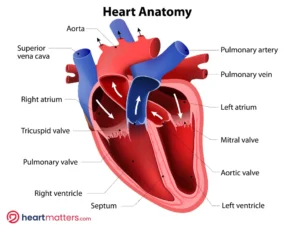
Think of the heart as two pumps working side by side, each with an upper and lower chamber. The upper chambers are called atria, they receive blood arriving at the heart. The lower chambers are called ventricles, they do the heavy lifting, pumping blood out to where it needs to go.
| Chamber | What it does |
|---|---|
| Right atrium | Receives used, oxygen-depleted blood returning from the body |
| Right ventricle | Pumps that blood to the lungs to collect fresh oxygen |
| Left atrium | Receives the freshly oxygenated blood returning from the lungs |
| Left ventricle | Pumps that oxygenated blood out to the rest of the body, the most powerful chamber |
The right side of the heart handles the pulmonary circulation, the journey to and from the lungs. The left side handles the systemic circulation, the journey to every organ and tissue in the body. Both circuits run simultaneously, every heartbeat, in perfect coordination.
The four valves
Blood needs to move in one direction only, any backflow would undermine the whole system. The heart solves this with four valves, each acting as a one-way door that opens to let blood through and snaps shut to prevent it flowing back.
The tricuspid valve sits between the right atrium and right ventricle. The pulmonary valve sits at the exit of the right ventricle, leading to the lungs. On the left side, the mitral valve sits between the left atrium and left ventricle, this is the valve involved in mitral valve prolapse and mitral regurgitation, conditions you may have heard of. The aortic valve sits at the exit of the left ventricle, guarding the entry to the aorta, the body’s main artery.
When valves become stiff and fail to open properly, we call that stenosis. When they fail to close completely and allow leakage, we call that regurgitation. Both can cause the heart to work harder than it should, which is why valve conditions are taken seriously and monitored carefully over time.
The heart’s electrical system
A pump needs a trigger. The heart’s trigger is electrical, a tiny signal generated by a cluster of specialised cells in the right atrium called the sinoatrial node, or SA node. This is the heart’s natural pacemaker, and it fires around 60 to 100 times per minute at rest, faster during exercise or stress, slower during sleep.
Each electrical impulse travels through the atria, causing them to contract and squeeze blood downward into the ventricles. It then passes through a relay station called the atrioventricular node, the AV node, which introduces a tiny, deliberate delay. This pause allows the ventricles to fill completely before they contract. From there, the signal travels rapidly down specialised pathways, the bundle of His and the Purkinje fibres, causing both ventricles to contract simultaneously and pump blood out to the lungs and body.
The entire sequence, from the SA node firing to the ventricles contracting, takes less than a second. And it happens without you thinking about it, every moment of your life.
When we record an ECG, an electrocardiogram, we are capturing this electrical activity on paper or screen. Each wave on the ECG trace corresponds to a different part of the electrical sequence. The P wave reflects the atria firing; the QRS complex reflects the ventricles contracting; the T wave reflects the ventricles recovering. A trained cardiologist can read a great deal about the heart’s health from these waveforms.
The cardiac muscle
The heart wall is made of a specialised type of muscle, cardiac muscle, that is found nowhere else in the body. Unlike skeletal muscle, which you control consciously, cardiac muscle contracts automatically and rhythmically, driven by the electrical system. Unlike smooth muscle found in your gut and blood vessels, cardiac muscle is extraordinarily fatigue-resistant, it has to be, given that it never gets to rest.
The heart wall has three layers. The outermost is the pericardium, a protective sac surrounding the heart. The middle and thickest layer is the myocardium, the cardiac muscle itself, which does the work of pumping. The innermost layer is the endocardium, a smooth lining that helps blood move cleanly through the chambers. When these layers become inflamed, myocarditis, pericarditis, endocarditis, it is often because of infection, and each presents its own clinical picture that requires careful assessment.
The heart valves, a closer look
Because valve problems are so common in cardiology, and because many patients are told they have a valve abnormality, it is worth spending a moment on how they actually work.
Each heartbeat involves two phases. During systole, contraction, the ventricles squeeze and the aortic and pulmonary valves open, pushing blood out. The mitral and tricuspid valves are closed, preventing backflow into the atria. During diastole, relaxation, the ventricles fill with blood from the atria. Now the aortic and pulmonary valves close, and the mitral and tricuspid valves open. The alternating open-and-close of these four valves is what produces the heartbeat sound your doctor hears through a stethoscope, the familiar lub-dub.
When I explain the lub-dub to a patient and they finally understand what those two sounds represent, the valves closing in sequence, something clicks. The heart stops being a mysterious black box and starts being something they can picture and understand.
Questions to Ask Your Cardiologist
If you are seeing a cardiologist for the first time, or have been told there is something worth monitoring, these questions can help you get the most from your appointment:
Questions worth asking
- Which part of my heart is affected, is it the muscle, the valves, the electrical system, or the arteries?
- When you listen to my heart with a stethoscope, what exactly are you listening for?
- What does my ECG show, and what do the different waves on the trace mean in my case?
- If I have a valve abnormality, how often does it need monitoring and what would prompt a change in management?
- Are there lifestyle changes that would specifically help protect the part of my heart that is under stress?
Conclusion
The heart is one of the most elegant structures in biology, a self-regulating, self-repairing pump that adapts in real time to every demand you place on it. Understanding its basic anatomy does not require a medical degree. It requires a clear explanation and a willingness to engage, and it pays dividends in every subsequent conversation you have with your health team.
When you know that your mitral valve sits between the left atrium and ventricle, you understand why a leaky mitral valve makes the left side of the heart work harder. When you know that the SA node is the heart’s natural pacemaker, you understand why a pacemaker is implanted when it fails. Knowledge like this turns a frightening diagnosis into something you can participate in managing.
For a deeper exploration of cardiac anatomy with diagrams and animations, visit our dedicated Understanding Your Heart page, it is one of the most comprehensive patient-facing resources we have built.
Free Resources
Our Heart Glossary explains terms like atrium, ventricle, SA node, AV node, systole, diastole, and pericardium in plain language.