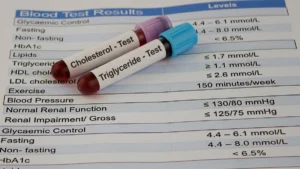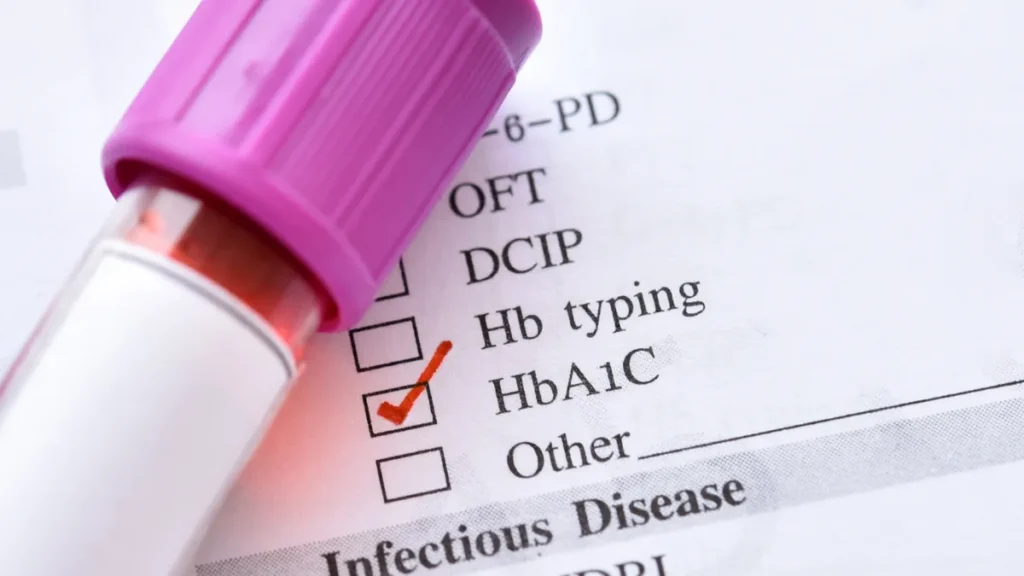
- HbA1c measures your average blood glucose level over the preceding 2–3 months, giving a far more complete picture of blood sugar control than a single glucose reading.
- No fasting required, unlike many other blood tests, HbA1c is not affected by what you ate the day before.
- An HbA1c of 6.5% or above indicates diabetes. Between 5.7% and 6.4% indicates prediabetes, a stage where lifestyle changes can genuinely prevent or delay diabetes developing.
- Diabetes significantly amplifies cardiovascular risk. Detecting and managing elevated blood sugar is a critical part of heart health, not just diabetes management.
- HbA1c is increasingly ordered by cardiologists as part of cardiovascular risk assessment, even when diabetes is not a suspected diagnosis.
You may have had an HbA1c test ordered by your cardiologist and wondered why a blood sugar test appeared in the middle of a cardiac workup. The answer is straightforward: diabetes and prediabetes are among the most significant modifiable cardiovascular risk factors, and HbA1c is one of the most reliable ways to detect them.
Understanding what the test measures, what your result means, and why blood sugar control matters so directly for heart health puts you in a much stronger position to act on the findings.
What Does HbA1c Actually Measure?
Glycated haemoglobin, the long-term picture
Haemoglobin is the protein in red blood cells that carries oxygen. Glucose in the bloodstream spontaneously attaches to haemoglobin, a process called glycation, in proportion to the average blood glucose concentration over time. Since red blood cells live for approximately three months before being broken down and replaced, the percentage of haemoglobin that is glycated reflects the average glucose level across that entire period.
This is what makes HbA1c more useful than a single fasting or random glucose measurement. A fasting glucose tells you the level right now. HbA1c tells you what it has averaged over the past two to three months. One generous meal the evening before the test does not affect it.
Why no fasting is needed
Because HbA1c measures a long-term average rather than a snapshot, there is no need to fast beforehand. It can be taken at any time of day from a standard blood draw, one of the practical advantages that makes it useful as part of a broader blood panel.
Understanding Your Result
| HbA1c level | Category | What it means |
|---|---|---|
| Below 5.7% (39 mmol/mol) | Normal | Blood sugar in a healthy range |
| 5.7–6.4% (39–47 mmol/mol) | Prediabetes | Elevated risk of progressing to type 2 diabetes, lifestyle intervention strongly recommended |
| 6.5% and above (48 mmol/mol+) | Diabetes | Diagnostic of diabetes, requires medical assessment and ongoing management |
For people already diagnosed with diabetes, HbA1c targets are personalised, a younger, otherwise healthy individual may have a lower target than an older person with multiple conditions where very tight glucose control carries more risk than benefit. These targets are always set in discussion with the treating team.
What to Expect, HbA1c Blood Test
Duration
A standard blood draw, 5 minutes from start to finish.
Preparation
No fasting required. Can be taken at any time of day. Recent meals do not affect the result.
Comfort
Standard venous blood draw. Brief and routine, often combined with other blood tests in the same sample.
How often
Without diabetes: typically every 1–3 years as part of cardiovascular risk review. With diabetes: every 3–6 months depending on stability and treatment.
Radiation / Contrast
None whatsoever.
Results
Available within a few days. Discussed by your cardiologist, GP, or endocrinologist in the context of your full risk profile.
Why This Matters for Your Heart
Diabetes is fundamentally a vascular disease
Diabetes is not a condition of blood sugar alone. Chronically elevated glucose damages the inner lining of blood vessels, accelerates atherosclerosis, promotes inflammation, and impairs clotting. People with diabetes are at substantially higher risk of coronary artery disease, heart failure, atrial fibrillation, and stroke.
Women with diabetes face a disproportionately greater relative cardiovascular risk than men, this sex-specific risk amplification is an important clinical consideration that is often underappreciated.
Risk starts in the prediabetes range
Cardiovascular risk begins to rise before the threshold for a formal diabetes diagnosis is crossed, it starts in the prediabetes range. This is one of the most important reasons to identify elevated HbA1c early.
Weight loss, dietary improvement, and increased physical activity can prevent or substantially delay the progression from prediabetes to diabetes, and reduce cardiovascular risk in the process. That window of opportunity is genuinely worth acting on.
Why cardiologists order it
From a cardiologist’s perspective, HbA1c is part of the standard metabolic workup in patients presenting with coronary artery disease, heart failure, or new atrial fibrillation. Undetected diabetes is not uncommon in these presentations.
The SGLT2 inhibitors, originally developed as glucose-lowering medications, have now demonstrated substantial cardiovascular benefits including reduction of heart failure hospitalisation and cardiovascular death, independent of diabetes status. Understanding a patient’s glycaemic profile is therefore important even in primarily cardiac management contexts.
I order HbA1c routinely in cardiac workups, not because I am looking for diabetes specifically, but because blood sugar control directly affects the heart. Finding prediabetes in someone who didn’t know they had it is one of the most actionable findings in cardiovascular medicine.
— Prof. Peter Barlis, Interventional Cardiologist
- My HbA1c is in the prediabetes range, what lifestyle changes would make the most difference?
- How often should I have this test repeated given my cardiovascular risk profile?
- Does my HbA1c level change my cardiologist’s approach to my medications or targets?
- Should I be seeing an endocrinologist or diabetes educator alongside my cardiologist?
- What is my personalised HbA1c target if I have already been diagnosed with diabetes?
Free Download, Heart Matters
Our Heart Health Risk Factor Checklist covers 12 cardiovascular risk categories, including diabetes and blood sugar, with a traffic light self-assessment and space for your results and questions to raise at your next appointment.
Heart Matters Resource
When in Doubt, Get Checked Out
If you have cardiovascular risk factors but have never had an HbA1c test, it is a simple addition to any routine blood workup. Identifying prediabetes or undiagnosed diabetes early changes the trajectory of cardiovascular risk management significantly.
Conclusion
HbA1c is a simple, fasting-free blood test that provides a three-month window into your blood sugar control, and through that window, a meaningful view of one of the most important drivers of cardiovascular risk.
If your result is in the prediabetes range, that is information worth acting on, not just for diabetes prevention, but for heart protection. The lifestyle changes that prevent prediabetes progressing to diabetes are the same ones that reduce cardiovascular risk across the board.
If you have never had this test as part of your cardiovascular assessment, it is worth asking for it at your next appointment.