- Second-degree AV block is an ECG finding. It means most electrical signals reach the lower chambers of the heart normally, but every so often one does not, and a beat is missed.
- Many people have no symptoms at all and only learn about it because an ECG was done for another reason. Where symptoms do occur, tiredness, light-headedness, breathlessness on exertion and fainting are the usual ones.
- There is more than one pattern, and they are not managed in the same way. Working out which pattern is present, and what it means for you, is a job for your cardiologist rather than something the label alone can settle.
- Some causes are entirely benign, including being very fit, being asleep, and taking common heart medications.
- Management ranges from doing nothing beyond keeping an eye on it, through adjusting medication, to a pacemaker where the pattern warrants it.
Second-degree AV block is one of those phrases that appears on a report and stops you in your tracks. The word block suggests something obstructed, and a second degree of it implies there is a first and a third, which invites the immediate question of how bad this one is.
It is worth knowing what the finding describes, what it might explain about how you have been feeling, and what usually happens next. It is also worth saying early that the answer depends a good deal on the detail, and that the detail is something your own cardiologist is best placed to work through with you.
What the Finding Describes
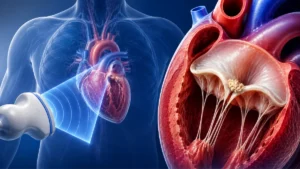
Every heartbeat starts in the upper chambers of the heart and travels down through a junction called the atrioventricular node to the lower chambers, which do the pumping.
In second-degree block, most of those signals get through as they should. Occasionally one does not. When that happens the lower chambers receive no instruction and no beat occurs. On the ECG tracing this shows as a signal from the upper chambers with nothing following it.
It sits between the two other degrees. In a first-degree block, every signal still arrives, just later than usual. In complete heart block, none of them do. Second-degree is the middle ground, where most arrive and some do not.
The Pattern Matters More Than the Name
Missed beats can follow more than one pattern, and this is the part that genuinely determines what happens next.
In one pattern, the delay between the upper and lower chambers stretches a little with each beat until one signal fails to get through. In the other, the delay stays exactly the same and then a beat simply vanishes with no build-up at all.

Those two patterns arise in different parts of the heart’s wiring, which is why they behave differently over time and why they are approached differently. Your report may name them, usually as Mobitz I and Mobitz II, and occasionally Wenckebach. Those are simply the surnames of the doctors who described them, so the words themselves tell you nothing.
What they do tell your cardiologist is a good deal, and that is really the point. Two people can have the same three words on a report and end up with very different plans, neither of which is deducible from the label alone.
What It Might Feel Like
A great many people feel nothing whatsoever and are surprised to be told about it, particularly when the ECG was done for an unrelated reason.
Where symptoms do occur, they follow from the heart rate being effectively lower than it should be. Tiredness that is out of proportion to what you have been doing is common, as is breathlessness on exertion. Light-headedness, particularly on standing or during activity, can occur. So can fainting, and that one carries more weight than the others.
People sometimes notice the missed beats themselves, described as a pause or a stumble in the pulse. Others notice nothing at all even when the ECG shows beats being dropped regularly.
Symptoms tend to matter more than the pattern on paper. Someone feeling well with a reassuring pattern is in a different position from someone fainting with the same one, which is another reason this is a conversation rather than a lookup.
Two people can have the same three words on a report and quite different plans. The label describes the finding, not the situation.
What Causes It
Several of the causes are entirely benign, which is worth saying plainly.
Being very fit is one of them. Endurance training increases the nervous system’s braking influence on the heart, and in athletes this pattern can appear at rest and disappear entirely on exertion.
Being asleep produces the same effect for the same reason, which is why it sometimes shows up on overnight monitoring in people with completely normal hearts.
Medications are a frequent explanation. Beta-blockers, some calcium channel blockers and digoxin all slow conduction deliberately, and in some people that is enough to produce dropped beats.
Wear in the heart’s wiring accumulates with age, much as it does in other tissues, and is a common cause in older people.
Less commonly, it follows a heart attack or cardiac surgery, or accompanies conditions that affect the heart muscle itself.
How It Is Assessed
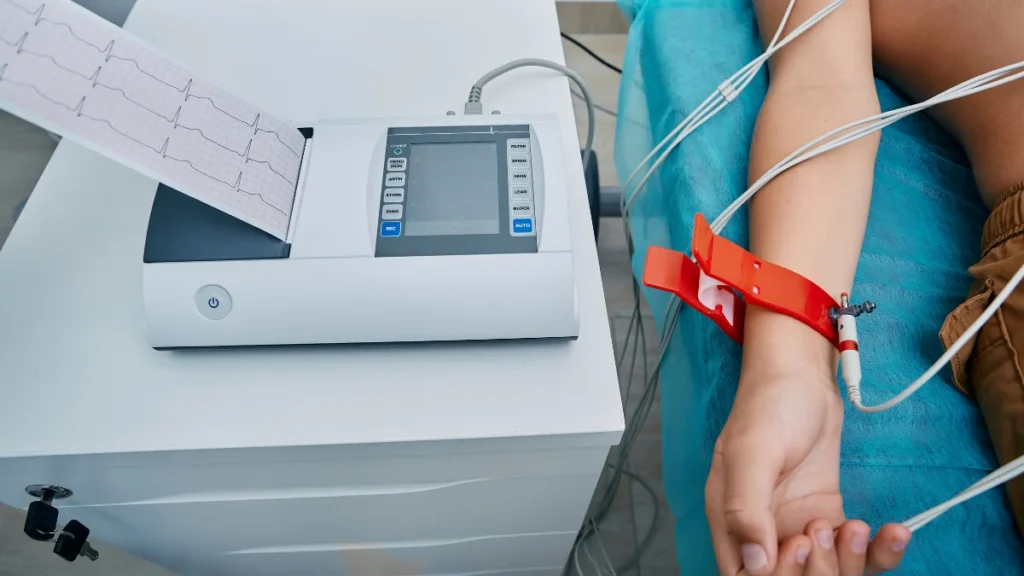
The ECG that found it is the starting point, and often it shows enough on its own.
Where the picture is unclear, or where the finding comes and goes, longer monitoring over a day or more gives a fuller view than a ten second tracing in a clinic ever could.
An exercise test can be informative, because the two patterns tend to respond to exertion in opposite directions. A review of your current medications is usually part of it. An echocardiogram may be arranged to look at the heart’s structure and pumping.
Your own account of symptoms carries real weight here, so it is worth being specific: what you felt, when, what you were doing, and whether it has happened more than once.
What Management Might Involve
There is a genuine range, and where someone sits within it depends on the pattern, the symptoms, and the cause.
For some people the answer is simply to know about it and be reviewed periodically, particularly where the cause is benign and there are no symptoms.
Where a medication is contributing, adjusting or changing it may resolve the problem, and that is often the first thing considered.
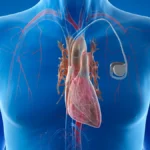
Where the pattern is one that tends to progress, or where symptoms such as fainting are occurring, a pacemaker is the usual recommendation. It is a well-established treatment, generally done under local anaesthetic with sedation, and it reliably resolves symptoms caused by dropped beats.
There is no medication that restores conduction through faulty wiring, which is why a device rather than a tablet is the answer when treatment is needed.
Conclusion
Second-degree AV block describes something specific and fairly narrow: most signals arriving as they should, and the occasional one not. In some people it reflects nothing more than a well-trained heart or a medication doing its job. In others it needs treating, and the treatment works well.
What the phrase on the report cannot tell you is which of those applies to you. That comes from the pattern, your symptoms, the cause, and the rest of your heart health considered together. If you have been given this finding, the questions worth taking to your cardiologist are what pattern is present, whether anything you are taking might be contributing, and whether anything needs doing now or simply keeping an eye on.
Related Reading
- First-Degree AV Block on Your ECG: What Does It Really Mean?
- Complete Heart Block: What It Means and How It’s Treated
- When a Slow Heart Rate Is Not Normal: Understanding Bradycardia
- What You Need to Know About Pacemakers
- Fainting Spells: What Syncope Might Be Telling You
- The Electrocardiogram (ECG / EKG)
- When a Standard ECG Isn’t Enough: A Guide to Cardiac Monitoring