- The most useful scale for managing weight and protecting your heart may not be the one in your bathroom. It is the one in your kitchen. A kitchen scale provides the accurate portion awareness that changes how you think about food for good.
- Most people significantly underestimate how much they are eating, not through carelessness but because visual portion estimation is genuinely unreliable, particularly for calorie-dense foods like oils, nuts, cheese, and grains.
- Weighing food does not need to be permanent or obsessive. A few weeks of occasional, curious measurement builds a mental reference library that persists long after the scale is put away.
- Excess body weight is one of the most significant modifiable cardiovascular risk factors. It drives high blood pressure, abnormal cholesterol, and insulin resistance. Accurate portion awareness is a direct and practical tool for addressing it.
- This is not a diet. It is an awareness tool, used with curiosity rather than rigidity, and without forbidden foods or rigid calorie counting.
Ask most people what the best scale for weight loss is, and they will describe the one in the bathroom. Step on it each morning, watch the number, adjust accordingly. It is the most familiar measurement in health, and also, for many people, one of the most frustrating. The number fluctuates day to day with hydration and timing. It tells you what happened but rarely tells you why. And for a significant number of people, the daily ritual of stepping on the scales produces more anxiety than insight.
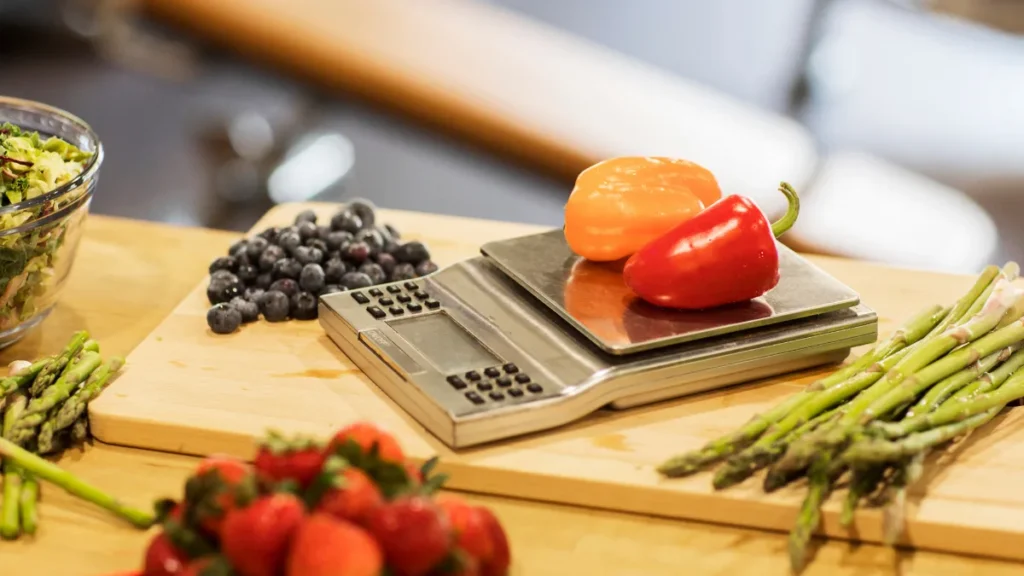
There is another scale worth considering. It sits in the kitchen, costs less than a good cookbook, and has the potential to quietly transform the way you understand food, without a single diet, rule, or forbidden list.
This is not a weight loss prescription. It is an idea worth sitting with. For many people, the missing piece in managing their weight and protecting their heart is not knowledge of what to eat. It is accurate awareness of how much.
The Problem With Portion Guessing
Most of us have been estimating food portions our entire lives. A handful of this, a drizzle of that, a serving of something else. And most of us, regardless of how health-conscious we are, significantly underestimate what those amounts actually weigh and what they contain.
This is not a character flaw. It is human. Our visual estimates of volume and weight are simply not calibrated for the precision that nutrition requires.
Research consistently bears this out. A landmark New England Journal of Medicine study, replicated many times since across different populations, compared what adults reported eating against what biochemical testing showed they had actually consumed. The mismatch was striking.
average underreporting of daily food intake when adults’ self-reports were compared with a gold-standard biochemical measurement of true energy intake.
Lichtman et al., New England Journal of Medicine, 1992
Restaurant portions, which have increased substantially over the past three decades, have gradually recalibrated our sense of what a normal serving looks like at the same time.
A bowl of pasta that feels modest is often two to three times a standard serving. A drizzle of olive oil, heart-healthy though it is, can easily be three or four tablespoons rather than one. A small handful of mixed nuts, barely noticed as an afternoon snack, can be 250 to 300 calories.
None of these foods are bad. That is not the point. The point is that without occasional, curious measurement, most of us are working with a mental map that does not match the territory. That mismatch, repeated across every meal, every day, accumulates in ways that are genuinely difficult to see.
What the Kitchen Scale Actually Does
Weighing your food, even occasionally and informally, does something that no app, label, or nutrition guide can fully replicate. It anchors the abstract to the concrete. When you weigh 30 grams of cheese and see how small it is, or weigh what you thought was a modest bowl of cereal and find it is nearly three servings, those moments of reality recalibration stay with you in a way that reading about portion sizes simply does not.
Think of it less as measuring and more as calibrating. A few weeks of occasionally weighing common foods, the ones you eat regularly, the ones you think you know, builds a mental reference library that persists long after you put the scale away. That library changes how you pour, how you serve, how you estimate. It is a one-time investment in awareness that pays ongoing dividends without ongoing effort.
The most common finding when patients start weighing their food is not that they are eating the wrong things. It is that they are eating the right things in quantities they had never accurately assessed. That awareness, once gained, is very hard to lose.
Prof. Peter Barlis, Interventional Cardiologist
The Foods That Produce the Greatest Surprises
Not all foods need the same level of precision. Vegetables, lean proteins, and most fruits are sufficiently low in calorie density that generous visual portions rarely cause meaningful nutritional inaccuracy. The foods where a scale reveals the most are those where a small volume difference translates into a large calorie difference.
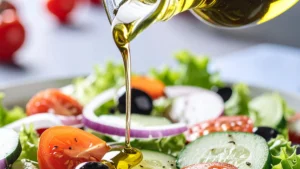
Cooking oils
The most consistently underestimated calorie source in home cooking. A casual pour is typically three to four times a measured portion, even with heart-healthy olive oil at 120 calories per tablespoon.
Nuts and seeds
Nutritionally excellent but calorie-dense. A standard serve is 30g, about a small handful. Most people pour 60 to 80g without registering the difference, doubling or tripling the intended intake.
Grains and pasta
Dry weight versus cooked weight is a consistent source of confusion. Pasta roughly triples in weight when cooked. A 60g dry portion becomes 180g cooked, which looks modest but is a meaningful carbohydrate load.
Cheese
A standard serve is 30g, roughly the size of a matchbox. Most people serve two to three times this amount without registering it. Cheese is also one of the most significant hidden sources of dietary sodium.
Sauces and dressings
Often overlooked entirely in nutritional accounting. A restaurant-style pour of salad dressing can add 200 to 400 calories and significant sodium to a meal that was otherwise light.
Protein portions
A 150g chicken breast and a 250g chicken breast look similar on a plate but differ significantly in protein and calories. For anyone optimising protein intake, accurate weighing is the only reliable method.
Why Weight Management Matters for Your Heart
Weight management is not a cosmetic concern on a cardiology platform. It is central to cardiovascular health.
Excess body weight is one of the most significant modifiable cardiovascular risk factors, driving elevated blood pressure, abnormal cholesterol, insulin resistance, type 2 diabetes, and sleep apnoea.
Even modest sustained weight loss, of 5 to 10% of body weight, produces measurable improvements across most of these risk factors. Blood pressure falls. HDL cholesterol rises. Blood sugar improves. Inflammation reduces.
These are not small effects. They are clinically meaningful changes that reduce the long-term risk of heart attack and stroke. Accurate portion awareness is one of the most practical and sustainable tools for achieving and maintaining that modest weight loss without a restrictive diet.
How to Use a Kitchen Scale Well
The most useful framing is curiosity rather than compliance. Weigh things you eat regularly, not to judge them, but to understand them. What does a standard serve of olive oil actually look like? How much does the portion of rice you usually serve actually weigh? These questions, answered accurately once, change the mental reference point permanently.
Focus precision where it matters most. Vegetables, leafy greens, and lean proteins can be estimated generously without consequence. Oils, nuts, grains, cheese, and sauces are where a scale earns its keep. The tare function, the button that zeros the display with a container already on the scale, lets you add ingredients sequentially to the same bowl and makes the process fast enough to be practical rather than feeling like a laboratory exercise.
The most valuable phase is the first few weeks. After weighing the same foods repeatedly, the visual memory of a correct portion becomes reliable enough that the scale is needed less often. Many people find they only need to return to it periodically, when starting a new food, when weight has crept up unexpectedly, or when re-establishing accuracy after a period of less structured eating.
A Note on Balance
For some people, tracking and measuring food can tip into anxious or disordered territory, and that is worth being honest about. If weighing food produces anxiety rather than insight, it is not the right tool at this time, and that is a conversation worth having with your GP or a dietitian. The Butterfly Foundation national helpline (1800 33 4673) provides confidential support if you or someone close to you is struggling with disordered eating.
For most people, however, a few weeks of curious, non-judgmental measurement produces awareness rather than anxiety. That awareness, once gained, is genuinely difficult to lose. The kitchen scale does not change what you eat. It changes what you know about what you eat. And knowledge, applied with self-compassion and without rigidity, is where lasting change begins.
- Weigh your cooking oil for one week. Pour what you would normally use, then weigh it. The result is almost always surprising.
- Weigh a portion of nuts before eating them. Then compare it to what you would have poured without thinking.
- Weigh dry pasta or rice before cooking, and note how the volume changes once cooked. This calibration is immediately and lastingly useful.
- Use the tare function to add ingredients sequentially to the same bowl. It makes the process fast enough to be practical every day.
- After four to six weeks of regular weighing, test your visual accuracy. Estimate first, then weigh and compare. Most people find the improvement is significant.
Free Download · Heart Matters
Our Heart Health Risk Factor Checklist covers 12 cardiovascular risk categories, including weight and metabolic health. A useful tool to bring to your next appointment.
Heart Matters Resource
When in Doubt, Get Checked Out
If you are concerned about your weight and its impact on your heart health, a conversation with your GP or cardiologist about your cardiovascular risk profile is the right starting point.
Conclusion
The best scale for weight loss is not the one in your bathroom. It is the one in your kitchen, used not as a tool of restriction but as a tool of understanding. A few weeks of curious, non-judgmental measurement reveals portion truths that stay with you permanently, changing how you cook, serve, and estimate food without requiring ongoing effort or obsession.
Combined with a heart-healthy dietary pattern and regular movement, accurate portion awareness is one of the most practical and sustainable contributions to both weight management and cardiovascular health available. It costs around $20. It takes seconds to use. And what it reveals is genuinely difficult to un-see, in the best possible way.