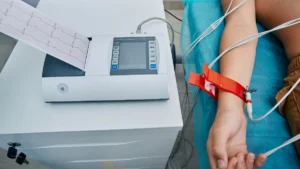
- White coat hypertension is when your blood pressure reads high in the clinic but sits in the normal range during ordinary daily life. It is common, affecting up to one in three people whose office readings are raised.
- It is caused by a stress response to the medical setting itself, not by a fault in your heart or blood vessels. The reading is real, but it does not reflect your usual blood pressure.
- The only reliable way to confirm it is to measure blood pressure away from the clinic, using either a 24-hour ambulatory monitor or a structured week of home readings.
- White coat hypertension is not always harmless. Some people go on to develop sustained high blood pressure, so ongoing monitoring matters even when no medication is started.
- Its mirror image, masked hypertension, is the more dangerous pattern: normal in the clinic, high at home, and easy to miss without out-of-office measurement.
The cuff tightens, the nurse watches the dial, and the number that appears is higher than anything you ever see at home. It happens every visit. You feel perfectly well, your home readings are reassuring, and yet the clinic keeps telling you your blood pressure is up. If this sounds familiar, you may have white coat hypertension.
It is one of the most common and most misunderstood findings in everyday medicine. The reading on the machine is not wrong. Your blood pressure really did rise in that moment. The question is whether that rise reflects how your heart and arteries behave during the other 23 hours of the day, when no one is watching.
Getting that question right matters. Treat white coat hypertension as though it were sustained high blood pressure and a person can end up on medication they do not need. Dismiss it entirely and you can miss the early warning that genuine hypertension is developing. The path between those two errors runs through one simple idea: measure blood pressure where life actually happens.
What White Coat Hypertension Actually Is
White coat hypertension describes a specific pattern. Blood pressure measured in a clinic or surgery is in the hypertensive range, while blood pressure measured away from the clinic is normal. The term comes from the white coats traditionally worn by doctors, though the effect has far more to do with the setting than the clothing.
The mechanism is a stress response. Being assessed by a health professional, sitting in an unfamiliar room, anticipating bad news, or simply rushing to make the appointment can all trigger a brief surge in heart rate and blood pressure. This is the same fight-or-flight system that sharpens your senses before a job interview. In most people it settles within minutes of leaving. For some, it switches on reliably the moment a cuff appears.
This is different from anxiety as a diagnosis. Many people with white coat hypertension do not feel anxious at all. The body responds to the clinical context automatically, below the level of conscious worry, which is part of why telling someone to relax so rarely lowers the number.
If the two numbers in a blood pressure reading have always been a little mysterious, this short explainer walks through what systolic and diastolic actually mean.
Watch · Heart Matters
Systolic and diastolic, explained. A plain-English guide to what the two numbers in a blood pressure reading actually mean.
How Common Is It?
White coat hypertension is far from rare. Across large studies, when people with raised office readings are checked properly away from the clinic, a substantial proportion turn out to have normal everyday blood pressure.
of people with high readings in the clinic are found to have white coat hypertension once their blood pressure is measured during normal daily life
International blood pressure registries
The effect tends to be more pronounced in older adults and in people who have been told for years that they have high blood pressure. It can even appear in people already taking blood pressure medication, where it can make treatment look as though it is failing when in fact the everyday numbers are well controlled.
Why It Is Easy to Get Wrong
The trouble with a clinic reading is that it captures a single, atypical moment. A few minutes in a medical room, often after sitting in a waiting area or hurrying through traffic, is not a fair sample of a whole day. Yet for decades this single snapshot was the basis for diagnosing high blood pressure.
When the diagnosis rests on office readings alone, two opposite mistakes become possible. The first is overdiagnosis: labelling someone hypertensive, and starting lifelong treatment, when their true blood pressure is fine. The second is the reverse problem, where genuinely high blood pressure outside the clinic goes undetected because the office reading happens to look acceptable.
Modern guidelines now treat measurement outside the clinic as essential rather than optional. The same principle underpins our advice on monitoring your blood pressure at home: the numbers that matter most are the ones gathered during ordinary life, not in a single moment of clinical stress.
White Coat Versus Masked Hypertension
White coat hypertension has a mirror image, and understanding both makes the whole picture clearer. They are opposite patterns, and they carry very different levels of risk.
White Coat Hypertension
High in the clinic, normal at home. Risk is generally lower than sustained high blood pressure, but it can progress over time, so it needs watching rather than ignoring.
Masked Hypertension
Normal in the clinic, high at home. This is the more concerning pattern, because the raised blood pressure quietly damages arteries and the heart while routine checks look reassuring.
Masked hypertension is the more dangerous of the two precisely because it hides. A person feels well, their clinic readings look fine, and no one suspects a problem, while their blood pressure runs high during work, sleep, and daily activity. This is part of why a single normal reading in the surgery is no longer considered enough to rule high blood pressure out.
How It Is Diagnosed
Confirming white coat hypertension means comparing clinic readings with readings taken during normal life. There are two reliable ways to do this, and your doctor may use either or both.
Ambulatory monitoring
A small device worn for 24 hours takes automatic readings during the day and overnight. It gives the fullest picture, including how blood pressure behaves during sleep.
Home monitoring
A validated upper-arm monitor used at set times over about a week. Readings taken morning and evening, while seated and rested, build a reliable everyday average.
The thresholds differ slightly between settings, which surprises many people. Clinic readings use one cut-off for diagnosing high blood pressure, while home and daytime ambulatory averages use a slightly lower one. This is normal and expected, because blood pressure is genuinely a little lower in relaxed, familiar surroundings.
For a closer look at why the clinic setting itself nudges your reading upward, this video explains what is happening in the body during that moment.
Watch · Heart Matters
The white coat effect, up close. Why the clinic setting itself can push your reading up, and what is happening in the body.
A blood pressure reading is a moment, not a verdict. The honest answer almost always comes from measuring it where the patient actually lives their life.
Prof. Peter Barlis, Interventional Cardiologist
Does It Need Treatment?
For true white coat hypertension, where everyday blood pressure is genuinely normal, medication is often unnecessary. The reading that rises only in the clinic does not, on its own, justify lifelong tablets. What it does justify is ongoing attention.
That is the key nuance. White coat hypertension sits somewhere between normal blood pressure and sustained high blood pressure in terms of long-term risk. A meaningful number of people with it will develop genuine hypertension within a few years. So the sensible approach is regular review, repeat out-of-office measurement, and attention to the everyday habits that keep blood pressure healthy.
Where lifestyle and risk factors are concerned, the same fundamentals apply as for anyone protecting their heart: maintaining a healthy weight, limiting salt and alcohol, staying physically active, and not smoking. Even something as accessible as regular walking contributes to keeping blood pressure in a healthy range over time.
When blood pressure is genuinely high outside the clinic, treatment follows the usual path. The medicines most often used include ACE inhibitors, angiotensin receptor blockers, and calcium channel blockers, chosen to suit the individual. The decision to start, change, or hold any blood pressure medicine is one only your doctor or cardiologist can make for you, based on your full picture rather than a single number.
Getting an Accurate Reading at Home
If you are monitoring your own blood pressure, a few simple habits make the readings far more trustworthy. Small details in technique can shift a result by enough to change a diagnosis.
Sit and settle first
Rest quietly for five minutes before measuring. Sit with your back supported, feet flat on the floor, and legs uncrossed.
Support your arm
Rest your arm on a table so the cuff sits at heart height. An unsupported or dangling arm can push the reading up noticeably.
Measure twice, same times
Take two readings a minute apart, morning and evening, for several days. Record them all rather than picking the lowest.
Avoid caffeine, exercise, and smoking for at least 30 minutes beforehand, and empty your bladder first, as a full bladder can raise the reading. Use a validated upper-arm monitor rather than a wrist device, and bring your log to your next appointment so the pattern, not just a single number, guides the conversation.
Heart Matters Resource
When in Doubt, Get Checked Out
If your clinic and home readings keep telling you different stories, that is worth investigating properly rather than guessing. A short period of out-of-office monitoring can settle the question for good.
Conclusion
White coat hypertension is a reminder that a blood pressure reading is a measurement of a moment, not a final judgement on your heart. The number that climbs in the clinic is genuine, but it tells only part of the story. The fuller answer comes from seeing how your blood pressure behaves across an ordinary day.
If your clinic readings have been high but you suspect they do not reflect your everyday self, the practical step is straightforward: ask about ambulatory or home monitoring, measure carefully, and review the pattern with your doctor. Whether the outcome is reassurance or the early detection of genuine high blood pressure, you come away knowing your real numbers, which is exactly where good heart care begins.
Related Reading
- High Blood Pressure: Why Monitoring Matters and What Your Numbers Mean
- ACE Inhibitors: Beyond Blood Pressure Treatment
- Angiotensin Receptor Blockers (ARBs) and Heart Health
- Calcium Channel Blockers: Amlodipine, Felodipine, Nifedipine, and More
- Walking and Your Heart: Why the Simplest Exercise Is Often the Best
- What Is Atherosclerosis?
- Women’s Heart Health: Why It’s Different