- An aortic dissection is a tear in the wall of the aorta, the body’s main artery. It is a medical emergency, and every minute counts.
- The warning sign is sudden, severe chest or back pain, often described as ripping or tearing, and often the worst pain a person has ever felt. It arrives at full intensity within seconds rather than building gradually.
- Long term high blood pressure is the single biggest risk factor. Most people who have a dissection have had raised blood pressure for years.
- Inherited conditions such as Marfan syndrome, and a family history of aortic aneurysm or unexplained sudden death, substantially increase risk and are a reason to ask about screening.
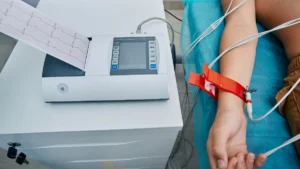
- Dissection is easily mistaken for other conditions, and a normal ECG or normal blood test does not rule it out. If the pain fits the pattern, call 000.
Most cardiac emergencies announce themselves gradually. A heaviness in the chest that builds over minutes. A tightness that comes on with exertion and eases with rest. An aortic dissection does not behave this way. It arrives at full force, without warning, in people who felt perfectly well moments earlier.
It is the emergency that gives no notice. A person is well in the morning, well over lunch, and in cardiac arrest by the evening. That pattern is not a rare exception to how dissection behaves. It is characteristic of it.
Understanding what an aortic dissection is, who is at risk, and above all what it feels like, is the difference between a call to emergency services and a fatal delay.
What Is an Aortic Dissection?
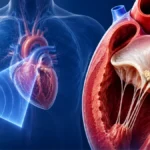
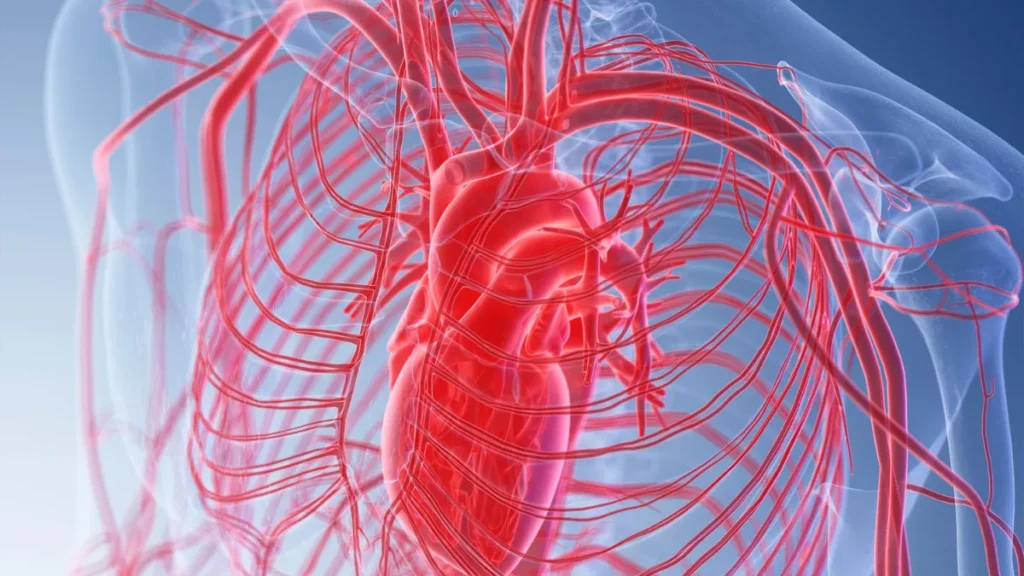
The aorta is the largest blood vessel in the body. It leaves the heart, arches over the top of it, and travels down through the chest and abdomen, carrying every drop of blood the heart pumps out to the rest of the body. It is roughly the width of a garden hose, and it withstands enormous pressure with every heartbeat.
The wall of the aorta is made of three layers, bonded together. A dissection begins when the innermost layer develops a tear. Blood, travelling at high pressure, is forced into that tear and begins to push the layers apart, carving a false channel along the length of the vessel.
Once that channel opens, several things can go badly wrong at once. The false channel can compress the true one, starving organs of blood. It can extend into the branches that supply the brain, kidneys, or the heart muscle itself. It can rupture entirely. And if the tear is close to the heart, blood can leak into the sac that surrounds it, squeezing the heart until it can no longer pump.
The Two Types, and Why the Difference Matters
Doctors classify dissections by where the tear sits. This is not academic. The two types are treated in fundamentally different ways.
Type A dissections involve the ascending aorta, the section closest to the heart. These are surgical emergencies. The tear can extend backwards into the sac around the heart or shear off the arteries feeding the heart muscle, and either can cause sudden cardiac arrest. Type A dissections are taken directly to theatre.
Type B dissections are confined to the descending aorta, further down the chest. These are often managed initially with aggressive blood pressure control in intensive care, with a stent placed inside the vessel in selected cases. Surgery is not always the first step.
Type A
The tear involves the section of aorta nearest the heart. This is the more dangerous form and is treated as an immediate surgical emergency.
Type B
The tear is confined to the descending aorta, further from the heart. Often managed first with intensive blood pressure control, and sometimes a stent.
Why Time Matters
For an untreated Type A dissection, the risk of death rises with every hour that passes after the tear. This is why it is never something to wait out.
What It Actually Feels Like
This is the section worth remembering, because recognising the pain is what gets people to hospital in time.
The classic symptom is sudden, severe pain in the chest or back. Patients describe it as ripping, tearing, or being stabbed. It is frequently described as the worst pain of their life. Two features set it apart from most other chest pain.
First, the onset. It does not build. It is maximal within seconds. People can often tell you exactly what they were doing at the moment it began.
Second, it can move. As the tear extends along the vessel, the pain can travel, migrating from the front of the chest through to between the shoulder blades, or down into the abdomen.
Dissection can also present in ways that look like something else entirely. Stroke-like symptoms if the tear reaches the arteries to the brain. Abdominal pain. Fainting. A leg that suddenly turns cold and pale. In the most severe cases, the first sign is collapse. This was the pattern in the widely reported death of United States Senator Lindsey Graham in July 2026, whose office cited preliminary findings of an aortic dissection due to arteriosclerotic cardiovascular disease. He was 71, had recently returned from an overseas trip, and had shown no sign of being unwell.
Chest pain that arrives at full intensity in an instant, and is described as tearing or ripping, is not a wait and see symptom. It is a call an ambulance symptom.
Why Blood Pressure Sits at the Centre of This
The most important thing to understand about dissection is that in the majority of cases, it is the endpoint of a process that has been building quietly for years.
Every heartbeat sends a pulse of pressure through the aortic wall. Over decades, persistently high blood pressure stresses that wall, stiffening it and degrading the elastic tissue that holds the layers together. Add the plaque and inflammation of atherosclerosis, the same disease process that drives most heart attacks and strokes, and the wall becomes progressively less able to tolerate the pressure it is subjected to.
Chronic hypertension is the single biggest modifiable risk factor for aortic dissection, and it is present in the large majority of cases. This is the uncomfortable but hopeful part of the story. A condition that kills within minutes is driven, more than anything else, by a number that can be measured at home in 60 seconds and treated effectively.
The other well-recognised contributors are:
- Age and sex. Dissection most commonly affects men in their 60s and 70s, though it can occur far younger, particularly where there is an inherited cause.
- Smoking. Tobacco accelerates the arterial damage that weakens the aortic wall.
- An existing aortic aneurysm. A vessel that has already enlarged is a vessel more likely to tear.
- Stimulant drug use. Cocaine and amphetamines cause abrupt, extreme blood pressure surges.
- Pregnancy. Uncommon, but a recognised period of increased risk in women with underlying aortic disease.
The Genetic Side, and When Family History Matters
Not every dissection is a story about decades of blood pressure. A meaningful minority occur in younger people whose aortas were structurally vulnerable from birth.
Inherited connective tissue conditions
Marfan syndrome is the best known. It affects the connective tissue that gives the aortic wall its strength, and people with Marfan syndrome can experience dissection in their 30s or 40s. Loeys-Dietz syndrome and vascular Ehlers-Danlos syndrome carry similar risk. These conditions often, though not always, come with recognisable physical features such as tall stature, long limbs and fingers, and problems with the lens of the eye.
Bicuspid aortic valve
Some people are born with an aortic valve that has two leaflets instead of the usual three. This is one of the most common congenital heart differences, and it is associated with weakness in the wall of the ascending aorta, independent of any valve problem. It is also relevant to aortic stenosis later in life.
Familial aortic disease with no syndrome attached
This is the group most often missed. Some families carry a tendency to aortic aneurysm and dissection without any of the classical syndromes and without any outward clues. The only signal is the family history itself.
If a parent, sibling, or child has had an aortic aneurysm, an aortic dissection, or an unexplained sudden death, that is worth raising with your doctor. Imaging can measure the size of the aorta long before it is in danger, and an aorta that is enlarging can be monitored, treated with blood pressure medication, and repaired electively. Elective repair is a very different proposition to emergency surgery on a tearing vessel.
Why It Is So Easily Missed
Aortic dissection is one of medicine’s great imitators, and this is worth understanding because it affects what you should do.
The standard tests used to assess chest pain, an ECG and a blood test for cardiac enzymes, can be entirely normal while the aorta is tearing. A chest X-ray is often unremarkable. The diagnosis usually rests on a CT scan of the aorta, and that scan only gets ordered if someone thinks to order it.
This has two practical implications. If you experience sudden tearing chest or back pain, say so in exactly those words to the paramedics and to the doctor in the emergency department. The description matters. And if you have a family history of aortic disease, say that too, unprompted. It changes how the pain in front of the doctor is interpreted.
It is entirely reasonable, in that situation, to ask directly whether an aortic dissection has been considered. Good clinicians will not be offended by the question.
What You Can Actually Do
The measures that protect the aorta are not exotic. They are the same measures that protect the rest of the cardiovascular system, applied consistently over years.
Know your blood pressure and treat it. If you have been prescribed medication for it, take it. This matters more than any other single action, and there is a great deal you can do alongside medication to help bring the numbers down.
Do not smoke. Treat raised cholesterol. Stay physically active. Understand your overall cardiovascular risk profile rather than any single number in isolation.
And know the alarm symptom. Sudden, severe, tearing chest or back pain, arriving at full intensity, in a person who was well moments before, is an emergency until proven otherwise. In Australia, call 000. Do not drive yourself. Do not wait to see whether it settles.
Conclusion
An aortic dissection is one of the few conditions in cardiovascular medicine where outcome is measured in minutes rather than hours or days. It is also, for most people, the final chapter of a much longer and much quieter story, one written by years of untreated blood pressure and arterial damage. That is the part that is within reach.
Take the blood pressure reading. Ask about the family history. And if the pain ever comes, sudden and tearing and unlike anything before it, do not talk yourself out of the phone call.
Related Reading
- Chest Pain: Understanding Symptoms, Causes and Evaluation
- Heart Attack vs Cardiac Arrest: What is the Difference?
- How to Measure Your Blood Pressure at Home
- Aortic Stenosis: When the Heart’s Gateway Narrows
- Heartburn or Heart Attack? How to Tell the Difference
- Smoking and Your Heart: Understanding the Risks
- Understanding Your Cardiovascular Risk Factors