

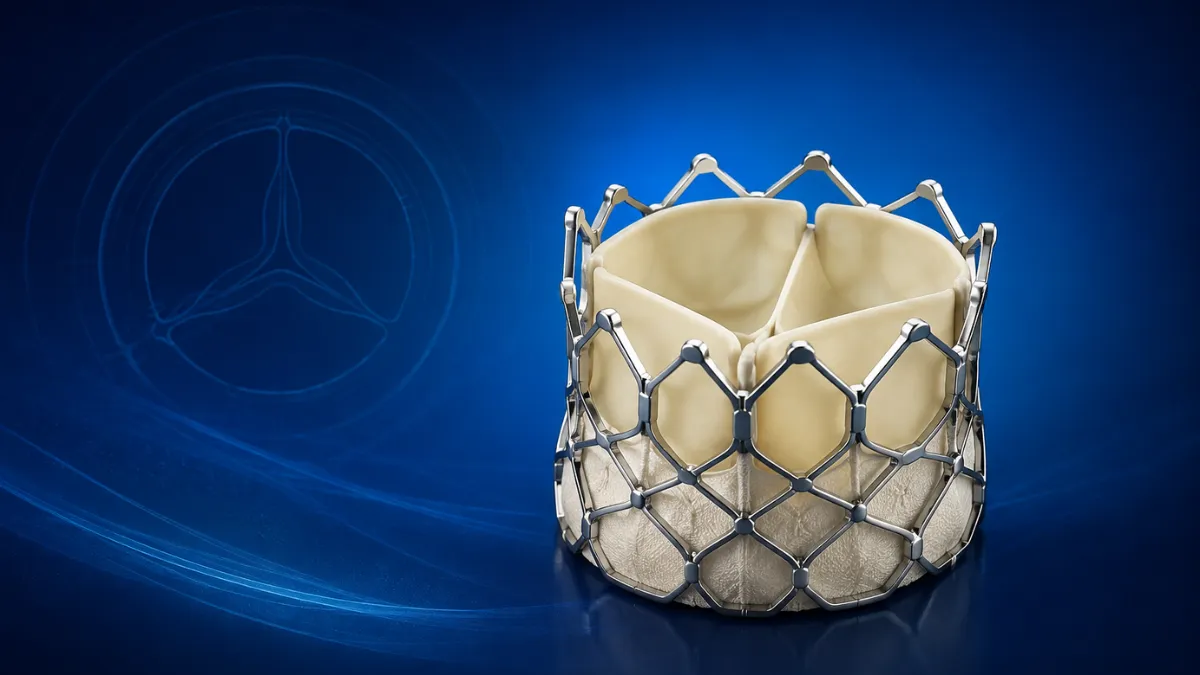
- A TAVI procedure implants a new aortic valve through a thin tube (catheter) passed up through an artery, usually in the groin. The chest is not opened and the heart keeps beating throughout.
- TAVI and TAVR are two names for the same procedure. TAVI is the usual term in Europe, the UK, Australia and much of Asia, and TAVR in North America.
- Who is offered TAVI now depends less on how risky surgery would be and more on age, the anatomy of the valve and arteries, and life expectancy. European guidelines published in 2025 recommend TAVI for most suitable people aged 70 or over, and surgery for most people under 70 who are at low risk from an operation.
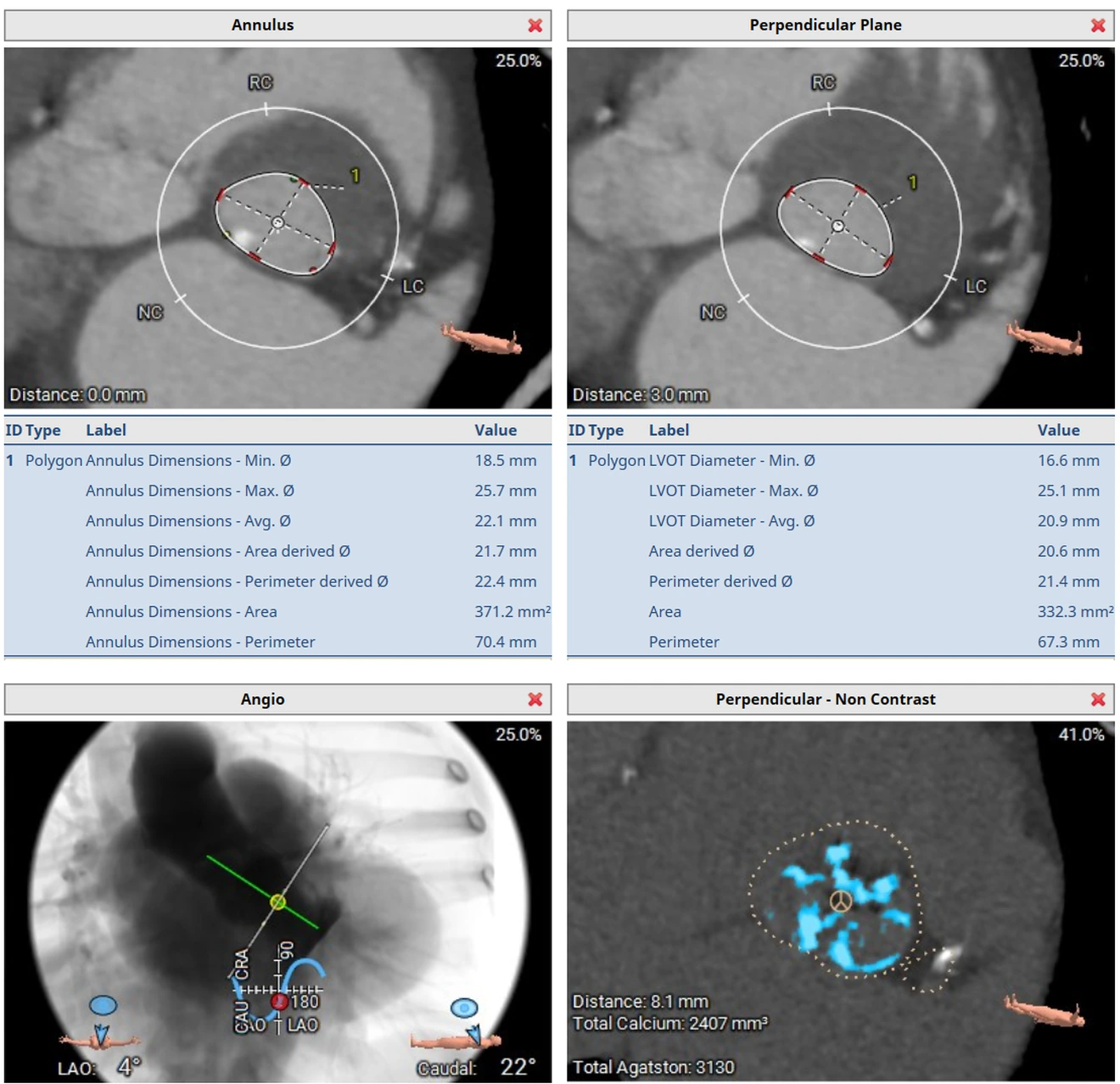
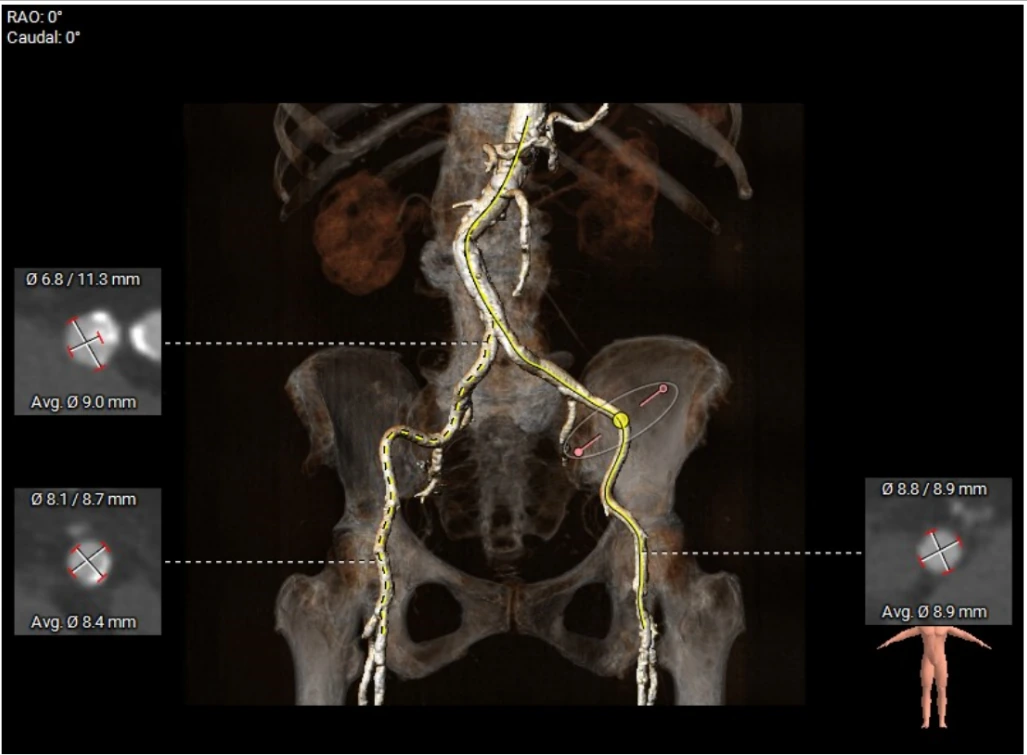
- A detailed CT scan is central to planning. It decides the type and size of the new valve and shows the best artery for access and the pathway to the heart.
- The most common complication involves the heart’s electrical wiring. Up to about one in 10 people need a permanent pacemaker afterwards.
- Most people are walking within a few hours and home from hospital within a few days.
Replacing a heart valve once meant opening the chest, stopping the heart and handing its work to a bypass machine. It was, and still is, an excellent operation. But many people with a narrowed valve were judged too old, too frail or too unwell to undergo such a large operation, and were left with very little to be offered.
Over the past two decades an alternative has emerged, and it is one of the biggest shifts in modern cardiology. A replacement valve, folded down to roughly the width of a pencil, travels to the heart through an artery and is opened inside the diseased valve while the heart carries on beating. Most people are awake, or lightly sedated, throughout.
If you or someone close to you has recently been told a valve is narrowed, this article explains what the procedure involves and how the choice between TAVI and surgery is usually made. It is background for the conversation with your own cardiologist, not a substitute for it.
What TAVI Is
TAVI stands for transcatheter aortic valve implantation. A catheter is a long, thin, flexible tube, and transcatheter means the whole procedure is done through that tube, rather than through a surgical opening.
TAVR, short for transcatheter aortic valve replacement, is exactly the same procedure under a different name. Which term you hear depends mostly on where you live. TAVI is standard in Europe, the UK, Australia and much of Asia, while TAVR is used in North America. This article uses TAVI, and everything in it applies equally to TAVR.
Strictly speaking, nothing is replaced. The diseased valve stays where it is, pressed outwards against the artery wall, and the new valve sits inside it. That detail matters more than it might seem, and it explains several points later in this article.
The new valve is made from treated animal tissue, from a cow or pig, sewn inside a collapsible metal frame. Crimped onto the end of the catheter, it is steered up through the arteries to the heart, with live X-ray images acting as a guide. Once it is in position inside the old valve, the frame is expanded. It pushes the stiff old leaflets aside, anchors itself in place and starts working straight away.
The Words You Will Hear
Valve clinics use some terms so often that staff can forget to explain them. Here is what they mean in plain English.
Aortic stenosis
The condition TAVI treats. The aortic valve is the doorway between the heart and the body’s main artery, the aorta. When the valve stiffens and narrows, the heart has to work harder to push blood through it.
Calcification
Hard calcium deposits build up in the valve over many years and make it thick and stiff. They come from wear and inflammation in the valve itself, not from calcium in the diet.
Leaflets
The thin flaps that make up the valve, opening and closing with every heartbeat, around 100,000 times a day. Most people have three (tricuspid), while some are born with two (bicuspid). In aortic stenosis they become too stiff to open fully.
The conduction system
The heart’s own electrical wiring, which sets the heartbeat. Part of it runs just below the aortic valve, so a new valve in that position can press on it.
Antiplatelet
A type of blood thinner that makes platelets, the tiny blood cells that start a clot, less sticky. Low-dose aspirin is the best-known example.
Anticoagulant
A stronger type of blood thinner that acts on the clotting proteins in the blood rather than on platelets. Warfarin and the newer direct oral anticoagulants (DOACs), such as apixaban and rivaroxaban, belong to this group.
Who TAVI Is Suitable For
Few things in valve medicine have changed as much as the answer to this question, and it is still changing.
TAVI started as a treatment for people with no other option, those judged too unwell to survive an operation. Trials then tested it in people at moderate risk from surgery and, later, in those at low risk. In the groups studied, results matched or improved on surgery.1,2 The question shifted from whether someone is well enough for an operation to which approach suits that person best.
The European guidelines published in 2025 recommend TAVI for people aged 70 or over whose valve has the usual three leaflets (tricuspid) and whose arteries for access are suitable, whatever their surgical risk. Surgery remains the recommended choice for most people under 70 who are at low risk from an operation, and for many people born with a two-leaflet (bicuspid) valve.3 American guidelines draw a broader band. Surgery is generally favoured under 65 and TAVI over 80, with either considered reasonable in between and the choice made case by case.4
When deciding how someone’s aortic stenosis should be treated, the heart team weighs up many things:
- How many years the new valve needs to last, and what will happen when it eventually wears out.
- Whether the arteries in the legs and pelvis are wide and clear enough for the delivery tube to pass through.
- The anatomy of the valve and where the calcium sits. Some anatomies are less well suited to a transcatheter approach, or may not offer the same durability.
- Whether other heart problems need fixing at the same time. Someone who also needs bypass grafting or another valve repaired is usually better served by a single operation.
- Frailty and other medical conditions, which affect recovery from open surgery far more than recovery from TAVI.
Because so much of this turns on individual anatomy, two people of the same age can be offered different things for good reasons. Where that choice sits for any one person is worth going through carefully with the treating cardiologist.
One more change in the 2025 European guidelines affects people with severe aortic stenosis who have no symptoms yet. Until recently they were usually monitored and treated only once symptoms appeared. The guidelines now say early treatment should be considered for many of them, provided the risk of the procedure is low.3 This follows a trial in which early TAVI reduced a combined measure of death, stroke and unplanned heart-related hospital stays. The benefit came mainly from fewer hospital admissions, with little difference in deaths over the period studied.5
The Assessment Beforehand
Planning a TAVI takes more work than the procedure itself, and it is where most of the important decisions are made.
An echocardiogram, an ultrasound scan of the heart, confirms how severe the aortic stenosis is and shows how well the heart muscle is coping. A CT scan with contrast dye then does the detailed work. It measures the valve to a fraction of a millimetre, which decides the size of the new valve, and maps the arteries from the groin upwards to check they can take the delivery tube. In many people the same scan can also check the arteries that supply the heart muscle, which may avoid a separate coronary angiogram.
Getting the size right matters. A valve that is slightly too small can leak around its edges. One that is slightly too large presses harder on the electrical wiring just below the valve, which raises the chance of needing a pacemaker.
An ECG, a tracing of the heart’s electrical activity, is also checked carefully. Existing wiring problems are among the strongest predictors of needing a pacemaker afterwards.
A dental check is usually arranged too, because untreated dental infection can spread to a newly implanted valve.6
The results then go to a heart team meeting, where interventional cardiologists, cardiac surgeons, imaging specialists and other specialists such as geriatricians review the case together. The meeting is not there to rubber-stamp a decision already made. Its job is to work out whether TAVI, surgery or continued monitoring suits this person best, taking their own wishes into account.
The Procedure Itself
Most TAVI procedures take one to two hours.
Most are done through the femoral artery, the large artery at the top of the leg, using a small puncture rather than a cut. If those arteries are too narrow or diseased, the valve can be delivered through an artery below the collarbone or in the neck, or directly through the chest wall, but only a minority of people need these routes.
In the early years, TAVI was done under general anaesthetic. Today it is often done under local anaesthetic with sedation, so the person is drowsy but breathing on their own. This speeds up recovery and lowers the risk of confusion that a general anaesthetic can cause in older people.
With the catheter in place, the new valve is expanded inside the old one. Some designs are opened with a balloon, while others open on their own as they are released from the delivery system. This part takes only moments. The new valve is checked straight away with ultrasound and pressure readings before the equipment is removed and the femoral artery is closed.

What to expect on the day
Time in the lab
Usually one to two hours.
Anaesthetic
Most commonly sedation with local anaesthetic, so awake but drowsy.
Access point
A puncture at the top of the leg in most cases, not a surgical cut.
Up and about
Sitting up within hours, walking the same day or the next morning.
Hospital stay
Two to three days is typical.
Monitoring after
Heart rhythm watched closely for the first day or two, and an echocardiogram before going home.
A procedure that once required opening the chest and stopping the heart is now routinely performed through a puncture in the groin, on a patient who is awake.
Recovery
Most people are sitting up within a few hours and walking the same day or the next morning. A hospital stay of two to three days is typical, and some centres send selected patients home sooner.
The improvement can be immediate and dramatic. Breathlessness that has been building for months often eases within days, because the blockage the heart was straining against has been removed.
For the first week or two, the main restrictions are about letting the groin heal rather than protecting the heart, so heavy lifting and strenuous exercise are usually limited. After that, activity generally builds back quickly. Many people are offered cardiac rehabilitation, a supervised programme of exercise and education, to help them return to normal life.
The Risks Worth Understanding
TAVI is a well-established procedure with a strong safety record, and serious complications are uncommon. A few are worth knowing about in advance, because understanding them makes the conversation about whether to go ahead a more useful one.
Needing a pacemaker
The most common complication. The new valve sits right against the heart’s wiring, and pressure on it can permanently slow the electrical signal. A pacemaker corrects this.
Stroke
Small fragments from the hardened valve can break off and travel to the brain. In current practice this happens to about two in every 100 people in the first month.
Problems at the groin
Bleeding or damage where the artery was entered. This is less common than in the early years, because the tubes used are now much narrower.
of people need a permanent pacemaker after TAVI. The rate varies with the type of valve and with any conduction system problems present beforehand.
US national TVT registry
need one after surgical valve replacement. This is the main trade-off between the two approaches.
PARTNER 3 and Evolut Low Risk trials
Sources: US national TVT registry7 and the low-risk trials.1,2
One further issue comes from the old valve staying in place. Because the new frame sits inside a rigid ring of calcium, small gaps can remain around its edge and let blood leak around the outside of the valve. Newer valves with sealing skirts have greatly reduced this. Small leaks usually cause no problems, but larger ones matter, so the team checks for them before the procedure ends.
Medicines Afterwards
Thinking on this has changed a lot, and in a direction that surprises people who assume more protection is always better.
Two kinds of blood thinner come up here, and they are easy to confuse. Antiplatelets, such as low-dose aspirin, make the tiny cells that start a clot less sticky. Anticoagulants, such as warfarin or one of the newer DOACs, act on the clotting proteins in the blood and are the stronger of the two.
For people with no other reason to take a blood thinner, a single antiplatelet tablet, taken long term, is now the standard after TAVI. A large trial compared aspirin alone with aspirin plus a second antiplatelet. The two-drug group had considerably more bleeding, with no fewer strokes or heart attacks to make up for it.8
Routine anticoagulation is not used either. A trial that gave a DOAC to people with no other reason to take one was stopped early, after more deaths, more clotting events and more bleeding in that group. Guidelines now advise against it.9
People who need an anticoagulant for another reason, most commonly atrial fibrillation, keep taking it. For most of them, adding an antiplatelet on top does more harm than good, mainly through extra bleeding.10 Across the field, the trend has been towards fewer blood thinners, not more.
Which of these medicines is right for a particular person, and for how long, is a decision for their own doctor, because it depends on their other health conditions as well as the valve.
How Long the Valve Lasts
This is TAVI’s main limitation, and it is the reason age still shapes the decision.
Transcatheter valves are made of tissue, and tissue valves wear out over time. Trials have now followed people for up to 10 years, and over that period the valves perform much like surgical tissue valves.11 What does not exist yet is the 15 and 20 year evidence available for surgery, because TAVI has not been widely used for long enough.
For someone in their eighties, this is mostly a theoretical concern. For someone in their sixties, it is central, because it raises the question of what happens when the valve wears out. A second valve can often be placed inside the first, although whether that is possible depends on the size and design of the original. Planning that sequence from the start, rather than treating the first procedure as the end of the story, is now a routine part of the discussion.
Follow-up is simple. Regular ultrasound scans check how the valve is working, and any wear is usually picked up well before it causes symptoms. Good dental care matters more than ever, as it does with any artificial valve, because infection in the bloodstream can settle on the new valve.
Questions People Often Bring to the Heart Team
Being offered a choice between two good treatments can feel harder than being told there is only one. These are among the questions people most often raise when they sit down with their cardiologist or surgeon, and they tend to make the discussion a more productive one.
- Given my age and my anatomy, what would you expect this valve to need in 10 or 15 years?
- Is my valve tricuspid or bicuspid, and does that change what you would recommend?
- What did the CT show about the arteries in my legs?
- What is my own chance of needing a pacemaker, rather than the average?
- If I choose to wait, what would you be watching for, and how often?
Heart Matters Resource
When in Doubt, Get Checked Out
Breathlessness on exertion, chest tightness, or feeling faint with activity are the symptoms that most often point to a narrowed aortic valve, and they are the ones that usually prompt medical assessment.
Conclusion
TAVI has changed what is possible for people with aortic stenosis, and the change has been greatest for those who once had no treatment option at all. A procedure lasting an hour or two, done through the groin while the person is awake, now achieves what once required opening the chest.
TAVI has not made surgery obsolete. Anatomy, age, other heart problems and how long the valve needs to last still point some people towards an operation. What has changed is that, for many people, there is now a real choice between two good options, worked through by a heart team together with the patient. If that is the position you find yourself in, the questions above are a reasonable place to start, and your own cardiologist is the person best placed to answer them.
References and sources
- Mack MJ, Leon MB, Thourani VH, et al. Transcatheter aortic-valve replacement with a balloon-expandable valve in low-risk patients (PARTNER 3). N Engl J Med. 2019;380(18):1695-1705.
- Popma JJ, Deeb GM, Yakubov SJ, et al. Transcatheter aortic-valve replacement with a self-expanding valve in low-risk patients (Evolut Low Risk). N Engl J Med. 2019;380(18):1706-1715.
- Praz F, Borger MA, Lanz J, et al. 2025 ESC/EACTS Guidelines for the management of valvular heart disease. Eur Heart J. 2025. doi:10.1093/eurheartj/ehaf194
- Otto CM, Nishimura RA, Bonow RO, et al. 2020 ACC/AHA Guideline for the management of patients with valvular heart disease. Circulation. 2021;143(5):e72-e227.
- Généreux P, Schwartz A, Oldemeyer JB, et al. Transcatheter aortic-valve replacement for asymptomatic severe aortic stenosis (EARLY TAVR). N Engl J Med. 2025;392(3):217-227.
- Delgado V, Ajmone Marsan N, de Waha S, et al. 2023 ESC Guidelines for the management of endocarditis. Eur Heart J. 2023;44(39):3948-4042.
- Carroll JD, Mack MJ, Vemulapalli S, et al. STS-ACC TVT Registry of transcatheter aortic valve replacement. J Am Coll Cardiol. 2020;76(21):2492-2516.
- Brouwer J, Nijenhuis VJ, Delewi R, et al. Aspirin with or without clopidogrel after transcatheter aortic-valve implantation (POPular TAVI, cohort A). N Engl J Med. 2020;383(15):1447-1457.
- Dangas GD, Tijssen JGP, Wöhrle J, et al. A controlled trial of rivaroxaban after transcatheter aortic-valve replacement (GALILEO). N Engl J Med. 2020;382(2):120-129.
- Nijenhuis VJ, Brouwer J, Delewi R, et al. Anticoagulation with or without clopidogrel after transcatheter aortic-valve implantation (POPular TAVI, cohort B). N Engl J Med. 2020;382(18):1696-1707.
- Thyregod HGH, Jørgensen TH, Ihlemann N, et al. Transcatheter or surgical aortic valve implantation: 10-year outcomes of the NOTION trial. Eur Heart J. 2024;45(13):1116-1124.
Related Reading
- Aortic Stenosis: When the Heart’s Gateway Narrows
- The Echocardiogram: What It Shows and Why It Matters
- What You Need to Know About Pacemakers
- Shortness of Breath and the Heart
- Fainting Spells: What Syncope Might Be Telling You
- Mitral Valve Prolapse: What You Need to Know
- Understanding Your Cardiovascular Risk Factors