
Single, Double, Triple, Quadruple Bypass: What Does the Number Mean?

Bypass Surgery

Key points

  • The number of bypasses — single, double, triple, quadruple — describes how many coronary arteries were rerouted, not how serious or dangerous the operation is.
  • A triple bypass on a fit, healthy patient is often a more straightforward operation than a single bypass on someone with poor heart function or multiple other medical conditions.
  • The goal of bypass surgery is to restore blood flow to every area of the heart that needs it. More bypasses often reflects a more thorough job, not a worse one.
  • The choice of vessel used for the bypass matters enormously for how long it lasts. The internal mammary artery is the gold standard — more than 9 out of 10 are still working well after 10 years. The radial artery comes a close second.
  • Recovery depends far more on your age, fitness, and heart function than on the number of bypasses performed. Modern recovery practices help patients get home and back to normal life faster.

In more than three decades as a cardiac surgeon, there is one moment in the pre-operative consultation that I have come to recognise instantly. I tell a patient they need a triple bypass, and I watch the calculation begin behind their eyes.

Triple must mean three times worse than single. It must mean three separate problems, three separate operations, or simply that their heart disease is three times as serious as it might have been. It must mean a longer recovery, a bigger risk, a harder road.

Patients also often ask where the “veins” are taken from, presuming that veins are the material mostly used to bypass blocked coronary arteries. Two other common questions are “are you cracking open my chest?” and “it must be very painful”.

None of these assumptions are correct. Clearing them up — calmly, carefully, and completely — is one of the most important conversations I have with patients before we go to theatre.

Your coronary arteries — a brief map

To understand what the number of bypasses means, you first need a basic picture of the arteries we are talking about.
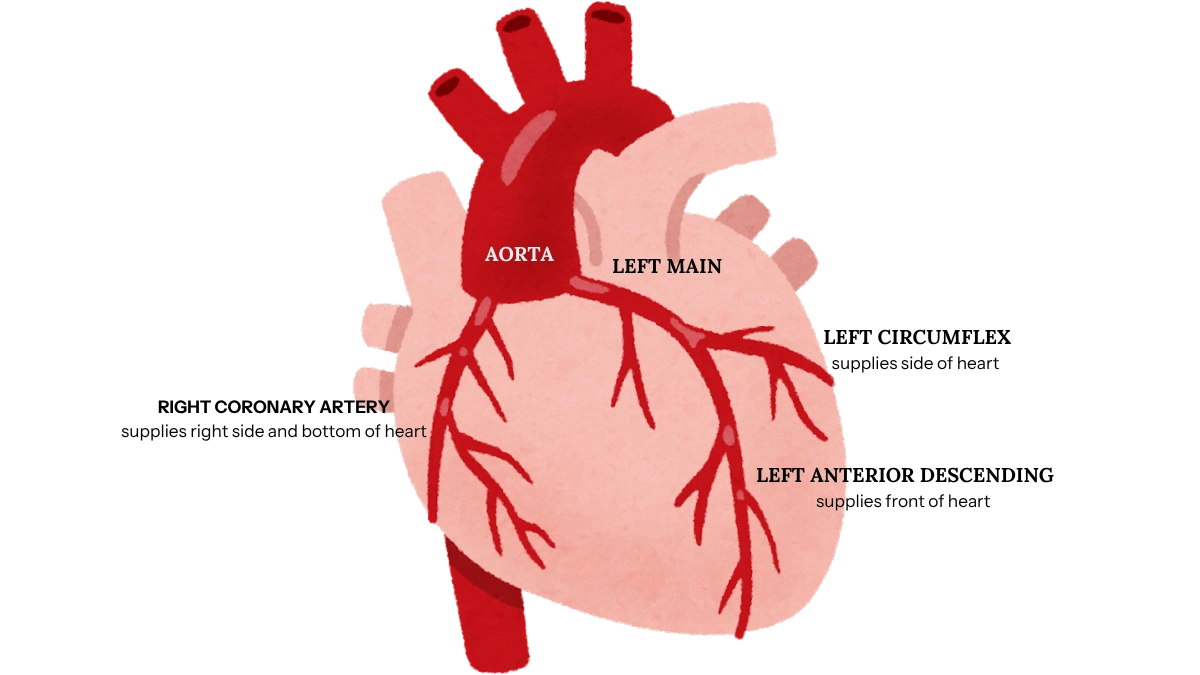
Diagram of the heart showing the three main coronary arteries — LAD, LCx, and RCA — as seen in anterior view
Figure 1. The three main coronary arteries supplying the heart muscle, shown in anterior view as the surgeon sees them. The patient’s right side is on the viewer’s left.

The heart has three main coronary arteries — the blood vessels that wrap around its surface and supply the heart muscle with the oxygen and nutrients it needs to keep beating. When one or more of these arteries becomes significantly narrowed or blocked, the heart muscle downstream is deprived of blood flow. That is coronary artery disease, and bypass surgery is one of the ways we restore that flow.

The three arteries are the left anterior descending artery, known as the LAD, which runs down the front of the heart and supplies a large portion of the left ventricle (the heart’s main pumping chamber). The left circumflex artery, or LCx, which curves around the left side of the heart, supplying the back and left side of the left ventricle. And the right coronary artery, or RCA, which supplies the right side of the heart and, in most people, the bottom wall of the left ventricle.

The LAD is the most important of the three. Because it supplies such a large portion of the left ventricle, significant blockages here demand prompt attention, and it is almost always the most important artery that we bypass.

Each of these three main arteries also has significant branches that supply their own territories of heart muscle. The diagonal branches come off the LAD and supply the front and side wall of the left ventricle. The marginal branches come off the LCx and supply the side wall. When one of these branches is large and significantly diseased, it can benefit from its own bypass — and this is often where a fourth graft comes from.

What the number actually means

A single bypass means one artery has been bypassed. A double bypass means two. A triple bypass — the most common type — means three arteries have been bypassed, typically the three main coronary arteries. A quadruple bypass means four grafts have been placed, usually because one of the main arteries also has a large branch that is diseased and needs its own bypass.

That is it. The number describes how many new routes we created around blocked segments — nothing more, nothing less.

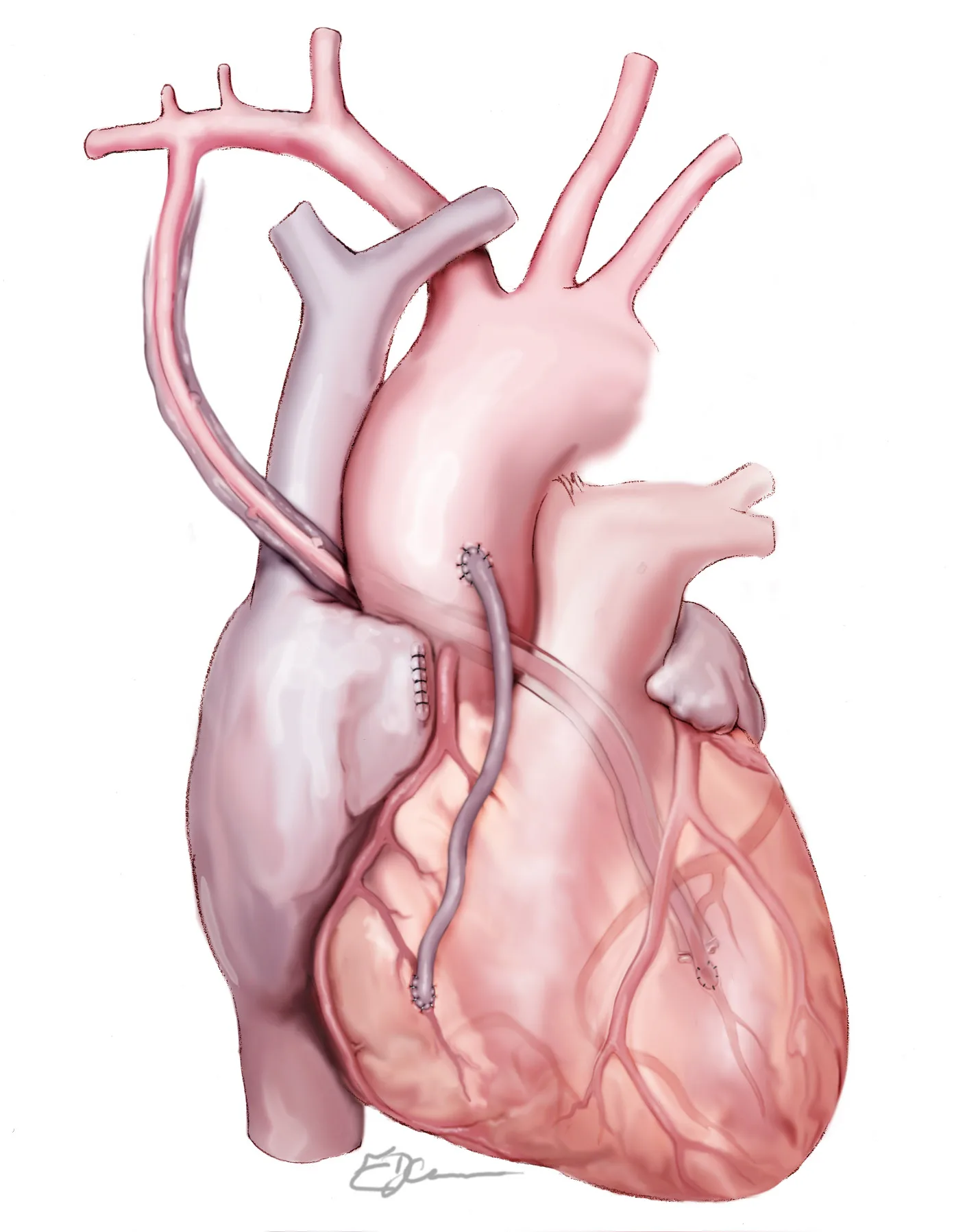
Illustration showing a traditional bypass arrangement with mammary artery to LAD and a vein graft to the right coronary territory
Figure 2

A traditional bypass arrangement

A bypass arrangement using the right internal mammary artery (RIMA), taken from inside the chest wall and crossed over to reach a coronary artery on the front of the heart, together with a saphenous vein graft from the leg.

Illustration: E. Jeannes

The number does not tell you how blocked the arteries were. It does not tell you how long the operation took. It does not tell you how serious your heart disease is compared to someone with a different number. And it certainly does not predict your recovery in any simple way.

The number of bypasses is best understood as a description of thoroughness. A surgeon who performs three bypasses on a patient with disease in all three main arteries has done a complete job. A surgeon who performs only one bypass on the same patient has left significant disease untreated — and that carries its own consequences.

The most common scenario

Triple bypass surgery is the most frequently performed type, because most patients who reach the point of needing surgery have significant disease in more than one artery. By the time coronary artery disease is severe enough to warrant surgery rather than stenting, it has often progressed throughout the coronary tree, affecting multiple vessels rather than a single isolated blockage.

This is not bad news. It is simply the nature of the disease, and it is exactly the scenario bypass surgery was designed to address.

Does more bypasses mean a more serious operation?

This is the question I am asked most often, and the honest answer is: not in the way most patients assume.

The duration and complexity of bypass surgery depends far more on the patient’s overall condition than on the number of grafts being placed. A triple bypass on a fit 58-year-old with good heart function, no diabetes, good lung function, and no prior cardiac surgery is a very different operation from a single bypass on a frail 75-year-old with a significantly weakened heart, impaired kidneys, and poor lung reserve. The first patient may be in theatre for three to four hours and home within five days. The second may face a considerably more complex course regardless of how many vessels were grafted.

What the surgical team is assessing before your operation is not primarily the number of bypasses required, it is you. Your age, your fitness, your heart muscle function, your other medical conditions, and whether you have had heart surgery before. These are the variables that shape the surgical risk, not the number written on the consent form.

3–5 hrs Typical theatre time for bypass surgery — whether single, double, or triple bypass in a suitable patient The additional time for each extra graft is generally 20–40 minutes

The grafts — what we use and why

Bypass surgery works by using a healthy blood vessel from elsewhere in the body to create a new route around the blocked section of a coronary artery. The vessel we choose — the graft — matters enormously for how long the bypass lasts.

The internal mammary artery — the gold standard

The left internal mammary artery (also called the left internal thoracic artery, or LIMA) runs along the inside of the chest wall and is the graft of choice for bypassing the LAD. The evidence for its longevity is extraordinary: more than 9 out of 10 of these grafts are still working well after 10 years, and many remain open at 20 years and beyond.

The reason is biological. The mammary artery is a living conduit. It adapts to its new role, responds to the demands of the coronary circulation, and resists the process of re-narrowing that affects vein grafts over time. When we place a LIMA-to-LAD graft, we are not simply creating a bypass — we are creating a durable, long-term solution for the most important artery in the heart.
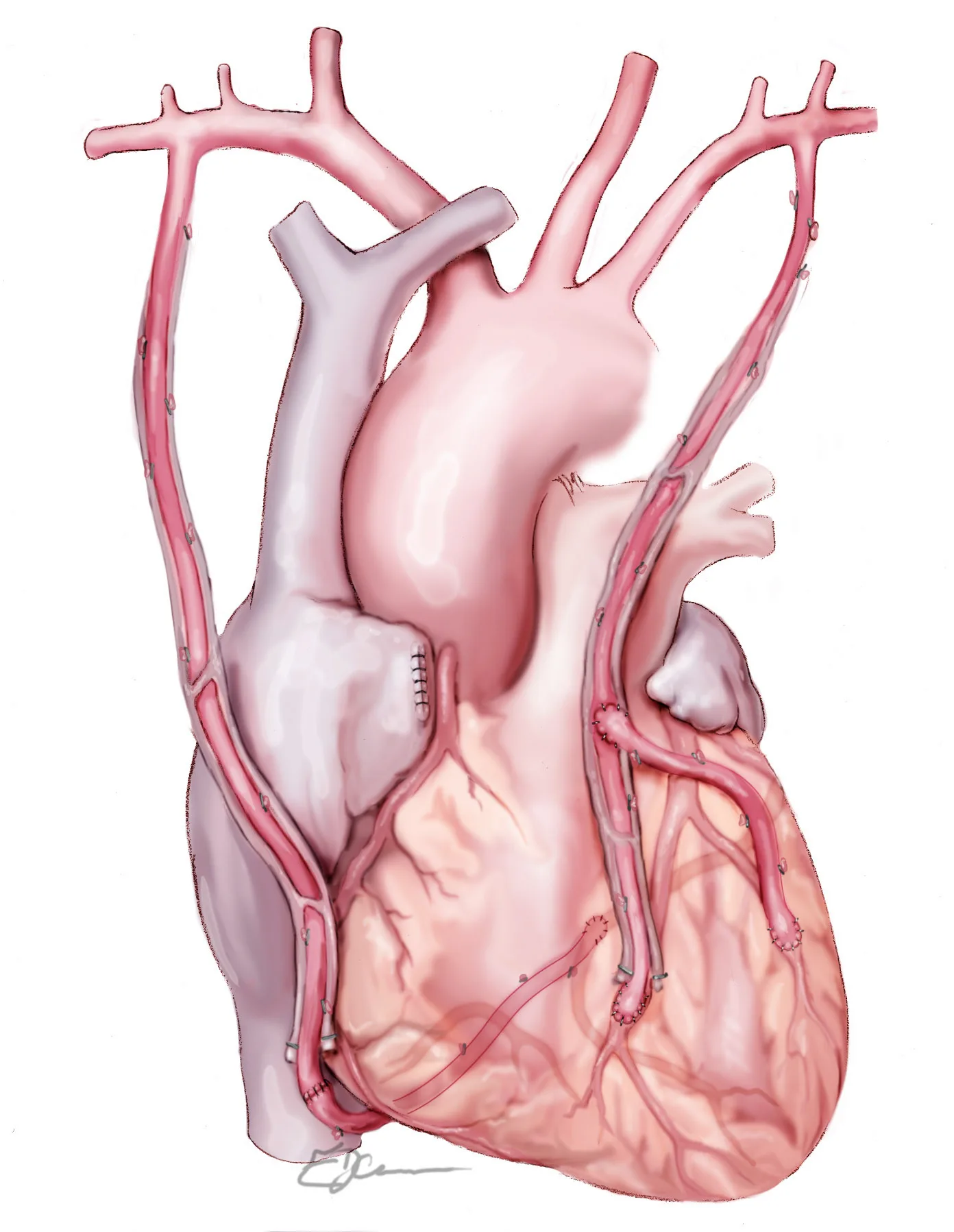
Illustration of maximum arterial revascularisation, combining both mammary arteries with a radial artery graft
Figure 3

All arterial grafts

Both mammary arteries combined with a radial artery graft from the forearm. All three coronary territories bypassed using arterial grafts, offering the most durable long-term result in younger patients.

Illustration: E. Jeannes

Where two mammary arteries are used — a technique known as bilateral internal mammary artery grafting — the evidence suggests even better long-term outcomes, particularly in younger patients. This is a more demanding approach and is not suitable for everyone, but in the right patient it represents the highest standard of surgical revascularisation.

The radial artery

The radial artery — the artery at the wrist used to take your pulse — can also be harvested and used as a graft in selected patients. Its long-term success rates fall between the mammary artery and the saphenous vein, and it is particularly useful in younger patients where durability is the priority.

The use of this artery was pioneered here in Melbourne by my mentor, Prof Buxton, in the late 1990s. Harvested from the forearm, it allows for a quick recovery and good outcomes. This graft has now been shown to have very good early and long-term results, staying open for over 15 years.
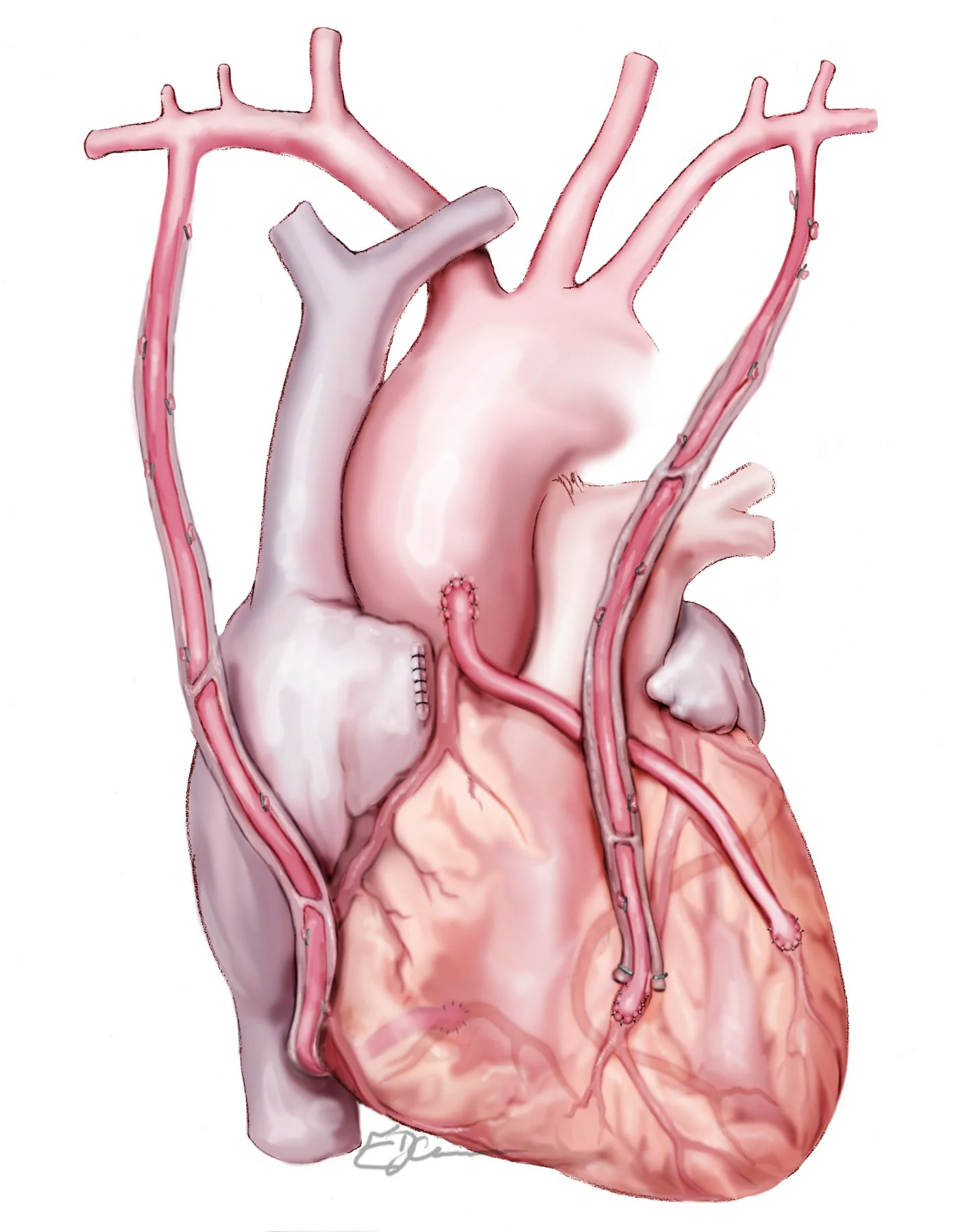
Illustration of bilateral internal mammary artery grafting, with both left and right mammary arteries used as bypass grafts
Figure 4

Using both mammary arteries

Both the left and right internal mammary arteries used as arterial grafts. Evidence suggests even better long-term outcomes in suitable patients, particularly younger ones. This approach is technically demanding and is not suitable for everyone.

Illustration: E. Jeannes

It is worth remembering that arterial grafts are much better than the alternative — saphenous vein grafts, which start to block off at around five years.

Saphenous vein grafts

The saphenous vein — the long vein running along the inside of the leg — is the most commonly used graft after the mammary artery. It is harvested through a small incision or, increasingly, through minimally invasive techniques, and used to bypass the remaining vessels.

Vein grafts are reliable and effective, but they do not last as long as arterial grafts. About half of saphenous vein grafts are still fully open after 10 years, compared to more than 9 out of 10 for the LIMA. This is not a failure of the surgery; it is simply the biology of vein grafts placed into the high-pressure arterial circulation. It means that for younger patients, or those with a long life expectancy, using as many arterial grafts as possible is an important part of surgical planning.

GraftSourceStill open at 10 yearsBest used for
Left internal mammary artery (LIMA)Inside chest wallMore than 9 in 10LAD bypass — gold standard in almost all patients
Right internal mammary artery (RIMA)Inside chest wallMore than 8 in 10Second arterial graft — particularly in younger patients
Radial arteryForearmAbout 8 in 10Additional arterial graft in suitable patients
Saphenous veinLegAbout 5 in 10Additional vessels — reliable and widely used

Quadruple bypass — and beyond

A quadruple bypass is less common than a triple, but far from rare. The fourth bypass almost always goes to one of the important branches of the three main arteries — most often a large diagonal branch off the LAD, or a significant marginal branch off the LCx — when that branch is diseased enough to be affecting heart muscle on its own.

So when your surgical team recommends a quadruple bypass, it does not usually mean you have a fourth main coronary artery that most people do not have. It means that one of the branches coming off your main arteries is large and important enough to warrant its own graft alongside the three main ones.

Quintuple bypass — five grafts — does occur, though it is uncommon. It typically involves the three main arteries plus two of their most significant branches, and is generally reserved for patients with very extensive coronary disease who are good surgical candidates.

I want to be clear about something important: the fact that a patient needs four grafts rather than three does not mean their operation is dramatically more dangerous or their recovery dramatically longer. It means their coronary disease was extensive enough to require four new routes, and that their surgical team was thorough enough to provide them.

Why a thorough job matters

One of the principles that guides every bypass operation I perform is the goal of restoring blood flow to every area of the heart that is at risk from significant disease. Surgeons call this complete revascularisation. In plain terms, it means leaving no important blockage behind.

The evidence is clear that leaving significant coronary disease untreated — because it is technically difficult or adds time to the operation — is associated with worse long-term outcomes. Patients whose disease is fully treated have lower rates of later heart attack, lower rates of repeat procedures, and better survival at five and ten years.

This is why the number of bypasses is, in some respects, a reflection of the surgeon’s commitment to doing the job properly. A patient who needs three vessels bypassed and receives three grafts has had their disease fully treated. A patient who receives only two grafts because the third vessel was technically challenging has been left with residual disease, and the consequences of that decision may not become apparent for years.

How we access the heart — and close it again

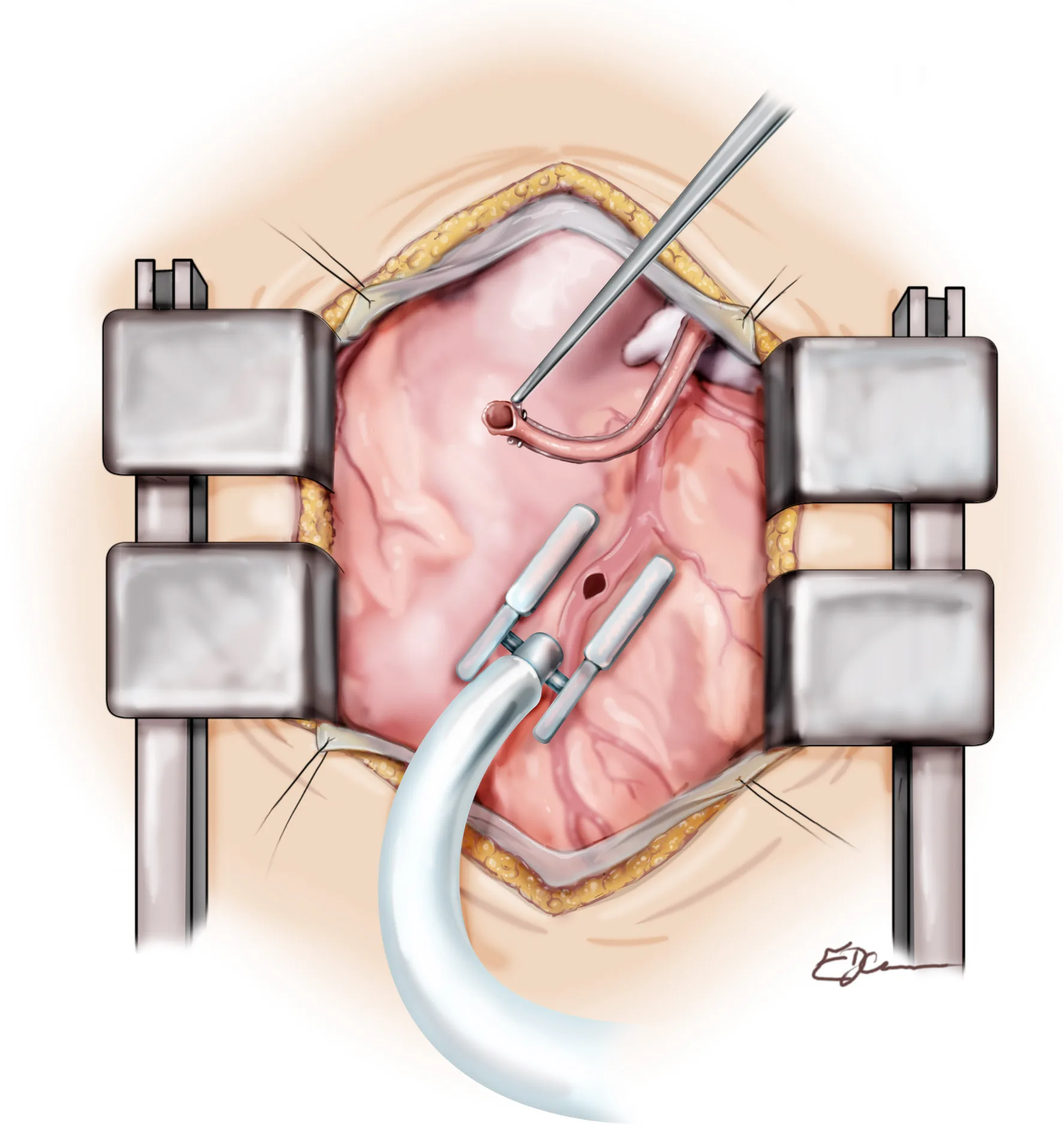
View inside the operative field during beating-heart bypass surgery through a median sternotomy
Figure 5

Inside the operative field

A view of the heart during bypass surgery, through the opening in the chest. The retractors on each side hold the chest open. The silver device in the middle gently holds a small area of the beating heart still while the graft is sewn on.

Illustration: E. Jeannes

For a typical triple bypass, the chest is opened through a midline incision called a median sternotomy (a controlled split of the breast bone). This gives the surgical team full access to all parts of the heart and allows us to harvest the internal mammary artery or arteries as grafts.

Traditionally, the split breast bone is brought back together at the end of the operation and held with stainless steel wires. One of the important improvements in recent years has been the use of titanium plates and screws to close the chest — a technique I have helped to develop. It is now recommended as part of modern Enhanced Recovery After Surgery (ERAS) guidelines, which are a set of practices designed to get patients home and back to normal life faster. With plate closure, patients need less pain relief, opioid use can often be avoided entirely, and the breast bone heals more securely.

When you meet your cardiac surgeon before your operation, it is entirely reasonable to ask: will all my blocked arteries be bypassed? What vessels are being grafted, and why? Are there any vessels that cannot be bypassed, and what does that mean for my outcome? And how will you close my chest — will you use plates and screws to help the breast bone heal?

Recovery — what the number means for you

The most important thing I can tell you about recovery from bypass surgery is this: the number of bypasses is one of the least important variables in how you will recover.

What matters far more is your age and baseline fitness, your heart muscle function going into the operation, whether you have diabetes, kidney disease, or lung disease, and whether this is your first heart surgery or a second operation after a previous one. A fit, active 60-year-old recovering from a triple bypass will almost always have a smoother and faster recovery than a sedentary 72-year-old recovering from a single bypass.

Recovery milestoneTypical timeframe
Breathing tube removedWithin hours of surgery in most patients
Out of intensive care24–48 hours
Home from hospital5–7 days in uncomplicated cases
Driving again4–6 weeks — check with your surgeon (as little as 2 weeks if the sternum is closed with plates)
Return to light activity4–6 weeks
Full recovery6–12 weeks for most patients
Cardiac rehabilitationBegins 4–6 weeks after surgery — strongly recommended

Cardiac rehabilitation — a structured program of supervised exercise, education, and psychological support — is one of the most important things you can do after bypass surgery, regardless of how many vessels were grafted. The evidence for its benefit in reducing repeat events, improving exercise capacity, and supporting return to a full life is overwhelming. I encourage every patient I operate on to attend.

A final word

Bypass surgery — whether single, double, triple, or quadruple — is one of the most studied and most successful operations in the history of medicine. More than a million procedures are performed worldwide each year, and the outcomes, for appropriately selected patients, are excellent.

The number of bypasses you need is determined by your anatomy — by the extent and location of your coronary disease, and by the surgical team’s commitment to treating it thoroughly. It is not a measure of how ill you are, how dangerous your operation will be, or how difficult your recovery will be. It is a description of thoroughness.

If you are facing bypass surgery, I hope this article has answered some of the questions that were forming in your mind when you first heard the number. The best thing you can do now is ask your cardiac surgeon to walk you through exactly what is planned — which vessels are being bypassed, what grafts will be used, and what treating all your disease thoroughly will mean for your long-term outlook. These are questions every cardiac surgeon expects to be asked, and they deserve a clear and complete answer.

Questions to ask your cardiac surgeon before bypass surgery

  • How many bypasses are planned, and which arteries are being grafted?
  • What grafts will be used — mammary artery, radial artery, or saphenous vein?
  • Will all my blocked arteries be bypassed — are there any vessels that cannot be treated?
  • What is my surgical risk based on my specific profile?
  • Will you close my chest with plates and screws?
  • What does recovery look like for someone with my age and health?
  • When can I start cardiac rehabilitation, and where should I go?
  • What medications will I need after surgery, and for how long?

Heart Health in Asian Populations

heartmatters.com 2026 04 01T061149.690
Key Points

  • People of South Asian background, with ancestry from India, Pakistan, Bangladesh, Sri Lanka, and Nepal, tend to develop heart disease earlier than Western populations, often at lower body weights. The good news is that this risk is very well understood and very actionable with the right awareness and early assessment.
  • People of East Asian background, with ancestry from China, Japan, Korea, and Southeast Asia, have a different but equally important cardiovascular profile, with higher rates of stroke and blood pressure-driven heart disease. Again, this is a risk profile that responds very well to early identification and management.
  • Standard cardiovascular risk calculators used by doctors were developed mainly in Western populations and may underestimate risk in South and East Asian individuals, which is why proactively raising your background in a cardiovascular risk conversation is so valuable.
  • Diabetes develops at lower body weights in both South and East Asian populations than in Western populations, making blood sugar assessment important even in people who appear slim by standard measures.
  • Early engagement with your healthcare team, even without symptoms, is the single most effective step people from these communities can take. The earlier the conversation, the more options are available.

If you are of South Asian or East Asian background, this article is written specifically for you, and it carries a message that is ultimately optimistic, not alarming.

Yes, the evidence shows that people from these communities face cardiovascular risks that are not fully captured by standard medical tools designed for Western populations. But the reason to know this is not to worry, it is to act. Because the cardiovascular risks that affect South and East Asian populations are well understood, largely preventable, and highly responsive to early intervention.

The most powerful thing you can do with the information in this article is use it to start a more specific and more informed conversation with your doctor. That conversation, had early, before symptoms develop, is where the difference is made.

Why Standard Risk Tools Sometimes Miss the Picture

Doctors use scoring tools and calculators to estimate a patient’s risk of having a heart attack or stroke over the next ten years. These tools consider age, blood pressure, cholesterol levels, smoking history, and family history, and they are genuinely useful. But they were developed and tested primarily using data from white Western European and North American populations.

For people of South Asian or East Asian background, these tools can underestimate risk, sometimes significantly. The body weight thresholds, cholesterol ranges, and blood pressure cut-offs that signal concern in a Western patient do not always apply in the same way. The result is that some people from these communities are told their risk is low when a more targeted assessment would identify important factors worth addressing.

This is not a failure of medicine, it is a gap that is now well recognised and being actively addressed in cardiovascular research. Knowing about it puts you in a position to ask the right questions.

South Asian Communities, What the Evidence Shows

Who this section applies to

South Asian refers to people with family roots in India, Pakistan, Bangladesh, Sri Lanka, Nepal, and Bhutan. This is one of the largest communities in Australia, the United States, the United Kingdom, and Canada, and one that carries a cardiovascular risk profile that deserves specific attention and specific action.

Heart disease tends to arrive earlier

Coronary artery disease, the narrowing of the arteries that supply the heart with blood, tends to develop earlier in South Asian individuals than in Western populations. This is not inevitable, and it is not a reason for fatalism. It is a reason for earlier, more proactive engagement with cardiovascular risk assessment, because identifying and managing risk factors in your thirties or forties is far more effective than waiting for symptoms to appear.

The disease also tends to affect the smaller coronary arteries, which are harder to see on some investigations and more diffuse in its distribution. This is another reason why a thorough assessment, rather than a single test, gives the most complete picture.

Act Early
For people of South Asian background, starting cardiovascular risk conversations with your doctor in your thirties rather than waiting for symptoms is one of the most effective things you can do for your long-term heart health. Early assessment means early action, and early action produces the best outcomes.

Body weight, why standard measures can be misleading

The standard BMI, body mass index, thresholds used in Western medicine define overweight as a BMI above 25 and obese above 30. These thresholds were developed using data from Western populations and do not translate directly to South Asian individuals.

South Asian bodies tend to carry more fat around the abdomen, even at lower overall body weights, and this abdominal fat pattern is more strongly linked to metabolic problems like insulin resistance, high blood sugar, and abnormal cholesterol than fat carried elsewhere. As a result, a South Asian person with a BMI of 23 or 24, technically “normal weight” by standard measures, may already have a metabolic profile that warrants attention and management.

Waist circumference, the measurement around the middle, is a more useful indicator of this risk than BMI alone. If you are of South Asian background, asking your doctor to measure your waist circumference alongside your weight gives a more complete picture of your cardiometabolic health.

Diabetes, why it develops earlier and at lower weights

Type 2 diabetes, a condition where the body does not manage blood sugar properly, is two to four times more common in South Asian populations than in white Western populations, and it tends to develop at younger ages and lower body weights. This matters enormously for cardiovascular health because diabetes significantly amplifies the risk of heart disease and stroke when it is present.

The practical implication is that a blood sugar test, specifically an HbA1c, which gives a three-month average of blood sugar control, is worth requesting even if you are not overweight and have no obvious symptoms of diabetes. Identifying pre-diabetes or early diabetes early gives the best chance of reversing it before it affects the heart.

Lp(a), an inherited risk factor worth knowing about

Lipoprotein(a), usually written as Lp(a) and pronounced “L-P-little-a”, is an inherited particle in the blood that raises cardiovascular risk. It is not affected by diet, exercise, or standard cholesterol-lowering medications, and it is carried in elevated amounts by a higher proportion of South Asian individuals than most other populations.

Most people have never had their Lp(a) measured, because it is not part of standard cholesterol testing. But it is a simple blood test, needs only to be done once in a lifetime, and identifies an important risk factor that completely changes the management conversation when it is elevated. We have a dedicated article on Lp(a) and what it means for your heart on Heart Matters. If you are of South Asian background, particularly with a family history of early heart disease, asking your doctor about Lp(a) is one of the most valuable things you can do at your next appointment.

As someone of South Asian background myself, this is not an abstract clinical observation, it is something I see in my own extended family and community. The patients who arrive in my operating theatre with advanced coronary disease in their forties are often people whose risk was underestimated for years because the standard tools were not built with them in mind. Earlier conversations change outcomes. I have seen it.

— Prof. Jai Raman, Cardiothoracic Surgeon

East Asian Communities, What the Evidence Shows

Who this section applies to

East Asian refers to people with family roots in China, Japan, Korea, Taiwan, Hong Kong, and Mongolia. Southeast Asian encompasses Vietnam, Thailand, the Philippines, Indonesia, Malaysia, Cambodia, and neighbouring countries. While these are richly diverse populations with very different cultural and dietary traditions, they share some important cardiovascular patterns that are worth understanding.

Stroke, the priority risk to manage

East Asian populations generally have lower rates of coronary artery disease, blocked heart arteries, compared to South Asian or Western populations. This is genuinely positive and reflects the protective effects of traditional dietary patterns and historically lower rates of obesity in these communities.

However, stroke rates are higher, and this is the cardiovascular priority for East Asian populations. A stroke occurs when blood supply to part of the brain is interrupted, either by a blocked artery or a burst blood vessel. Both types are more common in East Asian populations than in Western ones, and both are strongly driven by high blood pressure, which is the most important cardiovascular risk factor to manage in these communities.

Blood pressure and salt, a particularly important connection

High blood pressure, or hypertension, is the dominant cardiovascular risk factor in East Asian populations, and it responds particularly strongly to dietary salt intake. Many traditional East Asian cuisines are naturally high in sodium, from soy sauce, fish sauce, miso, preserved vegetables, and processed foods, and this dietary pattern can contribute meaningfully to blood pressure elevation over time.

The good news is that this is one of the most modifiable risk factors available. Reducing dietary sodium, alongside medication where needed, produces very meaningful reductions in blood pressure and stroke risk. Having your blood pressure checked regularly, and monitoring it at home with a home blood pressure device, is one of the highest-value health habits for anyone of East Asian background. We have a dedicated article on monitoring blood pressure at home on Heart Matters.

Atrial fibrillation, a specific conversation worth having

Atrial fibrillation, or AF, is a common heart rhythm condition where the upper chambers of the heart beat irregularly rather than in a coordinated rhythm. When AF is present, blood can pool in the heart and form clots, which can travel to the brain and cause a stroke. We have a dedicated article on AF and stroke risk on Heart Matters.

In East Asian populations, the stroke risk associated with AF appears to be somewhat higher than in Western populations, which means the decision about whether to use blood-thinning medication to protect against stroke is particularly important. If you have been diagnosed with AF and are of East Asian background, having an explicit conversation with your cardiologist about your stroke risk and the best approach to managing it is very worthwhile.

Sleep apnoea at lower body weights

Obstructive sleep apnoea, a condition where breathing repeatedly stops and starts during sleep, is a significant but under-recognised cardiovascular risk factor. It is associated with high blood pressure, atrial fibrillation, and heart failure. Most people are aware that it is more common in people who are overweight, but in East and Southeast Asian populations, sleep apnoea develops at significantly lower body weights than in Western populations, due to differences in facial bone structure that affect the size of the upper airway.

This means that a lean East Asian person with heavy snoring, morning headaches, or unrefreshing sleep should be assessed for sleep apnoea regardless of their weight. We cover this in detail in our dedicated article on obstructive sleep apnoea and the heart.

Alcohol, an important note for East Asian individuals

Approximately one in three people of East Asian background carries a genetic variation that affects how the body processes alcohol. When alcohol is consumed, the body normally breaks it down through a series of steps. In people with this genetic variation, one of those steps does not work properly, causing a build-up of a toxic substance called acetaldehyde. This produces the characteristic facial flushing, redness of the face and neck, that many East Asian people experience after even small amounts of alcohol.

This flushing is not merely a cosmetic reaction. The acetaldehyde that builds up is a direct cardiovascular toxin and is also linked to an increased risk of certain cancers. For people of East Asian background who experience this flushing response, there is a particularly strong cardiovascular reason to keep alcohol consumption to a minimum. We discuss this further in our dedicated article on alcohol and the heart.

The Positive Picture, What Early Action Achieves

Everything described in this article is actionable. Every risk factor mentioned, blood pressure, blood sugar, Lp(a), sleep apnoea, cholesterol, dietary sodium, alcohol, can be identified with simple tests, and most can be meaningfully reduced with a combination of lifestyle changes and, where needed, medication.

The cardiovascular outcomes for South and East Asian patients who are identified early and managed proactively are excellent. The gap in outcomes between these populations and Western populations is not biological destiny, it is largely a consequence of later presentation and less targeted risk assessment. Change those two things, and the outcomes change with them.

The most important step is the first one: a conversation with your doctor that explicitly addresses your background and what it means for your cardiovascular risk assessment.

Background Priority areas to discuss with your doctor Key tests worth asking about
South Asian Earlier cardiovascular risk assessment, diabetes screening at lower BMI, family history of early heart disease, abdominal weight distribution Lp(a) blood test, HbA1c, waist circumference, full lipid profile, blood pressure
East Asian Blood pressure control and home monitoring, dietary sodium, stroke risk if AF is present, sleep apnoea assessment, alcohol and the ALDH2 flushing response Home blood pressure readings, HbA1c, sleep study if snoring or unrefreshing sleep, ECG if palpitations
Southeast Asian Overlapping features from both groups above; rheumatic heart disease history if from an endemic region Individualised based on specific background, discuss with your doctor what applies most to you

The patients I worry least about are the ones who come to see me early, before symptoms, before a crisis, and say “I know my background puts me at higher risk, so I want to understand where I stand.” That conversation, had in your thirties or forties, gives us every opportunity to protect your heart for decades to come.

— Prof. Peter Barlis, Interventional Cardiologist

A Note on Acculturation, Second and Third Generations

One pattern worth understanding is what happens as South and East Asian families become more established in Western countries across generations. First-generation immigrants often maintain the dietary patterns of their home country, which, particularly for East Asian families, can be quite protective. Second and third generations frequently adopt more Western eating habits, more processed food, more refined carbohydrate, less of the traditional plant-based and fermented foods, while sometimes losing awareness of the specific cardiovascular risks their background carries.

If you are a second or third-generation Australian, American, or British person of South or East Asian descent, the cardiovascular risk profile of your ethnic background applies to you just as much as it does to a first-generation immigrant. It is worth knowing about, and worth discussing with your doctor.

Questions to raise at your next appointment

  • Does my South Asian or East Asian background affect my cardiovascular risk, and does the standard risk calculator my practice uses account for this?
  • Should I have my Lp(a) measured? I understand it is elevated more commonly in people of South Asian background.
  • Can we check my waist circumference and HbA1c alongside my standard blood tests, even though I am not overweight?
  • I have AF, does my background affect my stroke risk or the best approach to anticoagulation for me?
  • I snore and wake feeling unrefreshed, should I be assessed for sleep apnoea regardless of my weight?

Free Download, Heart Matters

Our Heart Health Risk Factor Checklist covers 12 cardiovascular risk categories, a useful tool to complete before any appointment, to ensure the full picture is discussed and nothing important is overlooked.

Download the Risk Factor Checklist →

Heart Matters Resource

When in Doubt, Get Checked Out

If you are of South Asian or East Asian background and have not had a cardiovascular risk assessment that explicitly accounts for your ethnic background, that conversation with your doctor is one of the most valuable you can have. Start it today.

Read: When in Doubt, Get Checked Out →

Conclusion

The cardiovascular risks that affect South and East Asian communities are real, well understood, and highly manageable when identified early. The standard medical tools that doctors use every day were not built with your specific background in mind, which means you may need to be the one who brings this conversation to your appointment.

That is not a burden, it is an opportunity. The person who walks into their doctor’s office armed with this awareness, asks the right questions, and gets the right assessment is the person who gives themselves the best possible chance of a long and healthy life.

Your background is not your destiny. It is information, and information, acted on early, is one of the most powerful tools in cardiovascular medicine.

More from Heart Matters

Aortic Stenosis: When the Heart’s Gateway Narrows

HEART MATTERS ARTICLES 25

Cardiothoracic surgeon Prof Jai Raman explains aortic stenosis, what causes the heart’s aortic valve to narrow, how to recognise the symptoms, and what modern treatment options including TAVR now mean for patients.