Key Points
- Drug-coated balloons (DCBs) are a catheter-based treatment that delivers medication directly to the artery wall without leaving any permanent metal implant behind.
- They have been used for many years to treat in-stent restenosis, when a previously placed stent re-narrows, with excellent results.
- Emerging evidence suggests DCBs may also have a role in treating certain new blockages, particularly in small vessels and complex bifurcation lesions.
- They are not a replacement for stents in most situations, stents remain the gold standard for the majority of significant coronary blockages.
- The field is evolving quickly, and as more trial data emerges, the range of patients and lesions suitable for DCB treatment is likely to grow.
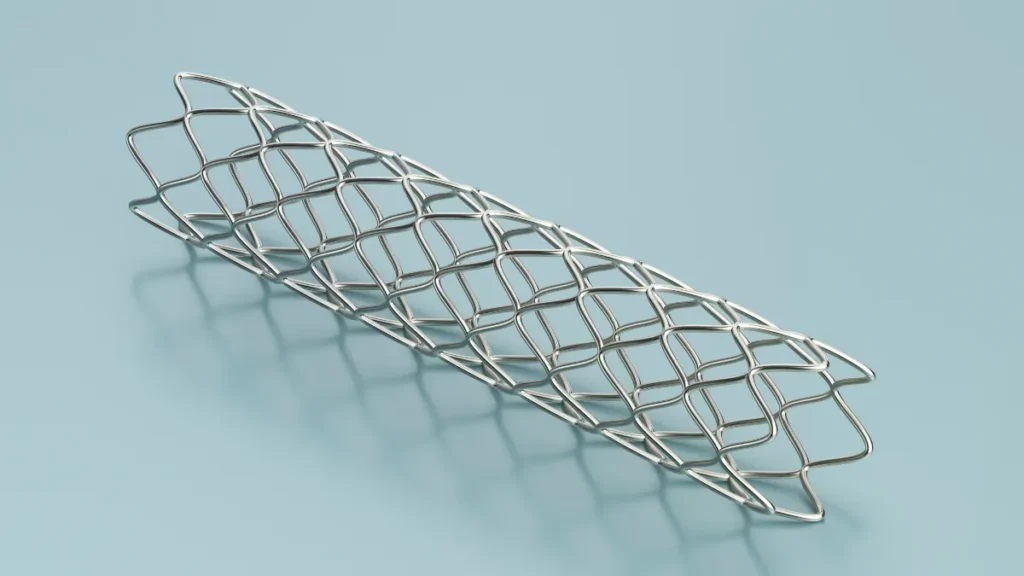
If you have been diagnosed with coronary artery disease, you may have heard about heart stents, small metal scaffolds placed inside a narrowed artery to keep it open. Stents have transformed the treatment of coronary artery disease over the past three decades, and they remain the cornerstone of what we do in the catheter laboratory.
But there is another technology quietly gaining ground, one that treats narrowed arteries without leaving anything permanent behind. Drug-coated balloons are not new, but their potential role is expanding, and it is worth understanding what they are and where they fit.
What is a drug-coated balloon?
A drug-coated balloon works on the same basic principle as conventional balloon angioplasty, a small balloon is threaded through a catheter to the site of a blockage and inflated to open the artery. The difference is that the balloon’s surface is coated with a medication that is transferred directly to the artery wall during inflation.
That medication, usually paclitaxel or sirolimus, helps prevent the artery from re-narrowing after the procedure. Once the balloon has done its job, it is deflated and removed completely. Nothing is left behind. The artery is treated, not scaffolded.
Where have drug-coated balloons been used until now?
The established home for DCBs has been in-stent restenosis, the frustrating situation where a stent that was placed years earlier gradually re-narrows due to tissue growing back through the metal mesh. Treating restenosis with another stent risks creating a further layer of metal and the same problem recurring. A DCB can treat the restenosis effectively without adding more metal, and the evidence for this is well established.
DCBs have also been used for some time in small vessel disease, arteries that are too narrow to accommodate a stent reliably, where placing metal risks more complications than it prevents.
left behind, drug-coated balloons treat the artery wall directly and are then fully removed
What about new blockages?
This is where things are getting interesting. The traditional view has been that DCBs are for restenosis, not for treating new, previously untouched blockages (what we call de novo lesions). That boundary is starting to shift.
Emerging trial data suggests that in carefully selected patients and lesion types, DCBs can produce outcomes comparable to drug-eluting stents even in new blockages. The appeal is obvious, if you can achieve the same result without implanting permanent metal, you potentially avoid the long-term complications that come with stents, including the small but real risk of late stent thrombosis and the need for prolonged blood-thinning medication.
In my practice, I am seeing more situations where a drug-coated balloon is a genuinely attractive option, but patient and lesion selection remains everything. This is not a technology for every blockage.
One area where DCBs are showing particular promise for new lesions is in bifurcation disease, where a blockage occurs at a fork in the artery, where a main vessel divides into a side branch. These are among the most technically challenging lesions in interventional cardiology, and two-stent strategies at bifurcations carry a modestly higher risk of complications. Using a DCB to treat the side branch while stenting the main vessel is an approach that is generating real interest and growing evidence.
What are the advantages of leaving no metal behind?
| Advantage | What it means in practice |
|---|---|
| No permanent implant | The artery retains its natural flexibility and structure |
| Shorter blood-thinning treatment | Less time on dual antiplatelet therapy, reducing bleeding risk |
| Easier future procedures | No stent to navigate around if further intervention is ever needed |
| No late stent complications | Avoids the small risk of late stent thrombosis that exists with permanent metal |
What are the current limitations?
DCBs are not the right tool for every situation, and it is important to be honest about that. In larger arteries, or those with heavy calcification, a stent’s mechanical scaffolding is essential, a balloon alone cannot hold the vessel open reliably. Some arteries, when dilated, can develop small tears (dissections) that require a stent to seal them. And in the most complex blockages, the long-term data for DCBs simply does not yet match the decades of evidence behind modern drug-eluting stents.
The honest position is that DCBs are a valuable and evolving tool, but one that requires careful judgement about which patients and which lesions are genuinely suitable. Getting that selection right is what determines whether the outcome is excellent.
Where is the evidence heading?
Several important clinical trials are underway or recently reported examining DCBs in new coronary lesions, and the results are cautiously encouraging. The pattern emerging from the data is consistent, in smaller vessels, simpler lesions, and specific anatomical situations like bifurcations, DCBs perform well. In larger, more complex disease, stents remain superior.
As the technology improves, newer sirolimus-coated balloons in particular are showing promising results, and as longer-term follow-up data accumulates, it is likely that the range of patients for whom a DCB is the best choice will expand. This is a field that is genuinely moving, and the interventional cardiology community is watching the trial results closely.
Questions to Ask Your Cardiologist
If you are being considered for a coronary procedure, here are some questions worth raising:
Questions worth asking
- Is my lesion the type that might be suitable for a drug-coated balloon, or is a stent clearly the better option in my case?
- If I receive a stent, how long will I need to take dual antiplatelet therapy, and what does that involve?
- If I have a previous stent that has re-narrowed, is a drug-coated balloon an option for treating it?
- What experience does your centre have with drug-coated balloons, particularly for the type of lesion I have?
Conclusion
Drug-coated balloons represent one of the more exciting developments in interventional cardiology in recent years, not because they are about to replace stents, but because they offer a genuinely different approach for the right patients. The ability to treat a blockage effectively without leaving permanent metal behind is an appealing prospect, and the evidence supporting their use is steadily growing.
For most significant coronary blockages today, a drug-eluting stent remains the gold standard. But the boundaries of where DCBs are appropriate are shifting, and as ongoing trial results emerge, more patients are likely to benefit from this stent-free approach.
As always, the best treatment is the one chosen carefully for your specific situation, and that conversation with your cardiologist remains the most important one to have.
Free Resources
Our Heart Glossary explains terms like coronary artery disease, restenosis, dual antiplatelet therapy, and bifurcation in plain language.