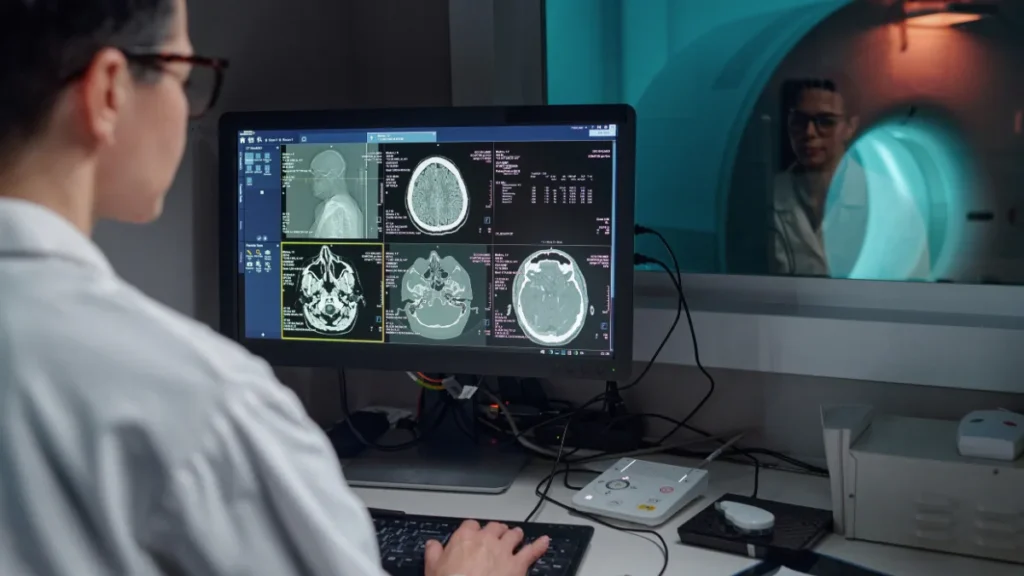
- A stroke happens when blood flow to part of the brain is cut off and brain cells begin to die. A TIA, or transient ischaemic attack, causes the same symptoms, but the blockage clears on its own before permanent damage occurs.
- A TIA is a medical emergency, not a minor event. The risk of a full stroke is highest in the 48 hours that follow, so rapid assessment and treatment in that window makes an enormous difference.
- Investigations after a stroke or TIA focus on finding the cause: narrowing in the neck arteries, an irregular heart rhythm called atrial fibrillation, a structural problem with the heart, or abnormal blood clotting.
- The right medications started promptly after a TIA, including blood thinners, blood pressure treatment, and statins, significantly reduce the risk of a subsequent stroke.
- A TIA is not a frightening endpoint. It is an opportunity. The evidence that acting quickly and comprehensively prevents stroke is among the strongest in all of vascular medicine.
A stroke or TIA can feel frightening when the symptoms first appear. One side of the face droops. A hand will not grip. Words come out wrong. Whether those symptoms last two minutes or two hours, they mean something important is happening that demands to be taken seriously.
A TIA is one of the most important medical events a person can experience, not because of the symptoms themselves, which resolve completely, but because of what they represent. The brain’s blood supply was briefly interrupted. The fact that it recovered fully this time does not mean the underlying cause has gone away.
The good news, and this is the central message, is that medicine now has highly effective ways to respond. The window between a TIA and a potential stroke is narrow, but it is also a genuine opportunity to intervene. The people who do best are those who engage with that opportunity quickly and completely.
What Is a Stroke?
A stroke happens when blood flow to part of the brain is suddenly interrupted. There are two main types. An ischaemic stroke occurs when a clot blocks one of the arteries supplying the brain. A haemorrhagic stroke occurs when there is bleeding from a blood vessel in or around the brain. In both situations, the affected area of the brain is at risk of injury, which is why time is so important in treatment.
The effects depend on which part of the brain is affected. Speech, movement, vision, balance, and memory can all be disrupted. Some effects improve significantly over time with rehabilitation, while others can be longer lasting or permanent. This is precisely why preventing a first stroke, or a second one, matters so much.
What Is a TIA?
A TIA, or transient ischaemic attack, produces exactly the same symptoms as a stroke, but the blockage clears on its own before permanent damage occurs. Symptoms appear suddenly, typically peak within seconds to a minute, and then resolve completely. In most cases this happens within minutes, though by definition it occurs within 24 hours.
Brain imaging after a true TIA shows no area of permanent damage. This is what distinguishes it from a minor stroke, though the immediate management of both is identical.
It is sometimes called a “mini-stroke”, but that name does it a serious disservice. A TIA is not a small event. It is a clear warning that the blood supply to the brain is not right, and that the risk of a full stroke in the days and weeks ahead is significantly elevated.
I never dismiss a TIA because the symptoms have passed. The fact that the brain recovered is exactly what gives us the best possible chance to prevent what could come next.
Prof. Peter Barlis, Interventional Cardiologist
people who have a TIA will go on to have a full stroke within 3 months without treatment, with the highest risk concentrated in the first 48 hours.
American Stroke Association
Recognising the Signs: FAST
The FAST acronym captures the most important warning signs of stroke and TIA. Knowing it can save a life. TIA symptoms are neurological. They reflect whichever part of the brain has been briefly deprived of blood. They come on suddenly and without warning. The key word is sudden.
Recognise a Stroke: F.A.S.T.
If you see any of these signs, call 000 immediately. Do not wait. Do not drive to hospital. Every minute matters.
- F — Face. Sudden drooping or weakness on one side. Ask the person to smile. Is it uneven?
- A — Arms. Sudden weakness or numbness in one arm. Can they raise both arms and hold them there?
- S — Speech. Slurred, confused, or absent speech, even briefly.
- T — Time. Call emergency services immediately. Do not wait to see if symptoms resolve.
Other warning signs include sudden loss of vision in one eye, double vision, severe unexplained dizziness, or sudden loss of coordination. Even if everything resolves on the way to hospital, urgent assessment is still essential. A TIA that has passed is still a TIA.
What Investigations Will I Have?
The purpose of investigation after a stroke or TIA is not simply to confirm what happened. It is to find out why, because the answer determines the treatment. Your medical team will want to move through this quickly, often within the first 24 to 48 hours.
Brain imaging: MRI and CT
The first priority is imaging the brain. A CT scan is often performed first in the emergency setting because it is fast and widely available, and can quickly exclude a bleed in the brain. An MRI scan follows when possible, as it is more sensitive. MRI can identify whether any permanent damage has occurred, and can also reveal older areas of reduced blood flow that may point to the underlying cause.
When the MRI shows multiple small areas of damage scattered across different parts of the brain, this is a strong signal that clots are being released from somewhere into the circulation, often from the heart. Finding that source becomes the priority.
Carotid artery ultrasound
The carotid arteries run up either side of the neck and supply blood directly to the brain. A build-up of fatty plaque in these arteries, called carotid stenosis or narrowing, is one of the most common and treatable causes of stroke and TIA.
A carotid Doppler ultrasound is a simple, painless scan that measures blood flow through these arteries. If significant narrowing is found on the side corresponding to your symptoms, a procedure to clear or widen the artery may be recommended, and the evidence for doing this promptly after a TIA is strong.
Heart rhythm monitoring: finding atrial fibrillation
Atrial fibrillation, or AF, is responsible for approximately one in five strokes. AF is an irregular heart rhythm in which the heart beats chaotically rather than in a coordinated fashion. When this happens, blood can pool in a small pouch in the left side of the heart called the left atrial appendage, forming a clot that can then travel to the brain.
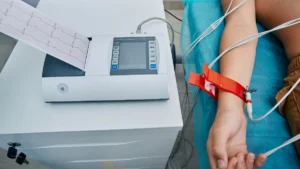
The challenge is that AF often comes and goes rather than being present all the time. This means a standard ECG, which records the heart rhythm for only a few seconds, may look entirely normal even in someone who has AF. Longer-term monitoring is often needed to catch it.
| Monitor Type | How Long It Records | What It Detects |
|---|---|---|
| Standard ECG | A few seconds | AF present at the exact moment of recording |
| Holter monitor | 24 to 48 hours | AF that comes and goes over a day or two |
| Patch monitor | Up to 14 days | Infrequent AF that short monitoring misses |
| Implantable loop recorder | Up to 3 years | Very infrequent or hidden AF, highest sensitivity |
When longer-term monitoring is needed
Sometimes a Holter or patch monitor comes back normal, but the clinical picture still strongly suggests the heart is the source of the problem. This is particularly the case when MRI has shown multiple small areas of damage in different parts of the brain, which points toward clots originating from a single source (often the heart) and being carried through the circulation.
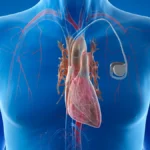
In this situation, your specialist may recommend an implantable loop recorder. It is a small device, roughly the size of a USB stick, placed just beneath the skin of the chest under local anaesthetic in a minor procedure. It monitors the heart rhythm continuously for up to three years, transmitting data wirelessly to your cardiologist.
Studies have shown that prolonged monitoring with a loop recorder detects AF in a significant proportion of patients whose stroke initially had no clear cause. Finding AF months or even years after the original event still matters enormously, because it changes treatment from antiplatelet therapy to anticoagulation and substantially reduces the risk of a further stroke.
If your specialist has recommended a loop recorder, this reflects a thorough and proactive approach, not a sign that something has been missed.
Echocardiogram: imaging the heart
An echocardiogram is an ultrasound scan of the heart that shows its structure, function, and valves in detail. After a stroke or TIA, it helps identify whether the heart itself may be the source of a clot.
Conditions that can cause clots to form in the heart include reduced pumping function, valve disease, and a patent foramen ovale, or PFO. This is a small hole between the upper chambers of the heart that is present in around one in four people and that can allow clots to cross directly into the arterial circulation.
When a standard echocardiogram does not provide a clear enough view, a transoesophageal echocardiogram, or TOE, can be performed. A small probe is passed gently down the oesophagus, which sits directly behind the heart, giving a much closer and more detailed image of the heart and the large blood vessel that leaves it.
Blood tests
Blood tests assess cholesterol levels, including LDL, HDL, and triglycerides, along with blood glucose and HbA1c (a measure of your average blood sugar over the past three months) to screen for diabetes. A full blood count looks for conditions that increase the tendency to form clots, such as polycythaemia (an excess of red blood cells) or thrombophilia (an inherited tendency to form clots more readily than normal).
One marker worth asking about specifically is Lp(a), or lipoprotein(a). This is a lesser-known type of cholesterol-related particle that is not included in standard cholesterol tests. It is largely determined by genetics, and elevated levels independently raise the risk of both stroke and heart disease. As targeted therapies for elevated Lp(a) are now becoming available, identifying it early is increasingly meaningful. Read more in our article on lipoprotein(a) and inherited heart risk.
Medications That Reduce the Risk of a Future Stroke
The evidence base for stroke prevention after TIA is strong and well established. Several different classes of medication are used, and starting the right ones promptly is where much of the long-term risk reduction occurs.
The information below describes the main categories used in this setting and explains why each one matters. It is not a recommendation about your specific regimen. The choice of medication, combination, dose, and duration is an individual clinical decision that sits with your neurologist, cardiologist, and treating team.
Blood-thinning medications
Blood-thinning medications fall into two main groups, and they work in different ways. Antiplatelet medications, such as aspirin and clopidogrel, reduce the tendency of platelets (the tiny blood cells involved in clot formation) to stick together. Anticoagulants, such as warfarin and the newer direct oral anticoagulants (DOACs) including apixaban and rivaroxaban, work further along the clotting pathway and are more effective at preventing clots formed inside the heart.
Which group is used depends on the cause of the stroke or TIA. After a stroke or TIA not caused by atrial fibrillation, antiplatelet therapy is generally the cornerstone. In some situations, particularly the high-risk period immediately after a TIA, a second antiplatelet agent may be added for a defined period of time. Whether one or two agents are used, and for how long, is a careful clinical judgement made by your treating team based on the specific cause and your individual risk profile.
If atrial fibrillation is identified as the cause, the approach changes. Anticoagulants are generally more effective than antiplatelets in this setting because they target clots formed in the heart. Most patients with AF who would have once been treated with warfarin are now treated with a DOAC instead, since DOACs are generally easier to take, do not require regular blood tests for monitoring, and have a favourable safety profile. The choice of agent, the timing of starting it after the event, and the balance against any bleeding risk are decisions made by your specialist team.
Blood pressure treatment
High blood pressure is the single most important modifiable risk factor for stroke. Even modest, sustained reductions in blood pressure translate into meaningful reductions in the risk of a recurrent event.
ACE inhibitors are one class of blood pressure medication often used in this setting. The landmark PROGRESS trial showed a significant reduction in recurrent stroke with ACE inhibitor-based therapy after a first stroke or TIA, even in patients whose blood pressure was not markedly elevated. The benefit appeared to extend beyond simple blood pressure lowering. Several other classes of blood pressure medication are also effective, and the right combination for you depends on your other conditions and is a decision for your treating team.
Statins and cholesterol management
Statin therapy is often part of long-term care after a stroke or TIA, sometimes regardless of the baseline LDL cholesterol level. Statins do more than lower cholesterol. They stabilise arterial plaque, reduce inflammation in blood vessel walls, and lower the risk of future events through mechanisms that go beyond simple lipid reduction.
Lp(a) deserves specific mention here too. Standard lipid panels do not routinely include it, yet elevated Lp(a) is an independent risk factor for stroke and coronary artery disease. If your Lp(a) has not been checked, it is worth raising with your doctor, particularly as targeted therapies are becoming available.
Lifestyle Changes That Make a Meaningful Difference
Medications work best alongside genuine lifestyle change. The combination is more powerful than either alone.
Stop smoking
The single highest-impact change available, if relevant to you. Your doctor can help with cessation support and prescription options.
Move daily
Regular walking counts. Small and consistent beats occasional and intense, and 30 minutes most days is a realistic starting target.
Eat Mediterranean
A Mediterranean-style diet has the strongest evidence base for both heart and brain health. Olive oil, vegetables, legumes, oily fish, nuts.
Check your blood pressure
A home monitor is a small investment with a large payoff. Knowing your numbers makes the conversation with your doctor far more useful.
Stay engaged with your team
Long-term follow up matters. Knowing your medications, your targets, and what to ask at each appointment keeps you in control of the plan.
Protect your sleep
Poor sleep raises blood pressure and stress hormones. If snoring or daytime tiredness is significant, ask about obstructive sleep apnoea.
These do not all need to happen at once. Starting with the highest-impact change first, usually blood pressure control or smoking cessation if relevant, and building from there is both realistic and effective.
Heart Matters Resource
When in Doubt, Get Checked Out
If you or someone with you develops sudden facial drooping, arm weakness, speech difficulty, or any other sudden neurological symptom, even one that resolves quickly, call 000 immediately. Do not drive to hospital. Do not wait to see if things improve. A TIA that has passed is still a TIA, and the window for intervention is narrow.
Questions to Discuss With Your Doctor
Knowing which questions to ask puts you in a much stronger position at every appointment. Here are the ones that matter most after a stroke or TIA:
- What do you think caused my event, and what investigations are being arranged to find out?
- Has my MRI shown any pattern that suggests clots from a cardiac source?
- Do I need longer-term heart monitoring, and which type would you recommend?
- Which medications am I starting, and what does each one do?
- What are my blood pressure and LDL cholesterol targets?
- Has my Lp(a) been checked, and if not, should it be?
- What is the most important lifestyle change for me to prioritise first?
Conclusion
A stroke or TIA is serious, but it is also one of the most actionable events in medicine. The investigations that follow are not just about understanding what happened. They are about finding the specific, treatable causes that can be addressed.
The people who navigate this best are those who understand what happened, engage fully with the investigation process, and commit to the long-term prevention plan their team puts in place. That is not a passive role. It is an active one, and it makes a real and measurable difference.