- A left bundle branch block, or LBBB, is an electrical finding on an ECG, not a blocked artery. The word “block” refers to a delay in the electrical signal that triggers the heart to beat, not a blockage in a blood vessel.
- LBBB is found incidentally on routine ECGs in many people, and in someone with no symptoms and a normal heart, it often requires monitoring rather than treatment.
- In other cases, LBBB is associated with underlying heart conditions including high blood pressure, coronary artery disease, heart failure, or valve disease, and finding it on an ECG is a prompt to investigate further.
- New LBBB appearing alongside chest pain or breathlessness is treated with particular urgency, it can mask the ECG changes of a heart attack and warrants prompt assessment.
- In people with heart failure and a significantly weakened heart, LBBB can worsen pump efficiency, and a specialised pacemaker called cardiac resynchronisation therapy may help restore coordinated beating.
Of all the phrases that appear on ECG reports, “left bundle branch block” is one of the most reliably alarming to patients, and one of the most frequently misunderstood. The word “block” conjures images of a blocked artery, a heart attack in progress, something urgent and dangerous.
In most cases, that is not what it means at all. A bundle branch block is an electrical finding, a delay in the signal that tells the left side of the heart when to contract. Understanding what that means, and what it does not mean, is the most useful thing this article can offer.
On its own, a left bundle branch block usually causes no symptoms. Most people only learn they have one when an ECG is done for some other reason, a routine check-up, a pre-surgery assessment, or while investigating something unrelated. If you feel well and yours was picked up by chance, you are in the most common situation of all.
The Heart’s Electrical System, a Brief Explanation
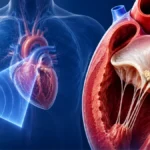
Your heart beats because of electrical signals, tiny impulses that travel through specialised pathways in the heart muscle, triggering each chamber to contract in the right sequence. This electrical system is entirely separate from the coronary arteries that supply the heart with blood.
The signal starts at the top of the heart, travels down through a junction called the AV node, and then splits into two branches, one carrying the signal to the right ventricle, the other to the left. These are the bundle branches. In a normal heart, both sides receive the signal almost simultaneously and contract together in a coordinated, efficient squeeze.
In a left bundle branch block, the signal travelling down the left branch is delayed or interrupted. The left ventricle, the heart’s main pumping chamber, receives the signal later than it should, causing it to contract slightly after the right side rather than simultaneously. This delay shows up as a distinctive pattern on the ECG.
What Causes LBBB?
LBBB can occur in people with entirely normal hearts, particularly older adults in whom age-related changes to the heart’s electrical pathways produce the finding without any underlying disease. In this context it is a finding to monitor rather than treat.
More often, LBBB is associated with an underlying cardiac condition. The most common causes include:
Idiopathic, no identifiable cause
In some people, particularly younger individuals, LBBB is found with no underlying cause identified. Thorough investigation is still warranted to confirm this.
High blood pressure
Long-standing hypertension causes the left ventricle to thicken and the electrical pathways to change, one of the most common causes of LBBB.
Coronary artery disease
A previous heart attack or significant coronary disease can damage the electrical pathways, producing LBBB as a lasting consequence.
Heart failure
A weakened heart muscle, whether from cardiomyopathy or other causes, is frequently associated with LBBB, and the two conditions can worsen each other.
Valve disease
Significant aortic valve disease in particular can produce LBBB as the pressure and structural changes affect the electrical pathways.
Age-related changes
The heart’s electrical pathways change with age. LBBB found incidentally in an older person with no symptoms and no other cardiac disease often requires monitoring rather than treatment.
What LBBB Looks Like on an ECG, in Plain Language
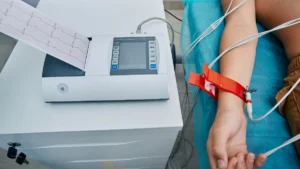
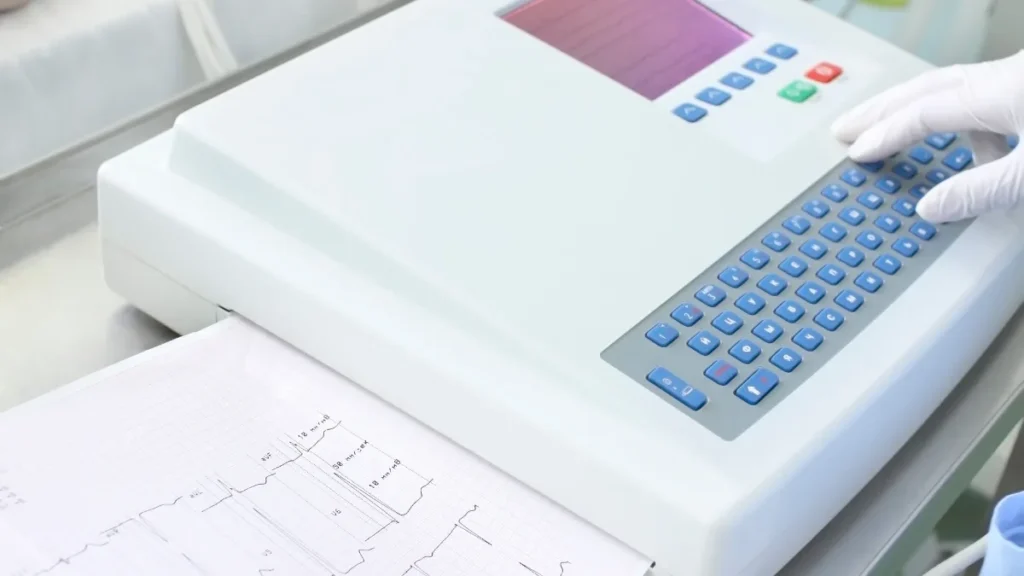
An ECG is a recording of the electrical signals that pass through your heart with every beat. Each beat produces a series of waves on the trace, and each wave reflects a different stage of that beat. The first small wave, called the P wave, reflects the upper chambers being activated. The tall central spike, called the QRS, reflects the contraction of the ventricles, the two large lower chambers that do the heart’s main pumping work. The rounded wave that follows, the T wave, reflects those chambers electrically resetting before the next beat. Reading the size, shape, and timing of these waves is how a doctor builds a picture of what the heart is doing.
On a standard ECG, LBBB produces a characteristic pattern, the QRS spike that reflects the ventricles contracting appears wider and more complex than normal, reflecting the fact that the two sides of the heart are activating at slightly different times rather than simultaneously.
A Single Heartbeat on the ECG
How to read this: Each tracing shows one heartbeat. The tall spike in the middle, the QRS, is the moment the main pumping chambers are activated. In a normal beat (left) it is narrow and sharp, because both sides fire together. In a left bundle branch block (right) the left side fires a fraction late, so the spike is stretched wider and often shows a small notch. The smaller waves on either side, the P before and the T after, are the rest of the heartbeat and are not the focus here.
Cardiologists recognise this pattern immediately. What matters clinically is not the pattern itself but what it means in context, who the patient is, what symptoms they have, whether the LBBB is new or longstanding, and what the rest of the investigation shows.
When LBBB makes ECG interpretation more complex
There is one situation where a left bundle branch block is treated with real urgency, and it is worth being clear about because it is specific. It is not about an LBBB found on a routine ECG in someone who feels well. It is about an LBBB that appears for the first time in a person who is acutely unwell, with chest pain or breathlessness, often sweating and clammy and clearly not right.
In that situation, the LBBB can hide the very ECG changes that would normally signal a heart attack, so the ECG alone cannot reliably rule one out. This is why anyone who develops chest pain or breathlessness, feels sweaty and unwell, and is not sure what is happening should seek urgent medical help or call emergency services rather than wait and see. Acting quickly is the safe choice, and the combination is taken seriously until proven otherwise. In hospital, blood tests for troponin and urgent imaging are arranged promptly to get a clear answer.
When I see a new LBBB in someone with chest pain or breathlessness, I treat it seriously until proven otherwise. The pattern changes the rules of interpretation, so the investigation needs to go further and faster than it might otherwise.
Prof. Peter Barlis, Interventional Cardiologist
Does LBBB Need Treatment?
The answer depends entirely on the clinical context, which is why a blanket statement about treatment is less useful than understanding the different scenarios.
Incidental LBBB in a person with no symptoms
When LBBB is found on a routine ECG in someone who is symptom-free and whose heart function is normal on echocardiogram, no specific treatment is required. Regular monitoring, repeat ECGs and periodic echocardiography, is typically arranged to track whether the underlying heart function changes over time.
LBBB with underlying cardiac disease
When LBBB is associated with high blood pressure, coronary artery disease, valve disease, or a weakened heart muscle, the priority is treating the underlying condition rather than the LBBB itself. Managing the blood pressure, optimising heart failure therapy, or addressing valve disease all take precedence. An echocardiogram is typically arranged to assess heart function, and further imaging or a stress test may follow depending on the clinical picture.
LBBB and heart failure, cardiac resynchronisation therapy
In people who have both heart failure with a significantly reduced ejection fraction and LBBB, the delay in left ventricular activation can meaningfully worsen pump efficiency. The two sides of the heart are not contracting in coordination, and that lack of synchrony reduces the effectiveness of each beat.
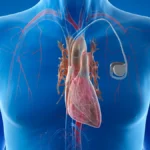
Cardiac resynchronisation therapy, CRT, is a specialised pacemaker device that delivers electrical signals to both ventricles simultaneously, restoring coordinated contraction. In carefully selected patients who meet the criteria, CRT can produce significant improvements in symptoms, exercise capacity, and heart function, and in some patients actually improves the ejection fraction over time. It is one of the most impactful device therapies available in heart failure management.
| Clinical situation | What it typically means | Usual next step |
|---|---|---|
| LBBB found incidentally, no symptoms, normal echo | Often benign, monitoring appropriate | Regular ECG and echocardiogram follow-up |
| LBBB with chest pain or breathlessness | Requires urgent assessment, cannot exclude heart attack on ECG alone | Troponin blood tests, urgent cardiology review |
| LBBB with high blood pressure or coronary disease | LBBB likely related to underlying condition | Echocardiogram, treat underlying condition |
| LBBB with heart failure and reduced ejection fraction | May be worsening pump efficiency, CRT worth considering | Specialist heart failure and device review |
Questions worth asking at your next appointment
- Is my LBBB new, or has it been present on previous ECGs?
- Should I have an echocardiogram to assess my heart function in the context of this finding?
- Is there an underlying cause, blood pressure, coronary disease, or valve disease, that we should be investigating or treating?
- If I have heart failure, am I a candidate for cardiac resynchronisation therapy given my LBBB?
- What symptoms should prompt me to seek assessment between appointments?
Heart Matters Resource
When in Doubt, Get Checked Out
If your ECG report mentions left bundle branch block and you are unsure what it means for you, a cardiology review that considers the finding in the context of your full clinical picture will give you a clear and specific answer.
Conclusion
Left bundle branch block is an electrical finding, a delay in the signal travelling to the left side of the heart, not a blocked artery. In many people it is found incidentally, requires no specific treatment, and can be managed with straightforward monitoring. In others it points toward an underlying condition that deserves investigation, and in the specific context of heart failure with reduced pump function it can worsen cardiac efficiency in ways a specialised pacemaker can meaningfully address.
The most important thing to know about LBBB is that its significance depends entirely on the context in which it is found. A cardiologist reviewing your ECG alongside your history, your symptoms, and your echocardiogram can give you a specific and accurate answer, one that an automated report simply cannot provide.
Related Reading
- The Electrocardiogram (ECG): What It Is and What It Shows
- First-Degree AV Block on Your ECG: What Does It Really Mean?
- The Echocardiogram: What It Shows and Why It Matters
- Understanding Your Cardiovascular Risk Factors
- Heart Failure and Quadruple Therapy
- Troponin: The Blood Test at the Heart of Chest Pain Assessment