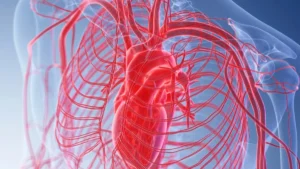
- Several medicines used in cardiology overlap with medicines used for hair, in both directions, which is why questions about hair loss often land with a cardiologist rather than a dermatologist.
- Minoxidil, the treatment most people are asking about, began life as a blood pressure drug. The scalp solution rarely troubles the heart. The tablets retain a diluted version of the original effects.
- Spironolactone, prescribed for heart failure and difficult blood pressure, also blocks the effects of male hormones. That is why it is used off-label for female pattern hair loss, and why some women notice a change in their hair while taking it.
- The same hormonal effect makes spironolactone an unsuitable hair treatment for men, and this is the point most often missed.
- Some hair loss is a signal rather than a cosmetic problem, including the shedding that commonly follows a heart attack, cardiac surgery, or any serious illness.
It is fair to wonder why a cardiologist is being asked about hair at all. The answer is that patients are increasingly being sent to ask.
Hair clinics and general practices now routinely tell people to check with their doctor about their heart before starting treatment, particularly minoxidil tablets. It arrives as a safety clearance rather than a cosmetic query, and it lands in a cardiology room because that is where it was sent.
There is a sound reason for that. Minoxidil was a blood pressure medicine long before it was a hair treatment, and it never entirely stopped being one. The overlap also runs the other way, because one of the medicines already sitting on many cardiac prescription lists is used by dermatologists for exactly this purpose.
Which is why the question, when it does come, is usually asked apologetically at the very end of the appointment, halfway out of the chair. It does not need to be. It is a question about medicines, and it belongs here.
Minoxidil, the One People Are Sent to Ask About
This is the treatment behind most of the clearance requests, and it has its own cardiovascular history.
It reached the market in the late 1970s as a treatment for severe hypertension. Patients taking it grew hair, and a topical formulation followed in the 1980s. Brand names differ from country to country, so the generic name minoxidil remains the reliable identifier on any packet, and available strengths vary by market.
Minoxidil opens potassium channels in the smooth muscle of small arteries. Those vessels relax and blood pressure falls. The body compensates by retaining salt and water and by raising the heart rate, which is why minoxidil tablets at blood pressure doses were almost always paired with a diuretic and a beta-blocker.
The scalp solution
Applied to intact scalp, only a small proportion of a topical dose reaches the bloodstream, far too little in most people to move blood pressure or heart rate measurably. Palpitations, lightheadedness, and mild ankle swelling have been described, but they are uncommon and tend to follow generous application, use over inflamed or broken skin, or unusual sensitivity to vasodilators.
Low-dose tablets
The bigger change over the past few years has been dermatologists prescribing minoxidil tablets at low doses, a small fraction of the intensity once used for hypertension. The largest published safety experience, a review of 1,404 patients across 10 centres in six countries, found side effects that were mostly mild. Hair growth in unwanted places was by far the most common, affecting about 15% of patients. Lightheadedness, fluid retention, and a faster heart rate each appeared in under 2%, and fewer than one in 50 people stopped treatment because of a side effect.
Hair in other places
The most frequently reported effect. Fine hair on the face, forearms, or upper back. It is not dangerous and it settles once the tablet is stopped.
Fluid retention
Salt and water retention is built into how the drug works. It shows up as puffy ankles or a small rise in weight, and it matters far more in a heart that is already struggling.
Heart rate and blood pressure
A slightly faster resting pulse and a small fall in blood pressure are both expected. People already taking several blood pressure medicines feel this more.
Where the frightening warnings came from
Anyone reading the product information for minoxidil tablets will find warnings about fluid collecting around the heart and about angina becoming worse. These are real, and they are also a product of their era, written from experience with high-dose treatment in patients who had severe hypertension, often alongside significant kidney disease, before modern blood pressure regimens existed. Pericardial effusion, meaning fluid in the sac surrounding the heart, was described in that setting and is identified on an echocardiogram.
At the doses used for hair, events of that severity appear to be rare rather than routine. Rare is not the same as impossible. The fair summary is that low-dose oral minoxidil has a reassuring short-term record in relatively healthy people, and a much thinner evidence base in those with established heart disease, because they are the patients least likely to have been studied.
Minoxidil at blood pressure doses also carries a rebound risk. Stopping abruptly removes the vasodilation while the compensating fluid retention and faster heart rate are still present, and blood pressure can overshoot. That is why the dose is usually stepped down rather than halted outright. Whether, when, and how to stop is a decision for the prescribing doctor, who may reasonably choose to stop immediately if a serious effect appears.
| Feature | Topical | Low-Dose Oral |
|---|---|---|
| Brand names (vary by country) | Several major brands | Usually generic tablets |
| Reaches the bloodstream | A small percentage | Effectively all of it |
| Availability | Over the counter in most markets | Prescription, and off-label |
| Common nuisance effects | Scalp irritation and itching | Unwanted hair, puffy ankles |
| Cardiovascular relevance | Low for most people | Modest, worth reviewing |
| Dose strengths | Vary by market | Far below blood pressure doses |
The situations that usually prompt a fuller review before oral minoxidil is considered are heart failure, known pericardial disease, significant valve disease, pulmonary hypertension, recent unstable angina, reduced kidney function, and a blood pressure regimen that is already crowded. In that last group, home blood pressure readings become genuinely useful information.
Spironolactone, the Medicine Already on the List
Spironolactone is a familiar name in cardiology. It is a mainstay of treatment in heart failure with reduced ejection fraction and one of the more useful options when blood pressure refuses to come down on three other agents.
Less widely known is that it does two things at once. Alongside its effect on salt and water handling, it blocks androgen receptors and reduces the production of male hormones. Androgens are central to pattern hair loss, which is why dermatologists reach for spironolactone in female pattern hair loss, acne, and polycystic ovary syndrome.
So a woman taking spironolactone for her heart who reports that her hair seems less thin is not imagining a mechanism. There is a plausible one, and it is the same mechanism a dermatologist would have been aiming for deliberately.
What the evidence actually supports
The evidence here is honest but modest. Most of it comes from observational series and clinical consensus rather than large randomised trials, and it points toward a partial effect that develops slowly, over many months, in some women rather than all of them. That is worth taking seriously. It is not a promise.
The doses are not the same
There is a further complication. The doses commonly used in dermatology sit above those used in heart failure, where treatment is deliberately conservative to protect kidney function and potassium levels.
Someone taking spironolactone for a cardiac reason is therefore receiving an amount that may or may not be doing much for their hair. A welcome side effect is a reasonable thing to enjoy. It is not a reason to start the drug, or to want more of it.
Why this is a different conversation for men
This is the point that gets lost fastest once the phrase “spironolactone helps hair” is in circulation.
Blocking androgens has consequences that men notice. Breast tenderness and breast tissue enlargement, known as gynaecomastia, are well recognised and become more likely at higher doses. Reduced libido is also reported. These are the reasons spironolactone is not used as a hair loss treatment in men.
Men already prescribed it for heart failure are a separate matter. There the cardiac benefit is substantial and well established, and the hormonal effects are managed as a known trade-off rather than pursued.
Potassium, and the combinations that matter
Spironolactone causes the body to retain potassium. That is intrinsic to how it works, and in most people it is handled without difficulty.
It becomes more delicate in combination. ACE inhibitors, angiotensin receptor blockers, sacubitril with valsartan, potassium supplements, and some anti-inflammatory painkillers all push potassium in the same direction, and reduced kidney function narrows the margin further. Blood tests before starting and at intervals afterwards are the standard way this is monitored, and they are the reason spironolactone is prescribed rather than borrowed from a relative’s cabinet.
Spironolactone is also avoided in pregnancy, because an antiandrogen affects a developing baby.
Finasteride and dutasteride, the other treatments raised most often, work on hormone conversion rather than on blood vessels. No consistent cardiovascular signal has emerged from the trial data, and the discussions around them concern sexual side effects and mood rather than the heart.
The GLP-1 Question
A study published in The BMJ in July 2026 looked at this directly. Researchers followed adults with type 2 diabetes starting a GLP-1 receptor agonist and compared them with people starting two other classes of glucose-lowering medicine. Newly recorded hair loss was more common in the GLP-1 group, by roughly 40% to 70% depending on the comparison.
Three things temper that. The absolute numbers were small, at around seven cases per 1,000 people a year against four to five in the comparison groups. The excess was concentrated in non-scarring hair loss, the diffuse and usually reversible kind linked to rapid weight change. And a study built on diagnoses recorded during routine care cannot fully separate an effect of the drug from an effect of losing weight quickly.
The study was done in one large health system and in people with diabetes, so it does not settle the question for everyone taking these medicines. It matters here because semaglutide and related medicines are now prescribed for cardiovascular reasons and not only metabolic ones. An effect on hair that is usually reversible sits on a very different scale from a reduction in heart attacks and strokes.
When Hair Loss Is a Signal Rather Than a Complaint
Not all hair loss is pattern baldness, and some of it points back toward the heart. A heart attack, cardiac surgery, or any major physiological stress can push a large proportion of hair follicles into their resting phase at once. The shedding arrives two to four months later, by which time most people have stopped connecting the two events.
Growing
Most follicles.
Lasts years.
Resting
A small minority.
Root pulls upward.
Shedding
Follicle empties,
then restarts.
Resting to shedding takes two to four months
A shock to the body pushes many follicles into the resting phase together, so they shed as a group months after the event.
Iron deficiency and thyroid disease belong in the same category. Both cause hair loss, both are common in people with heart disease, and both are treatable once found.
Questions Patients Ask Me Most
These are the ones that come up again and again in clinic, answered as plainly as I can. As always, this is general information, and any decision about your own medicines belongs in a conversation with your doctor.
Can I use the scalp solution if I have a heart condition?
For most people with stable heart disease, topical minoxidil is not the thing a cardiologist is concerned about. Very little of it reaches the bloodstream through intact scalp. It is still worth mentioning at your next appointment, particularly if you have heart failure or your blood pressure is being actively adjusted.
I am already on spironolactone. Will it help my hair?
It might, if you are a woman with pattern hair loss, and some women do notice a change. The effect is partial, gradual, and not universal, and the doses used in dermatology usually sit above cardiac doses. It is a welcome bonus if it happens, rather than something to count on or to ask for more of.
If it works for women, can a man take it for hair?
Spironolactone is not used as a hair treatment in men. The same hormone blocking that helps some women causes breast tenderness and breast tissue enlargement in men, and reduced libido is also reported. Men taking spironolactone for heart failure are in a different situation, where the cardiac benefit is the point.
My hair started falling out after my heart attack. Is it the medication?
Usually not. Shedding that begins two to four months after a heart attack, cardiac surgery, or a serious illness is far more often telogen effluvium, the body’s delayed response to the stress itself. It is diffuse rather than patchy and it recovers on its own in most cases. Iron levels and thyroid function are worth checking.
Should I stop my weight loss injection if my hair thins?
That is a conversation to have rather than a decision to make alone. The hair loss described with these medicines is the reversible kind and the absolute risk is small, while the cardiovascular benefit for people who qualify is substantial. Stopping a medicine prescribed to reduce heart attacks and strokes is not a step to take over hair without advice.
Is there anything worth checking before I try something?
Iron studies and thyroid function are the two most commonly useful tests, because both cause hair loss, both are common in people with heart disease, and both are treatable. Kidney function and potassium matter if spironolactone is being considered. These are simple blood tests rather than anything elaborate.
Heart Matters Resource
When in Doubt, Get Checked Out
New swelling, unexplained weight gain, or a racing pulse after starting any new medicine are worth reviewing properly rather than waiting to see whether they settle.
Conclusion
Hair and the heart share more pharmacology than either specialty tends to advertise. One widely used cardiac medicine has a genuine effect on hair in women and a set of reasons not to use it that way in men. The best known hair treatment was a blood pressure drug first and never entirely stopped being one.
So when a hair clinic or a GP sends someone to have their heart checked before starting treatment, that is a sensible instruction rather than a formality. For most people the answer will be straightforward. Knowing which people it is not straightforward for is the reason the question is worth asking at all.
Related Reading
- Statins: What Patients Ask Me Most
- How to Lower Blood Pressure Naturally
- Oral Semaglutide: What You Should Know About the Pill Form of Ozempic
- Swollen Legs and the Heart: What the Swelling Is Telling You
- Fatigue and the Heart: When Tiredness Is More Than Just Being Tired
- Understanding Your Cardiovascular Risk Factors