The Pulse NewsletterExpert heart health, in plain English. Fortnightly, from our clinicians.Subscribe →
Section
Conditions
A heart diagnosis can feel overwhelming — but understanding what you have is the first step to feeling more in control. The Conditions section covers the most common heart and cardiovascular conditions in plain language, written by specialist cardiologists. From atrial fibrillation to heart failure, each guide explains what the condition means, how it’s treated, and what life looks like going forward.
A heart diagnosis can feel overwhelming — but understanding what you have is the first step to feeling more in control. The Conditions section covers the most common heart and cardiovascular conditions in plain language, written by specialist cardiologists. From atrial fibrillation to heart failure, each guide explains what the condition means, how it’s treated, and what life looks like going forward.
White coat hypertension is when your blood pressure reads high in the clinic but sits in the normal range during ordinary daily life. It is common, affecting up to one in three people whose office readings are raised.
It is caused by a stress response to the medical setting itself, not by a fault in your heart or blood vessels. The reading is real, but it does not reflect your usual blood pressure.
The only reliable way to confirm it is to measure blood pressure away from the clinic, using either a 24-hour ambulatory monitor or a structured week of home readings.
White coat hypertension is not always harmless. Some people go on to develop sustained high blood pressure, so ongoing monitoring matters even when no medication is started.
Its mirror image, masked hypertension, is the more dangerous pattern: normal in the clinic, high at home, and easy to miss without out-of-office measurement.
The cuff tightens, the nurse watches the dial, and the number that appears is higher than anything you ever see at home. It happens every visit. You feel perfectly well, your home readings are reassuring, and yet the clinic keeps telling you your blood pressure is up. If this sounds familiar, you may have white coat hypertension.
It is one of the most common and most misunderstood findings in everyday medicine. The reading on the machine is not wrong. Your blood pressure really did rise in that moment. The question is whether that rise reflects how your heart and arteries behave during the other 23 hours of the day, when no one is watching.
Getting that question right matters. Treat white coat hypertension as though it were sustained high blood pressure and a person can end up on medication they do not need. Dismiss it entirely and you can miss the early warning that genuine hypertension is developing. The path between those two errors runs through one simple idea: measure blood pressure where life actually happens.
What White Coat Hypertension Actually Is
White coat hypertension describes a specific pattern. Blood pressure measured in a clinic or surgery is in the hypertensive range, while blood pressure measured away from the clinic is normal. The term comes from the white coats traditionally worn by doctors, though the effect has far more to do with the setting than the clothing.
The mechanism is a stress response. Being assessed by a health professional, sitting in an unfamiliar room, anticipating bad news, or simply rushing to make the appointment can all trigger a brief surge in heart rate and blood pressure. This is the same fight-or-flight system that sharpens your senses before a job interview. In most people it settles within minutes of leaving. For some, it switches on reliably the moment a cuff appears.
This is different from anxiety as a diagnosis. Many people with white coat hypertension do not feel anxious at all. The body responds to the clinical context automatically, below the level of conscious worry, which is part of why telling someone to relax so rarely lowers the number.
If the two numbers in a blood pressure reading have always been a little mysterious, this short explainer walks through what systolic and diastolic actually mean.
Watch · Heart Matters
Systolic and diastolic, explained.A plain-English guide to what the two numbers in a blood pressure reading actually mean.
How Common Is It?
White coat hypertension is far from rare. Across large studies, when people with raised office readings are checked properly away from the clinic, a substantial proportion turn out to have normal everyday blood pressure.
15 to 30% of people with high readings in the clinic are found to have white coat hypertension once their blood pressure is measured during normal daily life International blood pressure registries
The effect tends to be more pronounced in older adults and in people who have been told for years that they have high blood pressure. It can even appear in people already taking blood pressure medication, where it can make treatment look as though it is failing when in fact the everyday numbers are well controlled.
Why It Is Easy to Get Wrong
The trouble with a clinic reading is that it captures a single, atypical moment. A few minutes in a medical room, often after sitting in a waiting area or hurrying through traffic, is not a fair sample of a whole day. Yet for decades this single snapshot was the basis for diagnosing high blood pressure.
When the diagnosis rests on office readings alone, two opposite mistakes become possible. The first is overdiagnosis: labelling someone hypertensive, and starting lifelong treatment, when their true blood pressure is fine. The second is the reverse problem, where genuinely high blood pressure outside the clinic goes undetected because the office reading happens to look acceptable.
Modern guidelines now treat measurement outside the clinic as essential rather than optional. The same principle underpins our advice on monitoring your blood pressure at home: the numbers that matter most are the ones gathered during ordinary life, not in a single moment of clinical stress.
White Coat Versus Masked Hypertension
White coat hypertension has a mirror image, and understanding both makes the whole picture clearer. They are opposite patterns, and they carry very different levels of risk.
White Coat Hypertension
High in the clinic, normal at home. Risk is generally lower than sustained high blood pressure, but it can progress over time, so it needs watching rather than ignoring.
Masked Hypertension
Normal in the clinic, high at home. This is the more concerning pattern, because the raised blood pressure quietly damages arteries and the heart while routine checks look reassuring.
Masked hypertension is the more dangerous of the two precisely because it hides. A person feels well, their clinic readings look fine, and no one suspects a problem, while their blood pressure runs high during work, sleep, and daily activity. This is part of why a single normal reading in the surgery is no longer considered enough to rule high blood pressure out.
How It Is Diagnosed
Confirming white coat hypertension means comparing clinic readings with readings taken during normal life. There are two reliable ways to do this, and your doctor may use either or both.
Ambulatory monitoring
A small device worn for 24 hours takes automatic readings during the day and overnight. It gives the fullest picture, including how blood pressure behaves during sleep.
Home monitoring
A validated upper-arm monitor used at set times over about a week. Readings taken morning and evening, while seated and rested, build a reliable everyday average.
The thresholds differ slightly between settings, which surprises many people. Clinic readings use one cut-off for diagnosing high blood pressure, while home and daytime ambulatory averages use a slightly lower one. This is normal and expected, because blood pressure is genuinely a little lower in relaxed, familiar surroundings.
For a closer look at why the clinic setting itself nudges your reading upward, this video explains what is happening in the body during that moment.
Watch · Heart Matters
The white coat effect, up close.Why the clinic setting itself can push your reading up, and what is happening in the body.
A blood pressure reading is a moment, not a verdict. The honest answer almost always comes from measuring it where the patient actually lives their life.
Prof. Peter Barlis, Interventional Cardiologist
Does It Need Treatment?
For true white coat hypertension, where everyday blood pressure is genuinely normal, medication is often unnecessary. The reading that rises only in the clinic does not, on its own, justify lifelong tablets. What it does justify is ongoing attention.
That is the key nuance. White coat hypertension sits somewhere between normal blood pressure and sustained high blood pressure in terms of long-term risk. A meaningful number of people with it will develop genuine hypertension within a few years. So the sensible approach is regular review, repeat out-of-office measurement, and attention to the everyday habits that keep blood pressure healthy.
Where lifestyle and risk factors are concerned, the same fundamentals apply as for anyone protecting their heart: maintaining a healthy weight, limiting salt and alcohol, staying physically active, and not smoking. Even something as accessible as regular walking contributes to keeping blood pressure in a healthy range over time.
When blood pressure is genuinely high outside the clinic, treatment follows the usual path. The medicines most often used include ACE inhibitors, angiotensin receptor blockers, and calcium channel blockers, chosen to suit the individual. The decision to start, change, or hold any blood pressure medicine is one only your doctor or cardiologist can make for you, based on your full picture rather than a single number.
Getting an Accurate Reading at Home
If you are monitoring your own blood pressure, a few simple habits make the readings far more trustworthy. Small details in technique can shift a result by enough to change a diagnosis.
Sit and settle first
Rest quietly for five minutes before measuring. Sit with your back supported, feet flat on the floor, and legs uncrossed.
Support your arm
Rest your arm on a table so the cuff sits at heart height. An unsupported or dangling arm can push the reading up noticeably.
Measure twice, same times
Take two readings a minute apart, morning and evening, for several days. Record them all rather than picking the lowest.
Avoid caffeine, exercise, and smoking for at least 30 minutes beforehand, and empty your bladder first, as a full bladder can raise the reading. Use a validated upper-arm monitor rather than a wrist device, and bring your log to your next appointment so the pattern, not just a single number, guides the conversation.
Heart Matters Resource
When in Doubt, Get Checked Out
If your clinic and home readings keep telling you different stories, that is worth investigating properly rather than guessing. A short period of out-of-office monitoring can settle the question for good.
White coat hypertension is a reminder that a blood pressure reading is a measurement of a moment, not a final judgement on your heart. The number that climbs in the clinic is genuine, but it tells only part of the story. The fuller answer comes from seeing how your blood pressure behaves across an ordinary day.
If your clinic readings have been high but you suspect they do not reflect your everyday self, the practical step is straightforward: ask about ambulatory or home monitoring, measure carefully, and review the pattern with your doctor. Whether the outcome is reassurance or the early detection of genuine high blood pressure, you come away knowing your real numbers, which is exactly where good heart care begins.
A stroke happens when blood flow to part of the brain is cut off and brain cells begin to die. A TIA, or transient ischaemic attack, causes the same symptoms, but the blockage clears on its own before permanent damage occurs.
A TIA is a medical emergency, not a minor event. The risk of a full stroke is highest in the 48 hours that follow, so rapid assessment and treatment in that window makes an enormous difference.
Investigations after a stroke or TIA focus on finding the cause: narrowing in the neck arteries, an irregular heart rhythm called atrial fibrillation, a structural problem with the heart, or abnormal blood clotting.
The right medications started promptly after a TIA, including blood thinners, blood pressure treatment, and statins, significantly reduce the risk of a subsequent stroke.
A TIA is not a frightening endpoint. It is an opportunity. The evidence that acting quickly and comprehensively prevents stroke is among the strongest in all of vascular medicine.
A stroke or TIA can feel frightening when the symptoms first appear. One side of the face droops. A hand will not grip. Words come out wrong. Whether those symptoms last two minutes or two hours, they mean something important is happening that demands to be taken seriously.
A TIA is one of the most important medical events a person can experience, not because of the symptoms themselves, which resolve completely, but because of what they represent. The brain’s blood supply was briefly interrupted. The fact that it recovered fully this time does not mean the underlying cause has gone away.
The good news, and this is the central message, is that medicine now has highly effective ways to respond. The window between a TIA and a potential stroke is narrow, but it is also a genuine opportunity to intervene. The people who do best are those who engage with that opportunity quickly and completely.
What Is a Stroke?
A stroke happens when blood flow to part of the brain is suddenly interrupted. There are two main types. An ischaemic stroke occurs when a clot blocks one of the arteries supplying the brain. A haemorrhagic stroke occurs when there is bleeding from a blood vessel in or around the brain. In both situations, the affected area of the brain is at risk of injury, which is why time is so important in treatment.
The effects depend on which part of the brain is affected. Speech, movement, vision, balance, and memory can all be disrupted. Some effects improve significantly over time with rehabilitation, while others can be longer lasting or permanent. This is precisely why preventing a first stroke, or a second one, matters so much.
What Is a TIA?
A TIA, or transient ischaemic attack, produces exactly the same symptoms as a stroke, but the blockage clears on its own before permanent damage occurs. Symptoms appear suddenly, typically peak within seconds to a minute, and then resolve completely. In most cases this happens within minutes, though by definition it occurs within 24 hours.
Brain imaging after a true TIA shows no area of permanent damage. This is what distinguishes it from a minor stroke, though the immediate management of both is identical.
It is sometimes called a “mini-stroke”, but that name does it a serious disservice. A TIA is not a small event. It is a clear warning that the blood supply to the brain is not right, and that the risk of a full stroke in the days and weeks ahead is significantly elevated.
I never dismiss a TIA because the symptoms have passed. The fact that the brain recovered is exactly what gives us the best possible chance to prevent what could come next.
Prof. Peter Barlis, Interventional Cardiologist
1 in 10 people who have a TIA will go on to have a full stroke within 3 months without treatment, with the highest risk concentrated in the first 48 hours. American Stroke Association
Recognising the Signs: FAST
The FAST acronym captures the most important warning signs of stroke and TIA. Knowing it can save a life. TIA symptoms are neurological. They reflect whichever part of the brain has been briefly deprived of blood. They come on suddenly and without warning. The key word is sudden.
⚠️ Recognise a Stroke: F.A.S.T.
If you see any of these signs, call 000 immediately. Do not wait. Do not drive to hospital. Every minute matters.
F — Face. Sudden drooping or weakness on one side. Ask the person to smile. Is it uneven?
A — Arms. Sudden weakness or numbness in one arm. Can they raise both arms and hold them there?
S — Speech. Slurred, confused, or absent speech, even briefly.
T — Time. Call emergency services immediately. Do not wait to see if symptoms resolve.
Other warning signs include sudden loss of vision in one eye, double vision, severe unexplained dizziness, or sudden loss of coordination. Even if everything resolves on the way to hospital, urgent assessment is still essential. A TIA that has passed is still a TIA.
What Investigations Will I Have?
The purpose of investigation after a stroke or TIA is not simply to confirm what happened. It is to find out why, because the answer determines the treatment. Your medical team will want to move through this quickly, often within the first 24 to 48 hours.
Brain imaging: MRI and CT
The first priority is imaging the brain. A CT scan is often performed first in the emergency setting because it is fast and widely available, and can quickly exclude a bleed in the brain. An MRI scan follows when possible, as it is more sensitive. MRI can identify whether any permanent damage has occurred, and can also reveal older areas of reduced blood flow that may point to the underlying cause.
When the MRI shows multiple small areas of damage scattered across different parts of the brain, this is a strong signal that clots are being released from somewhere into the circulation, often from the heart. Finding that source becomes the priority.
Carotid artery ultrasound
The carotid arteries run up either side of the neck and supply blood directly to the brain. A build-up of fatty plaque in these arteries, called carotid stenosis or narrowing, is one of the most common and treatable causes of stroke and TIA.
A carotid Doppler ultrasound is a simple, painless scan that measures blood flow through these arteries. If significant narrowing is found on the side corresponding to your symptoms, a procedure to clear or widen the artery may be recommended, and the evidence for doing this promptly after a TIA is strong.
Atrial fibrillation, or AF, is responsible for approximately one in five strokes. AF is an irregular heart rhythm in which the heart beats chaotically rather than in a coordinated fashion. When this happens, blood can pool in a small pouch in the left side of the heart called the left atrial appendage, forming a clot that can then travel to the brain.
The challenge is that AF often comes and goes rather than being present all the time. This means a standard ECG, which records the heart rhythm for only a few seconds, may look entirely normal even in someone who has AF. Longer-term monitoring is often needed to catch it.
Sometimes a Holter or patch monitor comes back normal, but the clinical picture still strongly suggests the heart is the source of the problem. This is particularly the case when MRI has shown multiple small areas of damage in different parts of the brain, which points toward clots originating from a single source (often the heart) and being carried through the circulation.
In this situation, your specialist may recommend an implantable loop recorder. It is a small device, roughly the size of a USB stick, placed just beneath the skin of the chest under local anaesthetic in a minor procedure. It monitors the heart rhythm continuously for up to three years, transmitting data wirelessly to your cardiologist.
Studies have shown that prolonged monitoring with a loop recorder detects AF in a significant proportion of patients whose stroke initially had no clear cause. Finding AF months or even years after the original event still matters enormously, because it changes treatment from antiplatelet therapy to anticoagulation and substantially reduces the risk of a further stroke.
If your specialist has recommended a loop recorder, this reflects a thorough and proactive approach, not a sign that something has been missed.
Echocardiogram: imaging the heart
An echocardiogram is an ultrasound scan of the heart that shows its structure, function, and valves in detail. After a stroke or TIA, it helps identify whether the heart itself may be the source of a clot.
Conditions that can cause clots to form in the heart include reduced pumping function, valve disease, and a patent foramen ovale, or PFO. This is a small hole between the upper chambers of the heart that is present in around one in four people and that can allow clots to cross directly into the arterial circulation.
When a standard echocardiogram does not provide a clear enough view, a transoesophageal echocardiogram, or TOE, can be performed. A small probe is passed gently down the oesophagus, which sits directly behind the heart, giving a much closer and more detailed image of the heart and the large blood vessel that leaves it.
Blood tests
Blood tests assess cholesterol levels, including LDL, HDL, and triglycerides, along with blood glucose and HbA1c (a measure of your average blood sugar over the past three months) to screen for diabetes. A full blood count looks for conditions that increase the tendency to form clots, such as polycythaemia (an excess of red blood cells) or thrombophilia (an inherited tendency to form clots more readily than normal).
One marker worth asking about specifically is Lp(a), or lipoprotein(a). This is a lesser-known type of cholesterol-related particle that is not included in standard cholesterol tests. It is largely determined by genetics, and elevated levels independently raise the risk of both stroke and heart disease. As targeted therapies for elevated Lp(a) are now becoming available, identifying it early is increasingly meaningful. Read more in our article on lipoprotein(a) and inherited heart risk.
Medications That Reduce the Risk of a Future Stroke
The evidence base for stroke prevention after TIA is strong and well established. Several different classes of medication are used, and starting the right ones promptly is where much of the long-term risk reduction occurs.
The information below describes the main categories used in this setting and explains why each one matters. It is not a recommendation about your specific regimen. The choice of medication, combination, dose, and duration is an individual clinical decision that sits with your neurologist, cardiologist, and treating team.
Blood-thinning medications
Blood-thinning medications fall into two main groups, and they work in different ways. Antiplatelet medications, such as aspirin and clopidogrel, reduce the tendency of platelets (the tiny blood cells involved in clot formation) to stick together. Anticoagulants, such as warfarin and the newer direct oral anticoagulants (DOACs) including apixaban and rivaroxaban, work further along the clotting pathway and are more effective at preventing clots formed inside the heart.
Which group is used depends on the cause of the stroke or TIA. After a stroke or TIA not caused by atrial fibrillation, antiplatelet therapy is generally the cornerstone. In some situations, particularly the high-risk period immediately after a TIA, a second antiplatelet agent may be added for a defined period of time. Whether one or two agents are used, and for how long, is a careful clinical judgement made by your treating team based on the specific cause and your individual risk profile.
If atrial fibrillation is identified as the cause, the approach changes. Anticoagulants are generally more effective than antiplatelets in this setting because they target clots formed in the heart. Most patients with AF who would have once been treated with warfarin are now treated with a DOAC instead, since DOACs are generally easier to take, do not require regular blood tests for monitoring, and have a favourable safety profile. The choice of agent, the timing of starting it after the event, and the balance against any bleeding risk are decisions made by your specialist team.
Blood pressure treatment
High blood pressure is the single most important modifiable risk factor for stroke. Even modest, sustained reductions in blood pressure translate into meaningful reductions in the risk of a recurrent event.
ACE inhibitors are one class of blood pressure medication often used in this setting. The landmark PROGRESS trial showed a significant reduction in recurrent stroke with ACE inhibitor-based therapy after a first stroke or TIA, even in patients whose blood pressure was not markedly elevated. The benefit appeared to extend beyond simple blood pressure lowering. Several other classes of blood pressure medication are also effective, and the right combination for you depends on your other conditions and is a decision for your treating team.
Statins and cholesterol management
Statin therapy is often part of long-term care after a stroke or TIA, sometimes regardless of the baseline LDL cholesterol level. Statins do more than lower cholesterol. They stabilise arterial plaque, reduce inflammation in blood vessel walls, and lower the risk of future events through mechanisms that go beyond simple lipid reduction.
Lp(a) deserves specific mention here too. Standard lipid panels do not routinely include it, yet elevated Lp(a) is an independent risk factor for stroke and coronary artery disease. If your Lp(a) has not been checked, it is worth raising with your doctor, particularly as targeted therapies are becoming available.
Lifestyle Changes That Make a Meaningful Difference
Medications work best alongside genuine lifestyle change. The combination is more powerful than either alone.
Stop smoking
The single highest-impact change available, if relevant to you. Your doctor can help with cessation support and prescription options.
Move daily
Regular walking counts. Small and consistent beats occasional and intense, and 30 minutes most days is a realistic starting target.
Eat Mediterranean
A Mediterranean-style diet has the strongest evidence base for both heart and brain health. Olive oil, vegetables, legumes, oily fish, nuts.
Check your blood pressure
A home monitor is a small investment with a large payoff. Knowing your numbers makes the conversation with your doctor far more useful.
Stay engaged with your team
Long-term follow up matters. Knowing your medications, your targets, and what to ask at each appointment keeps you in control of the plan.
Protect your sleep
Poor sleep raises blood pressure and stress hormones. If snoring or daytime tiredness is significant, ask about obstructive sleep apnoea.
These do not all need to happen at once. Starting with the highest-impact change first, usually blood pressure control or smoking cessation if relevant, and building from there is both realistic and effective.
Heart Matters Resource
When in Doubt, Get Checked Out
If you or someone with you develops sudden facial drooping, arm weakness, speech difficulty, or any other sudden neurological symptom, even one that resolves quickly, call 000 immediately. Do not drive to hospital. Do not wait to see if things improve. A TIA that has passed is still a TIA, and the window for intervention is narrow.
Knowing which questions to ask puts you in a much stronger position at every appointment. Here are the ones that matter most after a stroke or TIA:
What do you think caused my event, and what investigations are being arranged to find out?
Has my MRI shown any pattern that suggests clots from a cardiac source?
Do I need longer-term heart monitoring, and which type would you recommend?
Which medications am I starting, and what does each one do?
What are my blood pressure and LDL cholesterol targets?
Has my Lp(a) been checked, and if not, should it be?
What is the most important lifestyle change for me to prioritise first?
Conclusion
A stroke or TIA is serious, but it is also one of the most actionable events in medicine. The investigations that follow are not just about understanding what happened. They are about finding the specific, treatable causes that can be addressed.
The people who navigate this best are those who understand what happened, engage fully with the investigation process, and commit to the long-term prevention plan their team puts in place. That is not a passive role. It is an active one, and it makes a real and measurable difference.
Most people with HCM live completely normal lives. Here is what the diagnosis means, what monitoring is needed, and why the outlook is better than most expect.
The choice between stents and bypass surgery depends on the complexity of your coronary disease, not just how blocked your arteries are
The SYNTAX trial, a landmark collaboration between cardiologists and cardiac surgeons, created the evidence base that guides this decision today
Your heart team uses several scoring tools to personalise the recommendation for you
In most cases there is time. This decision is made carefully, with your full understanding and agreement
No calculator replaces the Heart Team conversation. You are at the centre of this decision
I have spent more than fifty years in interventional cardiology. When I began my career, a blocked coronary artery was a life-altering diagnosis. The options were limited, the procedures crude by today’s standards, and the anxiety felt by patients and their families was, I suspect, not so different from what many of you reading this are feeling right now.
The field has changed beyond recognition. The early promise of pharmacotherapy: medications to slow the disease, relieve symptoms, reduce risk. The arrival of balloon angioplasty in the late 1970s, which felt revolutionary at the time: the idea that you could open a blocked artery from the inside, through a catheter no wider than a drinking straw, without a single incision on the chest. Then came the bare metal stent, a small metal scaffold that held the artery open after the balloon was deflated, which solved one problem and introduced another. Then drug-eluting stents, coated with medication to prevent the artery from narrowing again, and which changed everything.
Each of these advances was built on evidence: on clinical trials, on thousands of patients who gave their time, trusted their doctors, and allowed themselves to be part of something larger than their own treatment. If you have ever participated in a clinical trial, the advances that benefit cardiac patients today exist in part because of you. That debt is rarely acknowledged as clearly as it should be.
If you have just been told you need stents or bypass surgery
If you are reading this, you may have recently been told that you have significant coronary artery disease. Perhaps your angiogram has shown blockages in one or more of the arteries that supply blood to your heart. Perhaps your cardiologist has mentioned the words stents or bypass surgery, and perhaps, in that moment, the room felt a little smaller.
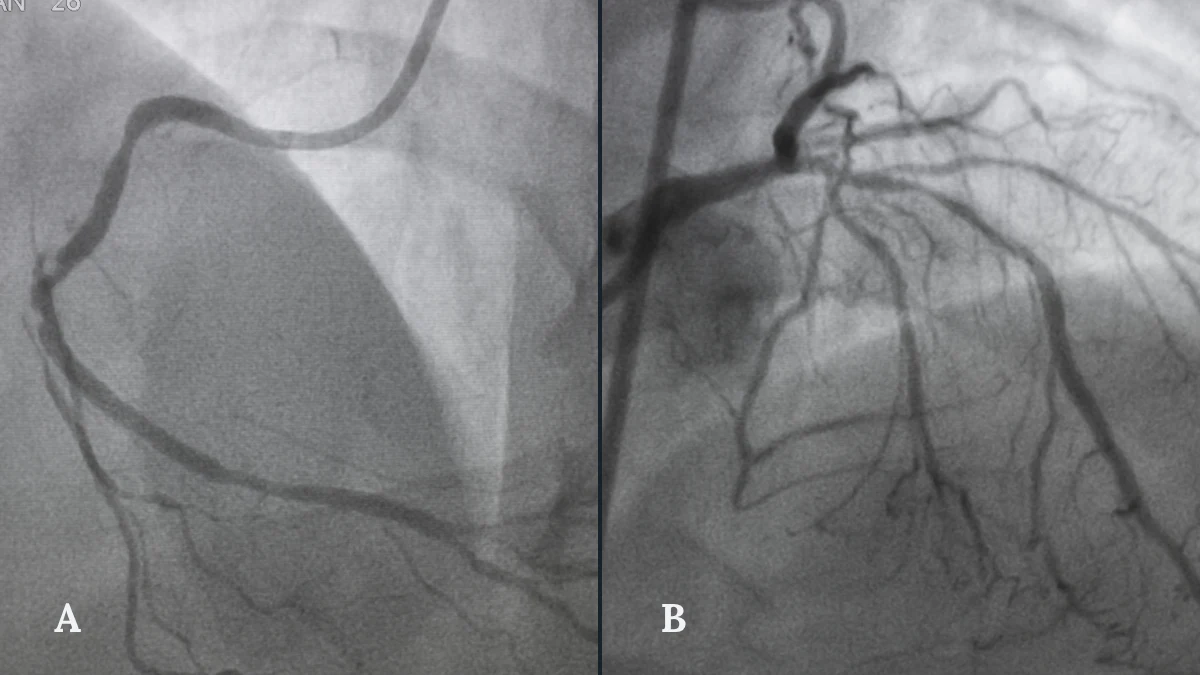
A coronary angiogram
During an angiogram, a thin flexible catheter is passed into the coronary arteries and a small amount of contrast dye is injected. The dye makes the arteries visible under X-ray, allowing your cardiologist to see exactly where plaque has built up and where blood flow is restricted. This is the investigation that forms the foundation of your Heart Team’s decision.
That feeling is entirely understandable. It is one of the more confronting conversations medicine asks patients to have. But I want to offer you something before we go any further: reassurance.
The decision about how best to treat your coronary disease is not arbitrary. It is not a coin toss. It is the product of decades of rigorous clinical research, including a landmark trial that I had the privilege of leading, and it is made by a team of specialists whose entire professional lives have been devoted to getting this decision right for patients exactly like you.
What follows is an attempt to explain how that decision is made, what your heart team is weighing up, and what you deserve to understand about your own care.
The question that needed an answer
By the early 2000s, interventional cardiology was at a crossroads.
Drug-eluting stents had arrived and the results were remarkable. For the first time, we could place a stent in a blocked coronary artery and dramatically reduce the chance of it narrowing again, the problem called restenosis that had plagued balloon angioplasty and bare metal stents for two decades. Cardiologists were understandably excited. The technology was advancing rapidly, and we were beginning to treat increasingly complex disease, multiple blocked arteries, blockages in critical locations, patterns of disease that had previously belonged almost exclusively to the cardiac surgeons.
But excitement is not evidence.
The honest truth was that we were pushing into territory where the data had not yet followed. Bypass surgery had decades of long-term outcome data behind it. It was proven, reproducible, and for patients with complex multivessel coronary disease, it had saved an enormous number of lives. The question that cardiologists and cardiac surgeons both knew needed answering was whether stents could match those outcomes in the most complex cases, or whether surgery remained the stronger choice.
What made this moment unusual in medicine was what happened next. Rather than cardiologists and surgeons arguing their respective corners, the two disciplines sat down together and agreed to find out.
A collaboration built on honest questions
The SYNTAX trial was conceived as a genuine partnership. On the cardiology side, I led the study design and execution. On the surgical side, Professor Friedrich Mohr of Leipzig brought the same rigour and the same commitment to finding the right answer, regardless of what that answer turned out to be.
We recruited 85 centres across Europe and the United States and enrolled 1,800 patients with either three-vessel coronary disease, significant blockages in all three of the main arteries supplying the heart, or left main disease, where the blockage sits at the origin of the coronary tree and carries particular weight in terms of risk. Every patient was assessed by both a cardiologist and a cardiac surgeon before randomisation. The Heart Team concept, the idea that complex coronary disease should never be decided by one specialty alone, was not an afterthought. It was built into the trial’s DNA from the very first protocol meeting.
Patients were randomised to receive either percutaneous coronary intervention with drug-eluting stents, the technical term for catheter-based stenting procedures, commonly abbreviated to PCI, or coronary artery bypass grafting, the surgical procedure commonly known as bypass surgery or CABG. We followed them for one year initially, then five years, then ten.
What the trial found, and why it mattered
The results, when they came, were nuanced in the way that the best science always is. They did not declare a single winner. They did something more valuable: they identified who benefited most from each approach.
Patients with less complex coronary disease did equally well with stents as with surgery at five and ten years. But patients with more complex disease, multiple blockages, difficult anatomy, involvement of critical vessel segments, did better with bypass surgery at five and ten years. The difference was meaningful, and it was consistent across multiple analyses.
The critical insight was this: it was not simply a question of stents versus surgery. It was a question of which patient, with which anatomy, benefits most from which treatment. And to answer that question properly, we needed a way to measure coronary complexity objectively. That tool became the SYNTAX score.
Research Spotlight
10 Years of SYNTAX: What a Decade of Research Taught Us About Your Heart
Most medical studies follow patients for a year or two. The SYNTAX trial followed 1,800 patients for a full decade, one of the longest and most detailed studies ever conducted in heart disease treatment.
What did ten years of follow-up reveal? That the decision between stents and bypass surgery is not just about your arteries, it is about you as a whole person. Factors including whether you have diabetes, how well your heart pumps, your kidney function, your body weight, and even your mental health before the procedure were all found to influence long-term outcomes. Patients who were on good medical therapy, cholesterol medication, blood pressure treatment, consistently did better regardless of which procedure they had.
The ten-year data also confirmed that for patients with blockages in all three main heart arteries, bypass surgery provided a meaningful survival advantage over stenting. For patients with disease at the critical left main junction, outcomes were more comparable, and the decision depends heavily on the individual.
Serruys PW et al. 10 Years of SYNTAX: Closing an Era of Clinical Research After Identifying New Outcome Determinants. JACC: Asia, 2023.
The SYNTAX score: measuring the complexity of your coronary disease
Not all coronary disease is equal. A single, straightforward blockage in one artery is a fundamentally different clinical problem from three heavily calcified blockages across multiple vessels, one of which sits at a critical branching point where two arteries divide. The SYNTAX score gave the field a standardised, reproducible way to measure coronary complexity from the angiogram, the X-ray map of your coronary arteries, and express it as a single number.
Each significant blockage is assessed for its location, severity, length, and features that make it more or less technically challenging to treat. The individual scores are added together to produce a total SYNTAX score. The higher the number, the more complex the coronary anatomy.
Score band
What it means
General direction
Low, 22 or below
Fewer blockages, simpler anatomy
Stenting outcomes comparable to bypass surgery
Intermediate, 23 to 32
Moderate complexity, careful assessment needed
Heart Team decision: both options weighed carefully
High, 33 or above
Multiple blockages, complex anatomy
Bypass surgery generally favoured for long-term outcomes
Beyond the anatomy: the SYNTAX Score II
The SYNTAX Score II adds eight clinical variables, including age, kidney function, diabetes status, and lung function, to the anatomical score, producing two side-by-side estimates: predicted four-year mortality with PCI, and with CABG. It is a considerably more personalised tool, and increasingly the one your team will use when the decision is genuinely difficult. More recently it was updated using ten years of follow-up data from the full SYNTAX programme, producing more accurate long-term predictions.
What your heart team is actually looking at
The SYNTAX score captures the complexity of your coronary anatomy, but it is only one part of the picture. Before your heart team makes a recommendation, they are weighing up two distinct sets of information: what your arteries look like, and what you are like as a patient. Both matter enormously.
The patient
Age and frailty
Bypass surgery is a major operation. Frailty and other conditions influence whether its benefits outweigh its risks for you specifically.
Diabetes
Strong evidence favours bypass in diabetic patients with multivessel disease. The FREEDOM trial established this clearly.
Heart muscle function
The ejection fraction, how well your heart pumps, affects both the risk and likely benefit of each treatment option.
Kidney function
Kidney health is an important input into surgical risk scores and affects contrast dye management during procedures.
Prior heart surgery
A second operation on the chest carries significantly higher risk. Previous bypass often shifts the balance toward stenting.
Your preferences
Recovery time, lifestyle, and personal values matter. Where evidence supports either option, your informed preference shapes the decision.
Age and overall health. A fit 55-year-old and a frail 78-year-old with the same coronary anatomy may receive very different recommendations, and rightly so. For a patient with significant frailty, poor lung function, or multiple other medical conditions, the risks of surgery itself may outweigh its benefits, even when the anatomy would otherwise favour it.
Diabetes. Diabetes deserves special mention because the evidence here is particularly strong. The FREEDOM trial, a landmark study examining diabetic patients with multivessel coronary disease, found that bypass surgery produced meaningfully better long-term outcomes than stenting in this group. Diabetes accelerates disease progression throughout the coronary tree, and bypass surgery offers a degree of future-proofing that stents in individual lesions cannot replicate.
26% relative reduction in major cardiovascular events with bypass surgery vs stenting at 5 years, in diabetic patients with multivessel coronary disease Source: FREEDOM Trial, Farkouh ME et al, New England Journal of Medicine, 2012
Heart muscle function. How well your heart is pumping, measured as the ejection fraction, influences both the risk of any procedure and the likely benefit. The ten-year SYNTAX data showed that patients with reduced heart pumping function had significantly higher rates of adverse outcomes regardless of treatment, underlining the importance of protecting heart function from the outset.
Kidney function. Contrast dye used during angiography and stenting can stress the kidneys, and kidney function is an important input into surgical risk scores.
Previous heart surgery. A second operation on the chest carries significantly higher technical risk. In this situation, stenting, even for complex disease, may be the preferred option.
What you want. A patient who understands their options and has strong preferences about recovery time, lifestyle, or risk tolerance deserves to have those preferences heard and incorporated into the decision. This is not a minor consideration.
The lesions: your blockages
Number of vessels involved. Single-vessel disease is almost always treated with stenting when intervention is needed. Three-vessel disease is where the stents-versus-bypass discussion most often begins.
The left main coronary artery. This short but critical vessel supplies the majority of the heart muscle in most people. A significant blockage here carries particular weight and is always discussed by the full Heart Team.
Bifurcation lesions. Blockages at branching points are technically demanding to treat with stents and carry additional weight in the SYNTAX score.
Chronic total occlusions. An artery completely blocked for three months or more. CTOs can be opened with specialised stenting techniques by experienced operators, but they represent some of the most technically demanding work in interventional cardiology.
Calcification. Heavily calcified arteries resist the expansion needed to deploy a stent optimally. Specialised techniques, including rotational atherectomy, which uses a tiny high-speed burr to modify the calcium before stenting, have improved outcomes considerably.
Diffuse versus focal disease. Long segments of disease spread throughout a vessel are harder to treat completely with stents, and incomplete treatment is associated with worse outcomes than complete revascularisation.
What might push your team towards one option or the other
Your heart team will use scoring tools and imaging to guide their recommendation, but what most patients really want to know is: given my situation, which way does this tend to go? The table below sets out the circumstances that most commonly influence that decision, in plain terms. No single factor is decisive on its own; your team is weighing all of them together.
May favour bypass surgery
May favour stenting
Multiple blocked arteries with complex disease
Blockages in all three main coronary arteries, particularly with diffuse or complicated anatomy, can often be addressed more completely in a single bypass operation than through multiple stenting procedures.
Simpler or single-vessel disease
Where blockages are limited to one or two vessels, or the anatomy is straightforward, stenting achieves equivalent outcomes with far less recovery time. Surgery adds risk without adding benefit.
Diabetes
Diabetes tends to cause disease that is more widespread and progresses faster. Bypass surgery has shown consistently better long-term outcomes in this group, partly because it protects against future disease in vessels that appear normal today.
Chronic kidney disease
Significant kidney impairment increases the risk of complications from major surgery and general anaesthesia. When kidney disease is advanced, your team may judge that the risks of bypass outweigh its benefits, and stenting becomes the safer path.
Bleeding risk or inability to take blood thinners
Stenting requires two blood-thinning medications taken together for a period afterwards. If you have a significant bleeding history, need another operation soon, or cannot safely take these medicines, bypass surgery avoids this requirement entirely.
Significant lung disease or anaesthetic risk
Bypass requires a general anaesthetic and open-chest surgery. For patients with significant COPD, severe asthma, or other conditions affecting lung function, the anaesthetic risk alone may make bypass unsuitable. Stenting is performed under local anaesthetic and light sedation.
Good overall health and fitness for surgery
For a fit patient with complex multivessel disease, good heart and lung function, and no prior chest surgery, bypass offers highly durable revascularisation. The internal mammary artery graft has a patency rate exceeding 90% at ten years.
Advanced age or frailty
For older or frailer patients, the six to twelve week recovery from bypass, and the risks of major surgery, may outweigh the long-term advantage. A shorter procedure with a faster return to normal life is often the more appropriate choice.
Vessels suitable for graft attachment
Bypass works by attaching a graft vessel beyond the blockage. Where the artery beyond the blockage is of good calibre and accessible, grafts can be placed reliably and durably.
Disease in distal segments unsuitable for grafting
When disease affects the very end portions of coronary vessels, there may be no suitable landing point for a bypass graft. In this situation, stenting of accessible segments may be the only viable interventional option, even when the overall disease is complex.
Valve surgery also needed
If you need both coronary revascularisation and valve repair or replacement, bypass surgery and valve surgery can be performed together in a single operation. This avoids two separate procedures and is generally preferred when the surgical risk is acceptable. Your cardiac surgeon and cardiologist will weigh this carefully together.
High surgical risk with valve disease
Where surgery is considered too high risk, percutaneous options may be considered for both the coronary disease and the valve problem. For example, a patient with significant aortic valve disease and coronary artery disease who cannot safely undergo open-heart surgery may be considered for TAVI (transcatheter aortic valve implantation) alongside PCI. These decisions require particularly careful Heart Team discussion.
Good overall health and fitness for surgery
For a fit patient with complex multivessel disease, good heart and lung function, and no prior chest surgery, bypass offers highly durable revascularisation. The internal mammary artery graft has a patency rate exceeding 90% at ten years.
Previous open-heart surgery
A second operation on the chest carries significantly higher risk than a first. If you have had bypass surgery before, your team will almost always favour stenting for any subsequent coronary intervention, regardless of anatomy.
Remember
None of these factors is decisive on its own. Your heart team is weighing all of them together, alongside the precise detail of your coronary anatomy, to arrive at the recommendation that is right for you. If you are unsure why a particular approach has been recommended, ask. Understanding the reasoning will help you feel confident in the decision.
The scoring tools your heart team uses
No single score makes the decision. Together, the tools below help your team answer two distinct questions: how complex is this coronary disease to treat, and how much risk does this particular patient carry?
Tool
What it measures
Used by
Output
SYNTAX score
Coronary anatomy complexity: blockage location, severity, and technical difficulty
Cardiologist and surgeon together
Number: low, intermediate, or high complexity
SYNTAX Score II 2020
Anatomy plus clinical profile: age, kidney function, diabetes, lung disease, and more. Updated using 10-year follow-up data.
Heart Team for complex cases
Predicted outcomes with PCI vs CABG, side by side
EuroSCORE II
Surgical risk: patient factors influencing the risk of the operation itself
Cardiac surgeon
Estimated % risk of adverse outcomes from the surgical procedure
STS score
Surgical risk, complications, and likely hospital stay
Cardiac surgeon
Risk estimates for major complications and prolonged stay
A word of caution, and of reassurance
If you have been reading this section and finding yourself reaching for a calculator, I understand the impulse. Some of these scoring tools are accessible online, and I have no doubt that some of you will find them. My advice, as someone who spent decades helping to build these tools, is this: please use them as a conversation starter with your cardiologist, not as a verdict.
A SYNTAX score is calculated from a detailed analysis of your coronary angiogram by a trained clinician. The inputs are precise, technical, and require direct interpretation of imaging that takes years of experience to read accurately. More importantly, the score is only ever one input into a much larger conversation.
“No calculator has ever treated a patient. The decision about your coronary disease belongs to you and your team, together.”
Prof. Patrick W. Serruys
There is time
One of the things I most want patients to understand is that in the vast majority of cases, there is time. A patient with a heart attack in progress may require immediate intervention, but most patients facing the stents-versus-bypass conversation are not in that situation. They have had their angiogram. Their disease has been documented. They are stable.
Your case will typically be discussed at a formal Heart Team meeting, a structured review where your cardiologist and cardiac surgeon examine your imaging and scoring together and reach a consensus recommendation. You will then meet with each of them in turn. That process unfolds over days, sometimes a couple of weeks. It is not rushed.
The Heart Team model was built into the SYNTAX trial protocol from the very first meeting. It has since become a cornerstone of international cardiology guidelines. It exists for you.
When bypass surgery is the stronger choice
Bypass surgery, formally known as coronary artery bypass grafting (CABG), involves a cardiac surgeon creating new routes for blood to flow around blocked sections of your coronary arteries, using blood vessels harvested from elsewhere in your body, most often the internal mammary artery from inside your chest wall or the saphenous vein from your leg. It is open-heart surgery, requiring a general anaesthetic and a period on a cardiopulmonary bypass machine. Recovery takes weeks, not days. For the right patient, with the right anatomy, it remains one of the most effective and durable interventions in all of medicine.
Three-vessel disease with high SYNTAX score. The SYNTAX trial’s most consistent finding, confirmed at ten years of follow-up, was that patients with three-vessel disease and a high SYNTAX score had meaningfully better outcomes with bypass surgery, driven primarily by lower rates of repeat procedures and heart attack.
Diabetes with multivessel disease. The FREEDOM trial established clearly that diabetic patients with multivessel coronary disease do better with bypass surgery than stenting over the long term. The mechanism relates to the biology of diabetic coronary disease, diffuse, aggressive, and progressive, and the ability of bypass surgery to protect against future events.
Significant left main disease with additional complexity. For patients with left main disease combined with additional complex coronary disease, bypass surgery has consistently shown favourable long-term outcomes in the major trials.
When the patient is a good surgical candidate. A relatively young, fit patient with good heart and lung function, no prior sternotomy, and high-complexity three-vessel disease: this is the patient for whom bypass surgery was designed.
When prolonged dual antiplatelet therapy is a concern. Stenting requires dual antiplatelet therapy (DAPT), typically aspirin combined with a second agent such as clopidogrel or ticagrelor, for a period after the procedure to prevent clot formation within the stent. For patients who cannot tolerate prolonged DAPT due to bleeding risk, a planned surgical procedure, or other medical reasons, bypass surgery avoids this requirement entirely. The internal mammary artery graft does not carry the same clotting risk as a freshly deployed stent, making CABG a more appropriate choice in these situations.
When stenting is the right answer
Percutaneous coronary intervention (PCI, or stenting) involves a cardiologist passing a thin, flexible catheter through an artery in the wrist or groin, navigating it to the blocked coronary artery under X-ray guidance, and deploying a small metal scaffold, the stent, to open the artery and hold it open. Modern drug-eluting stents release a medication that prevents the artery from narrowing again. For the right patient, stenting offers something bypass surgery cannot: a same-day or next-day procedure, performed under local anaesthetic and light sedation, with most patients home within 24 to 48 hours.
Stenting (PCI)
Bypass surgery (CABG)
How it works
Catheter through wrist or groin; stent opens blockage from inside
New routes around blockages using vessels from chest wall or leg
Anaesthetic
Local anaesthetic and light sedation
General anaesthetic
Hospital stay
24-48 hours for most patients
5-7 days typically
Recovery
Days to 1-2 weeks to normal activity
6-12 weeks for full recovery
Best suited to
Low to intermediate complexity; single or double vessel disease; high surgical risk
High complexity; three-vessel disease; diabetes with multivessel disease; left main with complexity
Long-term durability
Excellent in suitable anatomy; repeat procedures more common in complex disease
Internal mammary artery graft patency exceeds 90% at 10 years
Repeat procedure risk
Higher in complex multivessel disease
Lower long-term repeat intervention rate in suitable patients
Antiplatelet therapy (DAPT)
Required for a period post-procedure; bleeding risk and compliance must be considered
No prolonged DAPT requirement; advantage in patients with bleeding concerns or planned surgery
Low to intermediate SYNTAX score. The clearest indication for stenting over surgery is relatively straightforward coronary anatomy where the disease can be treated completely and safely. In this setting, the SYNTAX trial showed outcomes comparable to bypass at five and ten years.
Single and double vessel disease. For patients with significant disease in one or two coronary arteries, stenting is almost universally the preferred approach when intervention is needed.
High surgical risk. Where the EuroSCORE II indicates surgical risk outweighs the anatomical benefit of bypass, stenting, even of complex disease, may be the right answer.
When DAPT can be safely maintained. Stenting requires a period of dual antiplatelet therapy after the procedure. Where a patient can reliably tolerate this without bleeding concerns or planned surgery, this is not a barrier. For patients where DAPT compliance is straightforward, stenting remains an excellent option in appropriate anatomy.
Left main disease in lower complexity settings. The EXCEL and NOBLE trials concluded that stenting is a reasonable option for left main disease when the overall SYNTAX score is low to intermediate and the anatomy is suitable for complete revascularisation with stents.
The technology has moved on. The stents available today are not the stents of the SYNTAX trial era. Current-generation ultrathin drug-eluting stents, deployed by experienced operators, produce results that were simply not achievable when the original trial was designed. The evidence base continues to evolve, and the decisions your heart team makes for you are grounded in the best of what we know today.
Conclusion
The science exists to serve the patient in front of you. Not the patient in a trial, not the average across a population, but the person in the room, with their particular anatomy, their history, and their hopes about what comes next. No score has ever accounted for that. Your Heart Team has.
To the question patients most often ask me, which is better, stents or bypass, the honest answer is: it depends, and that is not an evasion. For straightforward disease, stenting is an excellent treatment with outstanding outcomes and a far shorter recovery. For complex, multivessel disease, particularly with diabetes or a high SYNTAX score, bypass surgery has proven itself over decades of follow-up data. Both treatments, done well in the right patient, extend life and relieve symptoms. The goal of everything described in this article is to help your team identify which of those patients you are.
Ask questions. Ask your cardiologist to explain your SYNTAX score and what it means for you specifically. Ask the cardiac surgeon what recovery would look like. An informed patient is always a better partner in their own care.
Patrick W. Serruys
If you have been told you need stents or bypass surgery
Questions to ask your heart team:
What is my SYNTAX score, and what does it mean for my specific situation?
Has my case been discussed at a Heart Team meeting with a cardiac surgeon?
Which treatment does the team recommend, and why?
What are the risks of each option for me specifically, not in general, but for my anatomy and my health?
If I choose stenting, will intracoronary imaging be used to guide the procedure?
What happens if I need a repeat procedure in the future?
How long do I have to make this decision, and who can I speak to if I have more questions?
There are no unreasonable questions when it comes to your heart. Your team expects them and welcomes them.
“During a recent visit to Australia for Sydney Valves 2026, I had the pleasure of reconnecting with Prof. Peter Barlis, my former PhD student and a longstanding collaborator. Peter has built something genuinely unique in Heart Matters, a patient education resource grounded in real clinical expertise, written by the people who actually treat these conditions. In a field where patients are often left to navigate complex decisions with little support, it fills an important gap. I was glad to contribute to it.”
Prof. Patrick W. Serruys
Photographed with Prof. Peter Barlis, Founding Editor of Heart Matters, Sydney Valves 2026
Key trials and research referenced in this article
SYNTAX trial: Serruys PW et al. Percutaneous coronary intervention versus coronary-artery bypass grafting for severe coronary artery disease. New England Journal of Medicine, 2009
SYNTAXES, 10-year follow-up: Thuijs D, Serruys PW et al. Percutaneous coronary intervention versus coronary artery bypass grafting in patients with three-vessel or left main coronary artery disease: 10-year follow-up. The Lancet, 2019
10 Years of SYNTAX, state of the art review: Serruys PW et al. Closing an Era of Clinical Research After Identifying New Outcome Determinants. JACC: Asia, 2023
FREEDOM trial: Farkouh ME et al. Strategies for multivessel revascularization in patients with diabetes. New England Journal of Medicine, 2012
EXCEL trial: Stone GW et al. Everolimus-eluting stents or bypass surgery for left main coronary artery disease. New England Journal of Medicine, 2016
NOBLE trial: Makikallio T et al. Percutaneous coronary angioplasty versus coronary artery bypass grafting in treatment of unprotected left main stenosis. The Lancet, 2016
This article is intended for patient education only and does not constitute individual medical advice. Please discuss your specific circumstances with your treating cardiologist.
The number of bypasses (single, double, triple, quadruple) describes how many coronary arteries were rerouted, not how serious or dangerous the operation is.
A triple bypass on a fit, healthy patient is often a more straightforward operation than a single bypass on someone with poor heart function or multiple other medical conditions.
The goal of bypass surgery is to restore blood flow to every area of the heart that needs it. More bypasses often reflects a more thorough job, not a worse one.
The choice of vessel used for the bypass matters enormously for how long it lasts. The internal mammary artery is the gold standard, with more than 9 out of 10 still working well after 10 years. The radial artery comes a close second.
Recovery depends far more on your age, fitness, and heart function than on the number of bypasses performed. Modern recovery practices help patients get home and back to normal life faster.
In more than three decades as a cardiac surgeon, there is one moment in the pre-operative consultation that I have come to recognise instantly. I tell a patient they need a triple bypass, and I watch the calculation begin behind their eyes.
Triple must mean three times worse than single. It must mean three separate problems, three separate operations, or simply that their heart disease is three times as serious as it might have been. It must mean a longer recovery, a bigger risk, a harder road.
Patients also often ask where the “veins” are taken from, presuming that veins are the material mostly used to bypass blocked coronary arteries. Two other common questions are “are you cracking open my chest?” and “it must be very painful”.
None of these assumptions are correct. Clearing them up, calmly, carefully, and completely, is one of the most important conversations I have with patients before we go to theatre.
Your Coronary Arteries, a Brief Map
To understand what the number of bypasses means, you first need a basic picture of the arteries we are talking about.
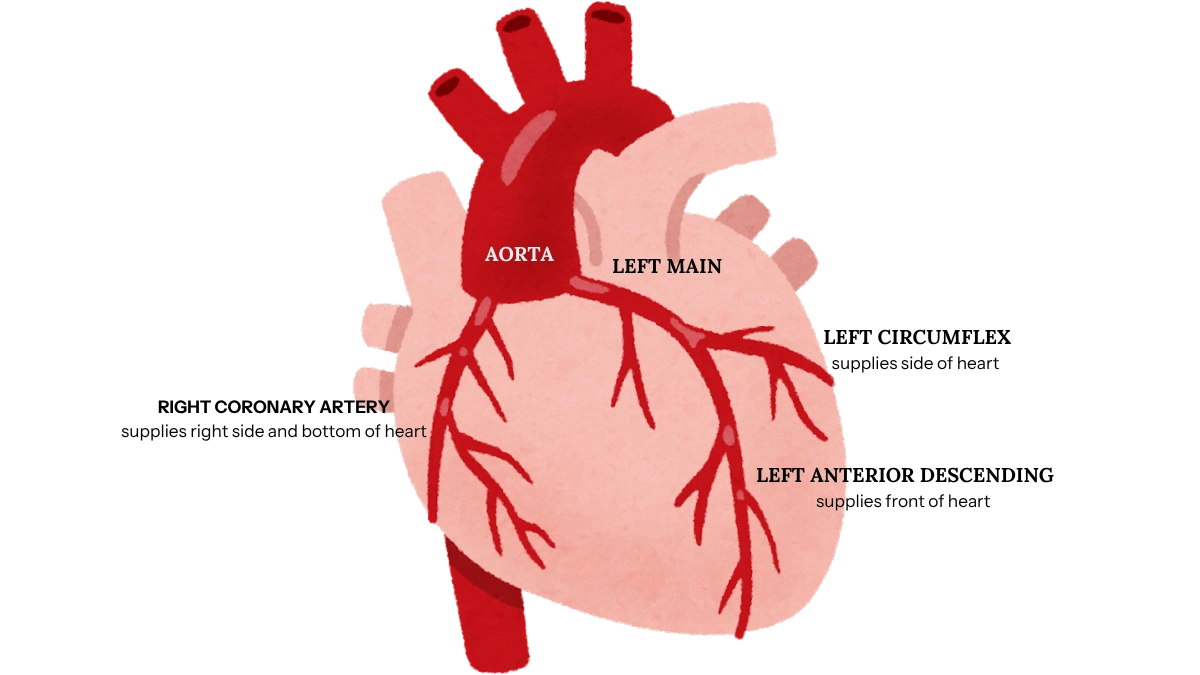
Figure 1. The three main coronary arteries supplying the heart muscle, shown in anterior view as the surgeon sees them. The patient’s right side is on the viewer’s left.
The heart has three main coronary arteries, the blood vessels that wrap around its surface and supply the heart muscle with the oxygen and nutrients it needs to keep beating. When one or more of these arteries becomes significantly narrowed or blocked, the heart muscle downstream is deprived of blood flow. That is coronary artery disease, and bypass surgery is one of the ways we restore that flow.
The three arteries are the left anterior descending artery, known as the LAD, which runs down the front of the heart and supplies a large portion of the left ventricle (the heart’s main pumping chamber). The left circumflex artery, or LCx, which curves around the left side of the heart, supplying the back and left side of the left ventricle. And the right coronary artery, or RCA, which supplies the right side of the heart and, in most people, the bottom wall of the left ventricle.
The LAD is the most important of the three. Because it supplies such a large portion of the left ventricle, significant blockages here demand prompt attention, and it is almost always the most important artery that we bypass.
Each of these three main arteries also has significant branches that supply their own territories of heart muscle. The diagonal branches come off the LAD and supply the front and side wall of the left ventricle. The marginal branches come off the LCx and supply the side wall. When one of these branches is large and significantly diseased, it can benefit from its own bypass, and this is often where a fourth graft comes from.
What the Number Actually Means
A single bypass means one artery has been bypassed. A double bypass means two. A triple bypass, the most common type, means three arteries have been bypassed, typically the three main coronary arteries. A quadruple bypass means four grafts have been placed, usually because one of the main arteries also has a large branch that is diseased and needs its own bypass.
That is it. The number describes how many new routes we created around blocked segments, nothing more and nothing less.
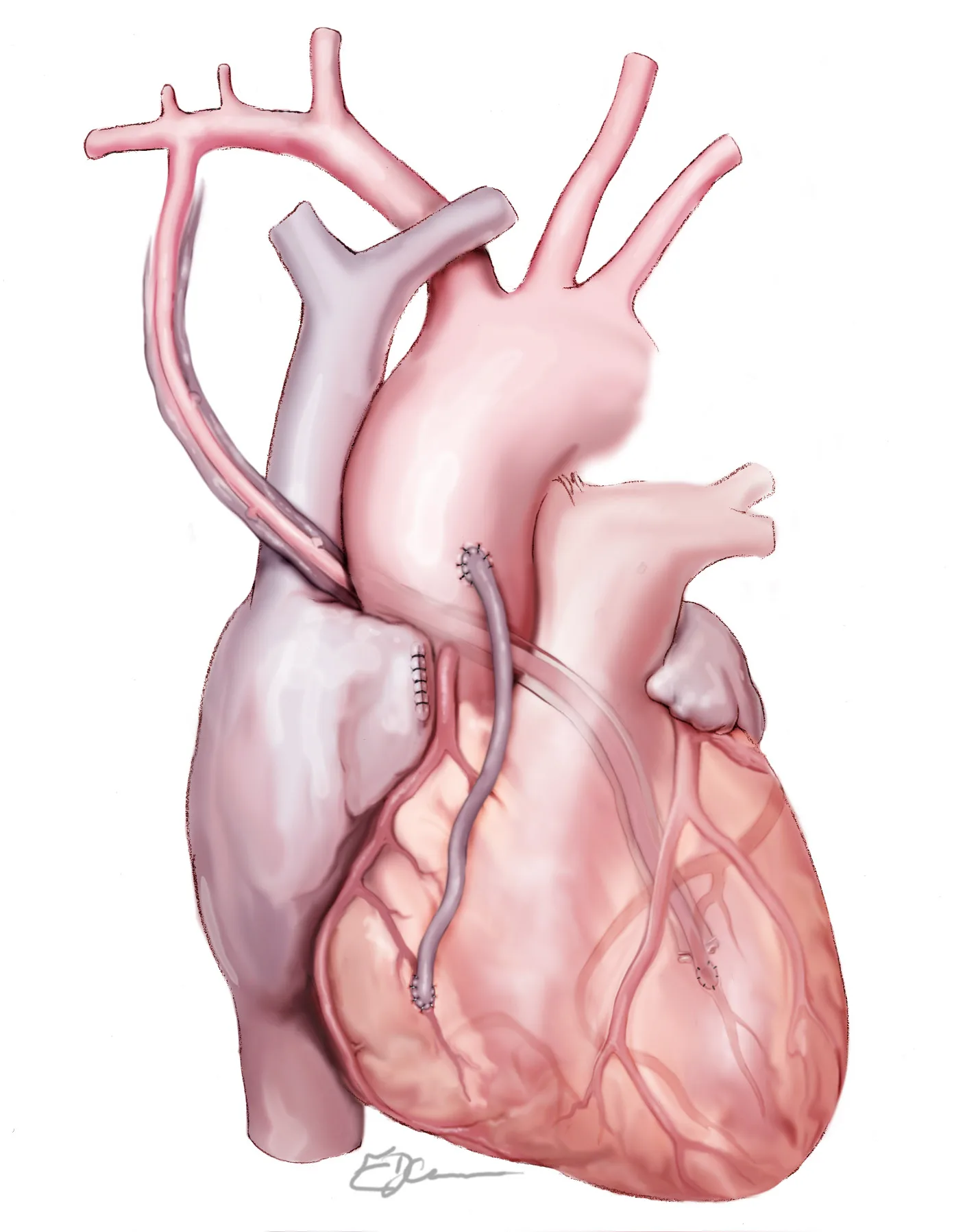
Figure 2
A traditional bypass arrangement
A bypass arrangement using the right internal mammary artery (RIMA), taken from inside the chest wall and crossed over to reach a coronary artery on the front of the heart, together with a saphenous vein graft from the leg.
Illustration: E. Jeannes
The number does not tell you how blocked the arteries were. It does not tell you how long the operation took. It does not tell you how serious your heart disease is compared to someone with a different number. And it certainly does not predict your recovery in any simple way.
The number of bypasses is best understood as a description of thoroughness, not of severity.
Prof. Jai Raman, Cardiothoracic Surgeon
The most common scenario
Triple bypass surgery is the most frequently performed type, because most patients who reach the point of needing surgery have significant disease in more than one artery. By the time coronary artery disease is severe enough to warrant surgery rather than stenting, it has often progressed throughout the coronary tree, affecting multiple vessels rather than a single isolated blockage.
This is not bad news. It is simply the nature of the disease, and it is exactly the scenario bypass surgery was designed to address.
Does More Bypasses Mean a More Serious Operation?
This is the question I am asked most often, and the honest answer is: not in the way most patients assume.
The duration and complexity of bypass surgery depends far more on the patient’s overall condition than on the number of grafts being placed. A triple bypass on a fit 58-year-old with good heart function, no diabetes, good lung function, and no prior cardiac surgery is a very different operation from a single bypass on a frail 75-year-old with a significantly weakened heart, impaired kidneys, and poor lung reserve. The first patient may be in theatre for three to four hours and home within five days. The second may face a considerably more complex course regardless of how many vessels were grafted.
What the surgical team is assessing before your operation is not primarily the number of bypasses required, it is you. Your age, your fitness, your heart muscle function, your other medical conditions, and whether you have had heart surgery before. These are the variables that shape the surgical risk, not the number written on the consent form.
3 to 5 hrs Typical theatre time for bypass surgery, whether single, double, or triple, in a suitable patient The additional time for each extra graft is generally 20 to 40 minutes
The Grafts, What We Use and Why
Bypass surgery works by using a healthy blood vessel from elsewhere in the body to create a new route around the blocked section of a coronary artery. The vessel we choose, the graft, matters enormously for how long the bypass lasts.
The internal mammary artery, the gold standard
The left internal mammary artery (also called the left internal thoracic artery, or LIMA) runs along the inside of the chest wall and is the graft of choice for bypassing the LAD. The evidence for its longevity is extraordinary: more than 9 out of 10 of these grafts are still working well after 10 years, and many remain open at 20 years and beyond.
The reason is biological. The mammary artery is a living conduit. It adapts to its new role, responds to the demands of the coronary circulation, and resists the process of re-narrowing that affects vein grafts over time. When we place a LIMA-to-LAD graft, we are not simply creating a bypass. We are creating a durable, long-term solution for the most important artery in the heart.
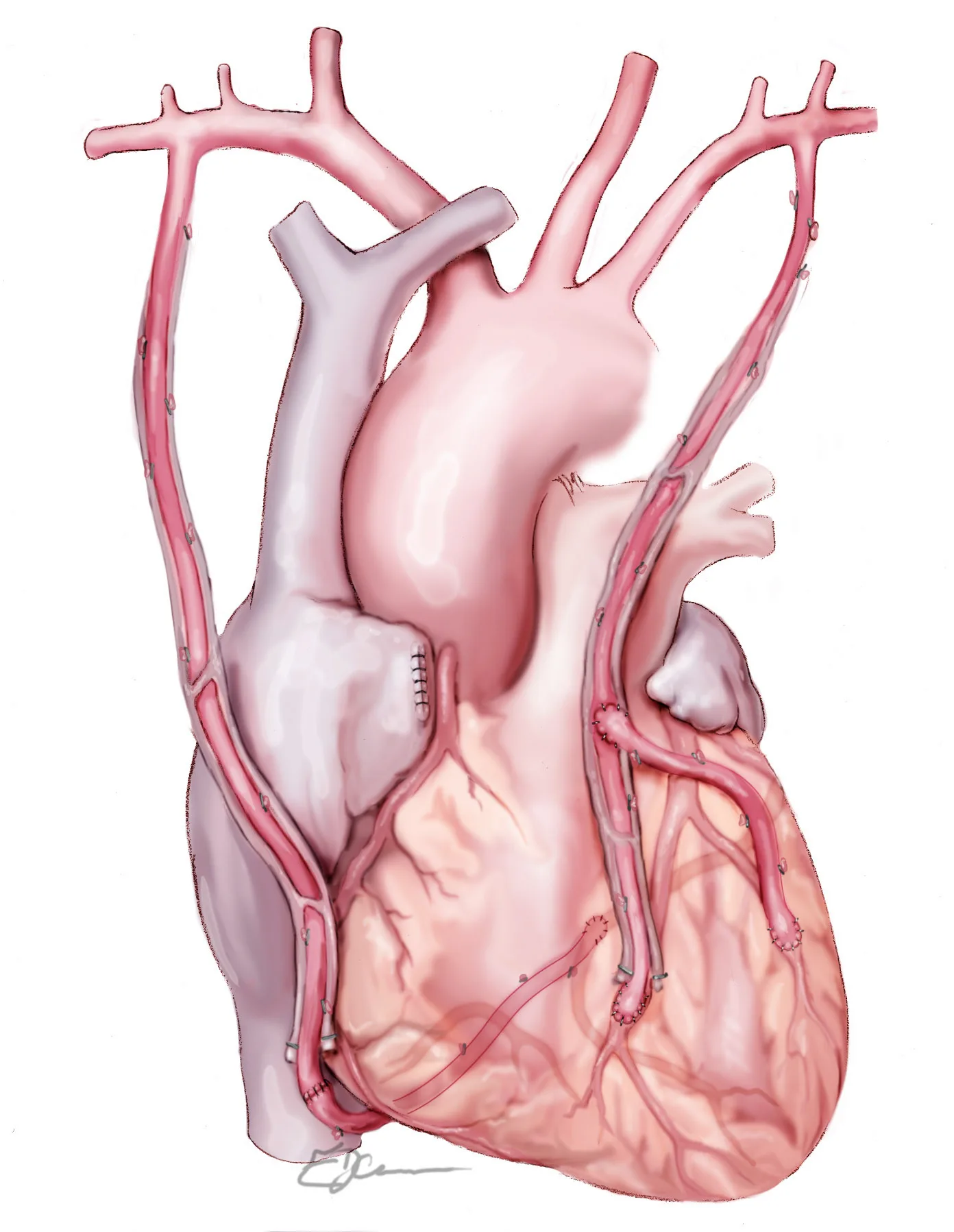
Figure 3
All arterial grafts
Both mammary arteries combined with a radial artery graft from the forearm. All three coronary territories bypassed using arterial grafts, offering the most durable long-term result in younger patients.
Illustration: E. Jeannes
Where two mammary arteries are used, a technique known as bilateral internal mammary artery grafting, the evidence suggests even better long-term outcomes, particularly in younger patients. This is a more demanding approach and is not suitable for everyone, but in the right patient it represents the highest standard of surgical revascularisation.
The radial artery
The radial artery, the artery at the wrist used to take your pulse, can also be harvested and used as a graft in selected patients. Its long-term success rates fall between the mammary artery and the saphenous vein, and it is particularly useful in younger patients where durability is the priority.
The use of this artery was pioneered here in Melbourne by my mentor, Prof Buxton, in the late 1990s. Harvested from the forearm, it allows for a quick recovery and good outcomes. This graft has now been shown to have very good early and long-term results, staying open for over 15 years.
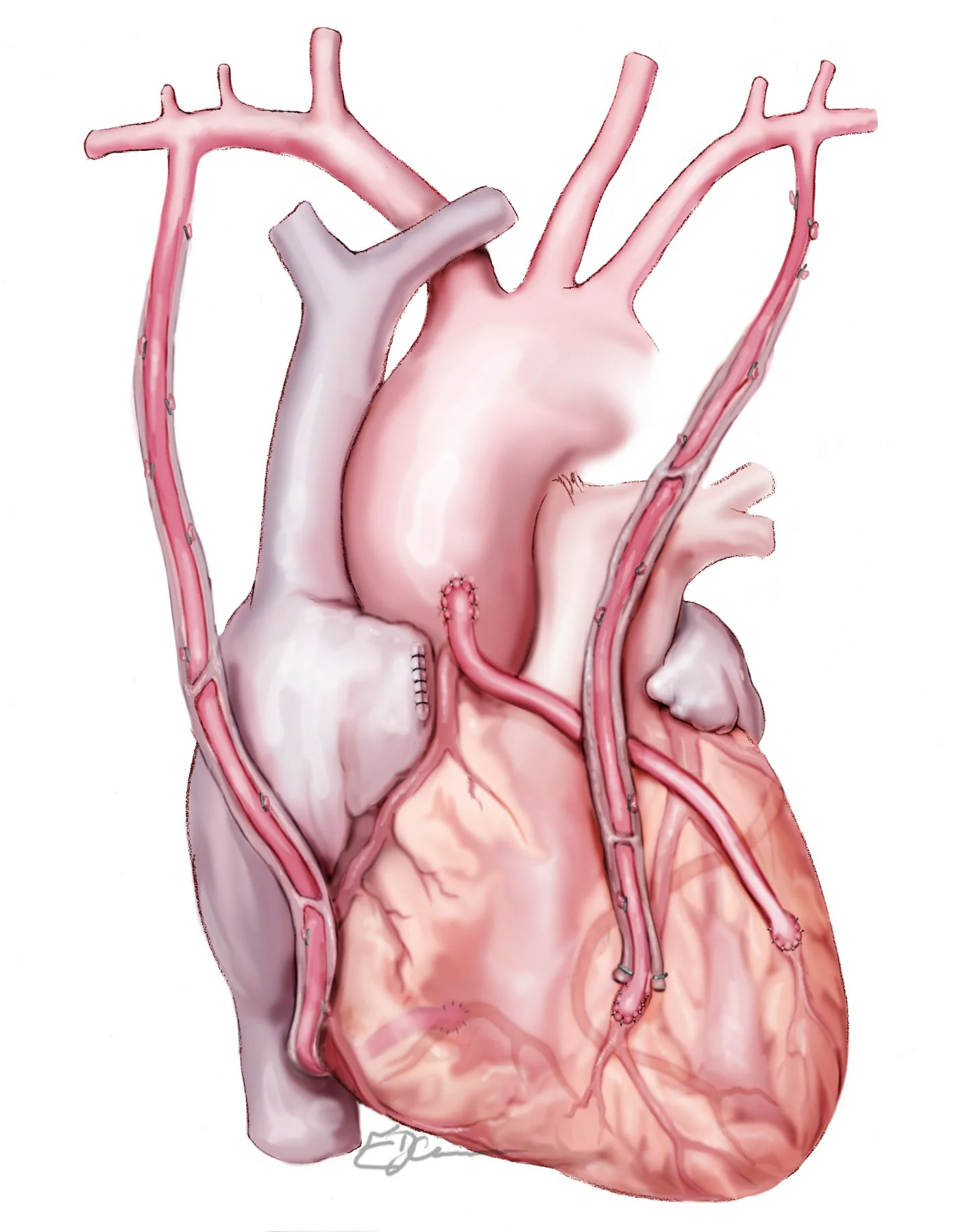
Figure 4
Using both mammary arteries
Both the left and right internal mammary arteries used as arterial grafts. Evidence suggests even better long-term outcomes in suitable patients, particularly younger ones. This approach is technically demanding and is not suitable for everyone.
Illustration: E. Jeannes
It is worth remembering that arterial grafts are much better than the alternative, saphenous vein grafts, which start to block off at around five years.
Saphenous vein grafts
The saphenous vein, the long vein running along the inside of the leg, is the most commonly used graft after the mammary artery. It is harvested through a small incision or, increasingly, through minimally invasive techniques, and used to bypass the remaining vessels.
Vein grafts are reliable and effective, but they do not last as long as arterial grafts. About half of saphenous vein grafts are still fully open after 10 years, compared to more than 9 out of 10 for the LIMA. This is not a failure of the surgery. It is simply the biology of vein grafts placed into the high-pressure arterial circulation. It means that for younger patients, or those with a long life expectancy, using as many arterial grafts as possible is an important part of surgical planning.
Graft
Source
Open at 10 years
Best used for
Left internal mammary (LIMA)
Inside chest wall
More than 9 in 10
LAD bypass, gold standard
Right internal mammary (RIMA)
Inside chest wall
More than 8 in 10
Second arterial graft
Radial artery
Forearm
About 8 in 10
Extra arterial graft
Saphenous vein
Leg
About 5 in 10
Additional vessels
Quadruple Bypass, and Beyond
A quadruple bypass is less common than a triple, but far from rare. The fourth bypass almost always goes to one of the important branches of the three main arteries, most often a large diagonal branch off the LAD, or a significant marginal branch off the LCx, when that branch is diseased enough to be affecting heart muscle on its own.
So when your surgical team recommends a quadruple bypass, it does not usually mean you have a fourth main coronary artery that most people do not have. It means that one of the branches coming off your main arteries is large and important enough to warrant its own graft alongside the three main ones.
Quintuple bypass, five grafts, does occur, though it is uncommon. It typically involves the three main arteries plus two of their most significant branches, and is generally reserved for patients with very extensive coronary disease who are good surgical candidates.
I want to be clear about something important: the fact that a patient needs four grafts rather than three does not mean their operation is dramatically more dangerous or their recovery dramatically longer. It means their coronary disease was extensive enough to require four new routes, and that their surgical team was thorough enough to provide them.
Why a Thorough Job Matters
One of the principles that guides every bypass operation I perform is the goal of restoring blood flow to every area of the heart that is at risk from significant disease. Surgeons call this complete revascularisation. In plain terms, it means leaving no important blockage behind.
The evidence is clear that leaving significant coronary disease untreated, because it is technically difficult or adds time to the operation, is associated with worse long-term outcomes. Patients whose disease is fully treated have lower rates of later heart attack, lower rates of repeat procedures, and better survival at five and ten years.
This is why the number of bypasses is, in some respects, a reflection of the surgeon’s commitment to doing the job properly. A patient who needs three vessels bypassed and receives three grafts has had their disease fully treated. A patient who receives only two grafts because the third vessel was technically challenging has been left with residual disease, and the consequences of that decision may not become apparent for years.
How We Access the Heart, and Close It Again
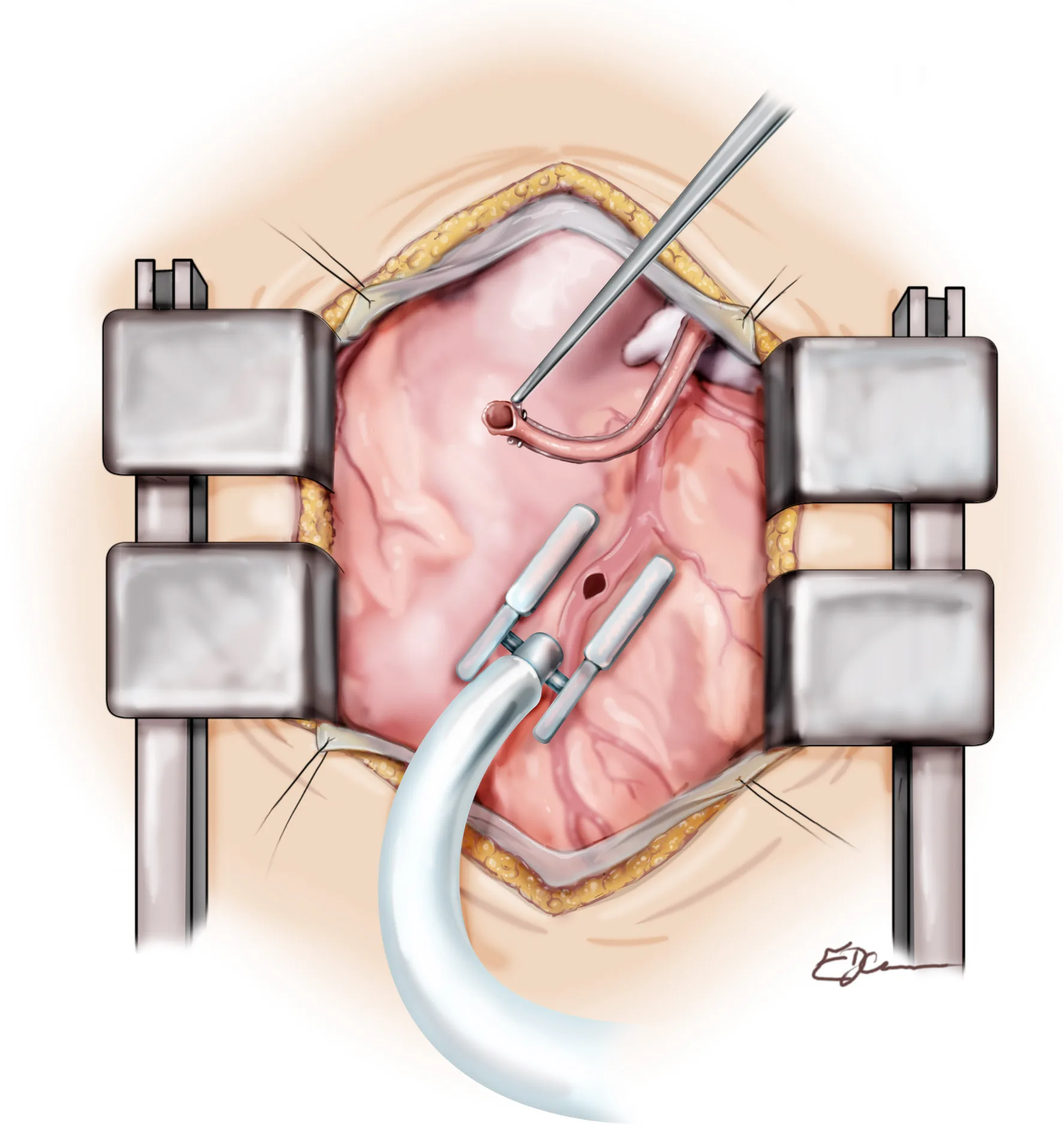
Figure 5
Inside the operative field
A view of the heart during bypass surgery, through the opening in the chest. The retractors on each side hold the chest open. The silver device in the middle gently holds a small area of the beating heart still while the graft is sewn on.
Illustration: E. Jeannes
For a typical triple bypass, the chest is opened through a midline incision called a median sternotomy (a controlled split of the breast bone). This gives the surgical team full access to all parts of the heart and allows us to harvest the internal mammary artery or arteries as grafts. The wider process of bypass surgery is covered separately, from admission through to discharge.
Traditionally, the split breast bone is brought back together at the end of the operation and held with stainless steel wires. One of the important improvements in recent years has been the use of titanium plates and screws to close the chest, a technique I have helped to develop. It is now recommended as part of modern Enhanced Recovery After Surgery (ERAS) guidelines, which are a set of practices designed to get patients home and back to normal life faster. With plate closure, patients need less pain relief, opioid use can often be avoided entirely, and the breast bone heals more securely.
When you meet your cardiac surgeon before your operation, it is entirely reasonable to ask: will all my blocked arteries be bypassed? What vessels are being grafted, and why? Are there any vessels that cannot be bypassed, and what does that mean for my outcome? And how will you close my chest, will you use plates and screws to help the breast bone heal?
Recovery, What the Number Means for You
The most important thing I can tell you about recovery from bypass surgery is this: the number of bypasses is one of the least important variables in how you will recover.
What matters far more is your age and baseline fitness, your heart muscle function going into the operation, whether you have diabetes, kidney disease, or lung disease, and whether this is your first heart surgery or a second operation after a previous one. A fit, active 60-year-old recovering from a triple bypass will almost always have a smoother and faster recovery than a sedentary 72-year-old recovering from a single bypass.
Recovery milestone
Typical timeframe
Breathing tube removed
Within hours of surgery
Out of intensive care
24 to 48 hours
Home from hospital
5 to 7 days if uncomplicated
Driving again
4 to 6 weeks, check with your surgeon
Return to light activity
4 to 6 weeks
Full recovery
6 to 12 weeks for most
Cardiac rehabilitation
Begins 4 to 6 weeks after surgery
Cardiac rehabilitation, a structured program of supervised exercise, education, and psychological support, is one of the most important things you can do after bypass surgery, regardless of how many vessels were grafted. The evidence for its benefit in reducing repeat events, improving exercise capacity, and supporting return to a full life is overwhelming. I encourage every patient I operate on to attend.
Most patients also leave hospital on a combination of medicines intended to protect the grafts and reduce future risk. These usually include aspirin and a cholesterol-lowering medicine, with the exact combination decided by the treating team.
Conclusion
Bypass surgery, whether single, double, triple, or quadruple, is one of the most studied and most successful operations in the history of medicine. More than a million procedures are performed worldwide each year, and the outcomes, for appropriately selected patients, are excellent.
The number of bypasses you need is determined by your anatomy, by the extent and location of your coronary disease, and by the surgical team’s commitment to treating it thoroughly. It is not a measure of how ill you are, how dangerous your operation will be, or how difficult your recovery will be. It is a description of thoroughness. If you are facing surgery, asking your cardiac surgeon to walk you through exactly what is planned is a conversation every surgeon expects to have, and one that deserves a clear and complete answer. Our questions to ask guide may help you prepare.
A new clinical trial published in JAMA found that patients with atrial fibrillation who continued drinking around one cup of coffee a day were 39% less likely to have a recurrence of AF compared to those who stopped completely.
This is the first randomised clinical trial to directly test whether coffee triggers AF episodes, overturning decades of routine clinical advice to avoid caffeine.
The finding does not mean patients should increase their coffee intake, and it does not apply to everyone. The trial involved patients who were already moderate coffee drinkers.
As with all research, there are limitations, and guidelines have not yet changed. Talk to your cardiologist before changing anything about your daily habits.
If you have been told you have atrial fibrillation, there is a good chance someone, whether a doctor, a nurse, or a well-meaning friend, has suggested you cut back on coffee. For years, caffeine has been viewed with suspicion in the context of heart rhythm disorders, and many patients with AF have quietly given up their morning cup out of caution. If you experience palpitations or an irregular heartbeat and are not sure whether it is related to AF, our dedicated article on palpitations explains what different sensations mean and when to seek help.
A major new clinical trial, published in JAMA in 2026 and conducted across five hospitals in Australia, the United States, and Canada, has now challenged that longstanding advice in a way that will be meaningful for many people living with AF.
The short version: in patients who already drank moderate amounts of coffee, continuing to drink around one cup a day after cardioversion was not harmful, and may actually have been protective against the return of irregular heart rhythm.
What is the DECAF trial?
DECAF stands for Does Eliminating Coffee Avoid Fibrillation, which neatly captures the question the researchers set out to answer. It is the first randomised clinical trial ever conducted on this specific question, which makes it a landmark study even by the standards of cardiology research.
The trial enrolled 200 adults with persistent AF who were all scheduled for cardioversion, the procedure that uses a controlled electrical impulse to reset the heart back into a normal rhythm. The average age of participants was 69 years and 71% were male. All were moderate coffee drinkers, consuming around seven cups per week, which is roughly one cup a day, at some point in the previous five years.
After successful cardioversion, patients were randomly assigned to one of two groups. One group was asked to continue drinking at least one cup of caffeinated coffee each day. The other group was asked to avoid all coffee and caffeine entirely, including decaffeinated coffee. Most participants were already being treated for AF with anticoagulation and some with antiarrhythmic or rate control medications, and these were continued throughout the trial. Both groups were then followed for six months to see whose heart rhythm stayed normal and whose returned to AF. The coffee group maintained their habit of around seven cups per week throughout the trial, while the abstinence group reduced to essentially none.
☕ Coffee group
47% of patients who continued drinking coffee had a recurrence of AF or atrial flutter within six months.
🚫 No coffee group
64% of patients who avoided all caffeine had a recurrence of AF or atrial flutter within six months.
📉 The difference
Patients who continued drinking coffee were 39% less likely to have a recurrence of AF compared to those who abstained entirely.
✅ Safety
Emergency visits and hospitalisations were similar between both groups. No deaths occurred in either group during the trial.
☕ What does this mean in practice?
For every 6 people with AF who continued drinking their daily coffee after cardioversion, approximately 1 avoided a recurrence that they would otherwise have had. That is a meaningful real-world benefit, and a number worth discussing with your cardiologist.
The result was statistically significant, meaning it is unlikely to be explained by chance alone. The lead investigator, Professor Christopher Wong of the University of Adelaide, described the results as astounding, noting that the trial suggests coffee is not only safe but potentially protective for patients with AF. Importantly, the DECAF trial was funded by the National Institutes of Health, with no pharmaceutical or industry sponsorship involved, which strengthens confidence in the independence of the findings.
Why might coffee help rather than hurt?
For decades, the assumption was that caffeine, as a stimulant, would make the heart more prone to irregular rhythms. The DECAF trial suggests the reality is more nuanced. The researchers and commentators offered several possible explanations for why moderate coffee consumption might actually be associated with fewer AF episodes.
Adenosine blockade
Caffeine blocks adenosine receptors in the heart. Adenosine can promote the conditions that allow AF to develop and persist, so blocking it may have a protective effect.
Anti-inflammatory effects
Coffee contains compounds beyond caffeine that have anti-inflammatory properties. Inflammation plays a role in the development of AF, so reducing it may help maintain normal rhythm.
Physical activity
Coffee is associated with increased physical activity, and exercise is known to reduce AF burden. Patients in the coffee group may have been more active as a result.
Caffeine withdrawal
Abruptly stopping caffeine causes physiological changes that may themselves be disruptive to heart rhythm. Regular moderate consumption avoids this stress on the body.
What are the limitations of this trial?
No single clinical trial, however well-designed, changes medical practice on its own, and the DECAF researchers themselves were careful to highlight several important limitations that patients should understand.
The trial enrolled 200 patients, which is a relatively modest number in the world of clinical cardiology. While the result was statistically significant, a larger study could either strengthen or modify these findings. The open-label design, meaning that both patients and researchers knew which group each person was in, could also influence how symptoms were reported or how often patients sought medical attention. There were also some differences in baseline characteristics between the two groups: the abstinence group was on average two years older and included more women, which may have influenced the results despite statistical adjustments.
The researchers also noted that AF episodes were detected through routine clinical care rather than a standardised monitoring schedule, which means some episodes in either group may not have been captured.
For years I have had the conversation in clinic about coffee and AF. Most patients ask about it, and until now the honest answer was that we did not have good randomised evidence either way. The DECAF trial changes that. For patients who are already moderate coffee drinkers, this is genuinely reassuring. But it is not a signal to start drinking more, and it is not a study of patients who never drank coffee. Context matters, and the conversation with your cardiologist still matters.
What does this mean for you?
If you have AF and you have been worried about your morning coffee, this trial offers genuine reassurance. For patients who are already moderate coffee drinkers, the best available evidence now suggests that continuing to drink around one cup a day is not harmful and may, if anything, be beneficial for heart rhythm stability after cardioversion.
However, it is important to understand what this trial does not tell us. It was not conducted in people who do not drink coffee at all, so it does not suggest that non-coffee-drinkers should start. It does not apply to large amounts of caffeine. It does not mean that every patient with AF should drink more coffee. And it does not override the advice of your own cardiologist, who knows your specific heart anatomy, medications, and circumstances.
Clinical guidelines have not yet been updated to reflect this trial, and further research will follow. In the meantime, the most sensible message is that you no longer need to feel guilty about your morning cup, but as always, any significant changes to your lifestyle or habits are worth discussing with your clinical team first.
Read More, Heart Matters
Our dedicated articles on atrial fibrillation cover what AF is, how it affects stroke risk, and the full range of treatment options available, explained in plain language.
This trial is interesting and genuinely reassuring for moderate coffee drinkers with AF. But it is not a prescription to drink more coffee, and it is not a reason to change anything without speaking to your cardiologist first. Every patient is different, every heart is different, and the right conversation is the one you have with the clinician who knows your case. Bring this up at your next appointment and ask what it means for you specifically.
Conclusion
The DECAF trial is a genuinely important piece of research that challenges a longstanding assumption in cardiology. For decades, patients with AF have been advised, often without strong evidence, to avoid caffeine. The first properly conducted randomised trial on this question tells a different story: for moderate coffee drinkers, continuing to enjoy one cup a day after cardioversion appears to be safe and may reduce the likelihood of AF returning.
It is a finding worth knowing about. It is also a reminder that in medicine, advice that has been repeated for many years is not always grounded in the evidence we now have the tools to generate. This trial gave us that evidence, and it is genuinely good news for the many patients with AF who have been quietly missing their coffee.
Wong CX, Cheung CC, Montenegro G, et al. Caffeinated Coffee Consumption or Abstinence to Reduce Atrial Fibrillation: The DECAF Randomized Clinical Trial. JAMA. 2026;335(4):317-325. doi:10.1001/jama.2025.21056
First presented by Christopher X. Wong, MBBS, MPH, PhD, at the American Heart Association Scientific Sessions 2025, New Orleans, LA, November 9, 2025. Published in print JAMA January 27, 2026
Funding: The DECAF trial was supported by the National Institutes of Health (NIH), National Heart, Lung and Blood Institute. No commercial or industry funding was involved in this research.
Iron deficiency is extremely common in cardiac patients, particularly those with heart failure, chronic kidney disease, or those taking blood-thinning medications long-term.
You do not need to be anaemic to be iron deficient. Many patients have low iron stores with a normal haemoglobin, and still experience significant fatigue and reduced exercise capacity.
Medications including aspirin, dual antiplatelet therapy, and anticoagulants (blood thinners) can cause low-grade, ongoing gastrointestinal blood loss that slowly depletes iron stores over months to years.
In heart failure, correcting iron deficiency, even without anaemia, significantly improves symptoms, exercise capacity, and quality of life, and reduces hospital admissions.
When oral iron supplements are poorly tolerated or inadequately absorbed, intravenous iron infusion is safe, effective, and increasingly available.
Iron levels are straightforward to check with a blood test. If you are experiencing unexplained fatigue and are on cardiac medications, asking your doctor about iron studies is worthwhile.
Iron deficiency and the heart have a closer connection than most people realise. It sits in the background of the cardiovascular conversation, overshadowed by cholesterol, blood pressure, and rhythm, and yet it is one of the most prevalent and most correctable problems in cardiac patients.
In cardiology and haematology clinics, iron deficiency turns up regularly. In patients on long-term blood thinners, in those managing heart failure, in people with chronic kidney disease. Recognising it, testing for it, and treating it effectively can make a profound difference to how a patient feels and functions day to day.
Iron Deficiency and the Heart, Why Are Cardiac Patients at Risk?
Several factors make cardiac patients particularly vulnerable to iron depletion. Understanding them helps explain why this problem is so common in this specific group.
Blood-Thinning Medications and Slow Blood Loss
Many cardiac patients take medications that reduce the blood’s ability to clot, aspirin, dual antiplatelet therapy (aspirin combined with clopidogrel or ticagrelor), or anticoagulants such as warfarin or DOACs (direct oral anticoagulants). These medications are essential and life-saving in the right context.
But they carry a side effect that is easy to overlook: low-grade, ongoing blood loss from the gastrointestinal tract. The gut lining is naturally prone to minor bleeding, small erosions and microscopic leaks that the body usually handles without consequence.
When platelet function is reduced or clotting is impaired, these tiny bleeds become slightly larger and slightly more persistent. Over months and years, the cumulative blood loss is enough to steadily deplete iron stores, even without any obvious sign of bleeding.
I see this regularly, a patient on long-term blood thinners who has been increasingly fatigued for months. Their haemoglobin is normal, so anaemia has been excluded. But their ferritin is very low and their iron stores are essentially empty. Correcting it changes everything.
— A/Prof. Ali Bazargan, Haematologist
Medication
How It Can Deplete Iron
Risk Level
Aspirin
Reduces the blood’s clotting ability and can irritate the stomach lining, leading to minor ongoing blood loss
Moderate, increases with dose and duration
Dual antiplatelet therapy
Two clot-preventing medicines combined, greater stomach and gut bleeding risk than aspirin alone
Higher, particularly in first 12 months
Warfarin
Reduces the blood’s ability to clot, any gut bleed is larger and slower to stop
Moderate to high, especially when the blood-thinning effect is stronger than intended
DOACs (apixaban, rivaroxaban, dabigatran)
Direct blood thinners, gut bleeding risk varies by medication and dose
Moderate, rivaroxaban carries slightly higher gut bleeding risk than apixaban
Heart Failure
Iron deficiency is extraordinarily common in heart failure, affecting up to 50% of patients with the condition. The reasons are multiple: reduced appetite, gut wall swelling that impairs iron absorption, and chronic low-grade inflammation that prevents iron from being properly used.
In some patients, underlying kidney disease compounds the problem further.
What makes this particularly important is that iron deficiency worsens heart failure outcomes independently of whether anaemia is present. The heart muscle itself requires iron for energy production. Iron-deficient cardiac muscle functions less efficiently, contributing directly to the breathlessness, fatigue, and exercise intolerance that define heart failure symptoms.
50% of patients with heart failure have iron deficiency, one of the most common and most treatable problems in this group, with or without anaemia European Heart Journal
Chronic Kidney Disease
The kidneys play a central role in iron metabolism. They produce a hormone called erythropoietin, a chemical signal that tells the bone marrow to produce red blood cells, a process that requires iron. In chronic kidney disease, this signalling is impaired and iron utilisation breaks down.
Patients with chronic kidney disease are therefore at high risk of iron deficiency through multiple mechanisms simultaneously, reduced production, impaired utilisation, and often dietary restrictions or gut absorption problems on top.
Iron deficiency in this setting is a major driver of fatigue and anaemia, and managing it is an important part of comprehensive kidney and cardiac care.
Iron Deficiency Without Anaemia, Why This Matters
One of the most important things to understand is that iron deficiency and anaemia are not the same thing. Anaemia, a low haemoglobin or red cell count, is the late consequence of prolonged iron depletion.
Long before haemoglobin falls, iron stores in the body become exhausted. A patient with depleted iron stores but a normal haemoglobin has no anaemia, but they may have profound fatigue, reduced exercise capacity, impaired concentration, and poor quality of life.
The body is compensating, but at a cost. In heart failure particularly, this state of iron deficiency without anaemia is clinically significant and responds well to treatment.
Blood Test
What It Measures
What Low Levels Mean
Ferritin
Iron storage protein, reflects total body iron stores
Low ferritin is the earliest marker of iron depletion, even with normal haemoglobin
Transferrin saturation (TSAT)
Percentage of iron-carrying protein that is actually carrying iron
Below 20% suggests iron is not being delivered to tissues adequately
Haemoglobin (Red blood cell)
Iron is attached to red blood cells. Oxygen requires attachment to the iron on red cells in order to be carried in circulation
Falls late in iron deficiency, a normal result does not exclude iron depletion
Serum iron
Iron circulating in the blood at the time of the test
Variable day-to-day, less reliable than ferritin or TSAT alone
The Evidence for Treating Iron Deficiency in Heart Failure
The clinical trial evidence for intravenous iron in heart failure is now substantial. A large clinical trial (AFFIRM-AHF) showed that intravenous iron, given to iron-deficient patients hospitalised with acute heart failure, significantly reduced the risk of repeat heart failure admissions in the following year.
Patients also reported meaningful improvements in quality of life and their ability to be physically active.
A further large clinical trial (IRONMAN) added weight, showing that regular intravenous iron therapy reduced combined cardiovascular events and hospitalisations over a longer follow-up period. These trials have established correcting iron deficiency as a standard part of heart failure management, not an optional extra.
The AFFIRM-AHF data was genuinely practice-changing. We now routinely check iron studies in every heart failure patient, and treat deficiency proactively, not just when anaemia develops.
— Prof. Peter Barlis, Interventional Cardiologist
How Is Iron Deficiency Treated?
Treatment depends on the severity of deficiency, the underlying cause, and how well the gut can absorb oral iron.
Oral Iron Supplements
For mild iron deficiency without significant gut absorption problems, oral iron supplements, ferrous sulfate, ferrous fumarate, or ferrous gluconate, are a straightforward starting point. They are inexpensive and widely available.
The challenge is tolerability. Oral iron frequently causes nausea, constipation, and abdominal discomfort, particularly in older patients or those on multiple medications. Taking iron with food reduces side effects but also reduces absorption.
Alternate-day dosing has been shown to improve both absorption and tolerability compared to daily dosing, and is now commonly recommended. In patients with heart failure or chronic kidney disease, gut absorption is often impaired enough that oral iron cannot replenish stores adequately, even when tolerated. In these patients, intravenous iron is the more effective route.
Intravenous Iron Infusion
Intravenous iron bypasses the gut entirely, delivering iron directly into the bloodstream where it is immediately available for use. Modern iron preparations specifically designed for infusion, including Ferinject and Monofer, can deliver a large dose in a single session lasting around 15 minutes, making the treatment practical and efficient.
A cannula is placed in a vein in the arm, the infusion runs over the agreed time, and the patient goes home the same day. A small proportion of patients experience mild flushing, fever, hives, muscle ache, joint ache, or a temporary drop in phosphate levels, your team will advise on monitoring if needed. Very rarely, extravasation of iron under the skin can lead to marked discolouration. Serious reactions are rare with modern preparations.
For cardiac patients with significant heart failure and impaired gut absorption, intravenous iron is increasingly the first-line treatment of choice.
What to Expect, Iron Infusion
Preparation
Fasting is not usually required. A cannula is typically placed in the arm on arrival. The infusion generally takes around 15 minutes depending on the preparation used, your team will confirm the details beforehand.
During
Patients are typically monitored throughout. Mild flushing or warmth is common and usually passes quickly. Most people are able to read, use their phone, or rest comfortably during the infusion.
Afterwards
Most patients go home the same day. Many notice an improvement in energy and exercise capacity in the weeks that follow as iron stores are replenished, though timing varies from person to person.
Follow-up
Iron levels are typically rechecked after the infusion, your doctor will advise on timing. In some conditions such as heart failure or chronic kidney disease, repeat infusions may be needed over time.
Should You Ask About Your Iron Levels?
If you are a cardiac patient experiencing unexplained or worsening fatigue, and particularly if you are on long-term aspirin, dual antiplatelet therapy, or anticoagulation, asking your doctor to check a full iron study panel is entirely reasonable.
The test is simple, inexpensive, and the result is directly actionable. Iron studies include ferritin and transferrin saturation (TSAT), both are needed, as ferritin alone can be falsely elevated by inflammation and may miss cases where iron stores appear normal but iron is not actually reaching the body’s tissues properly.
As a general guide, a ferritin below 100 micrograms per litre, or a transferrin saturation below 20%, may suggest iron deficiency is present, though your doctor will interpret these results in the context of your full clinical picture. You do not need to wait until you are anaemic. By that point, iron stores have been empty for some time, and earlier identification tends to lead to better outcomes.
Heart Matters Resource
When in Doubt, Get Checked Out
If you have heart failure, chronic kidney disease, or are on long-term blood-thinning medications and are experiencing significant fatigue, ask your doctor to check your iron studies. It is a simple test and a treatable problem.
Iron deficiency is common, underdiagnosed, and highly treatable in cardiac patients. Whether it arises from slow blood loss on blood-thinning therapy, from the metabolic demands of heart failure, or from the complex iron handling problems of chronic kidney disease, the end result is the same: depleted stores, profound fatigue, and a quality of life that does not have to be accepted as inevitable.
The evidence that treating iron deficiency in heart failure improves outcomes is now robust. The tools to do it, including intravenous iron infusion, are safe, practical, and increasingly accessible. What is needed is recognition that the problem exists in the first place.
If fatigue is limiting your life and you have not had your iron levels checked recently, that conversation with your doctor is worth having. It may be the most straightforward answer to a problem that has been hiding in plain sight.
Rheumatic heart disease is caused by repeated episodes of acute rheumatic fever, an abnormal immune response to streptococcal throat infection, that progressively damages the heart valves.
The causative organism is Group A Streptococcus, the same bacteria responsible for strep throat. In high-income countries, prompt antibiotic treatment prevents the inflammatory cascade. In low-resource settings, untreated infections lead to rheumatic fever and lasting valve damage.
The mitral valve is most commonly affected, producing stenosis or regurgitation that worsens with each recurrent episode of rheumatic fever. The aortic valve is the second most frequently involved.
Rheumatic heart disease remains the leading cause of acquired cardiovascular disease in children and young adults worldwide, predominantly affecting people in low and middle-income countries, including our nearest neighbour, Timor-Leste.
Prevention is straightforward and inexpensive: prompt antibiotic treatment of streptococcal throat infection, and long-term penicillin prophylaxis for those who have had rheumatic fever. The tragedy is one of access, not of medical complexity.
In Australian cardiology practice, rheumatic heart disease is a condition most cardiologists encounter rarely. A case here, a patient referred from overseas there. For many of my colleagues it exists mainly in textbooks, as a historical curiosity from an era before widespread antibiotic use.
But spend a week in the cardiac clinic at Hospital Nacional Guido Valadares in Dili, Timor-Leste, as I have, and the picture changes completely. You see young people in their twenties and thirties with severely damaged mitral valves. Children with significant valve disease. Patients who have never had access to the antibiotics that would have prevented everything they are now facing.
Rheumatic heart disease has not gone away. It has simply moved to places where we are less likely to see it, and where the people affected have less power to demand the attention their condition deserves. It remains the leading cause of acquired cardiovascular disease in children and young adults worldwide, affecting an estimated 40 million people and killing hundreds of thousands every year.
This article is about raising awareness of a condition that is preventable, treatable, and profoundly under-prioritised, and about the work being done to change that.
Heart Matters, Supporting the Timor-Leste Hearts Fund
The Timor-Leste Hearts Fund is Australia’s only medical NGO dedicated to life-saving heart surgery and heart health education for young people in Timor-Leste. Prof. Peter Barlis serves on the board and has worked on the ground in Dili supporting the Fund’s cardiac screening and skills training programs. Every donation makes a direct difference to a young person’s life.
A familiar bacteria with an unfamiliar consequence
Group A Streptococcus, Streptococcus pyogenes, is the bacteria responsible for strep throat. In Australia and other high-income countries, it is a common childhood infection that is diagnosed with a throat swab and treated with a course of antibiotics. Most children recover completely within days and never think about it again.
In settings where access to diagnosis and antibiotics is limited, or where poverty, overcrowding, and inadequate housing amplify the transmission and recurrence of streptococcal infections, the story is very different. When strep throat goes untreated or undertreated, some individuals mount an abnormal immune response. The immune system, primed to attack the streptococcal proteins, begins to cross-react with the body’s own tissues, including the heart. This is acute rheumatic fever.
Why the immune system attacks the heart
The mechanism of cardiac damage in rheumatic fever is molecular mimicry: proteins on the surface of Group A Streptococcus are structurally similar to proteins found in the human heart, particularly in the valve tissue. The immune system, mounting a response to the infection, cannot reliably distinguish between the bacterial proteins and the cardiac proteins. The resulting inflammatory attack damages the endocardium, the inner lining of the heart, and in particular the heart valves.
This is not a direct infection of the heart. The bacteria do not invade the cardiac tissue. It is the immune response itself, intended to protect the body, that causes the damage. This distinction matters because it explains why the damage continues even after the infection has resolved, and why recurrent streptococcal infections cause cumulative, progressive valve injury.
From Strep Throat to Heart Disease: The Disease Pathway
▶ The Progression of Rheumatic Heart Disease
Stage
What happens
Timeframe
Prevention window
Step 1
Group A strep throat infection. Sore throat, fever, swollen glands. Often mild or asymptomatic in young children.
Days
✓ Antibiotics here prevent everything that follows
Step 2
Acute rheumatic fever. Joint pain, fever, skin nodules, chorea (involuntary movements), and carditis (inflammation of the heart). Occurs 2 to 4 weeks after untreated strep infection in susceptible individuals.
Recurrent rheumatic fever. Each subsequent strep infection triggers another inflammatory attack on already-damaged valves. Damage is cumulative and progressive with each episode.
Months to years
✓ Penicillin prophylaxis prevents recurrence
Step 4
Chronic rheumatic heart disease. Scarring, thickening, and calcification of the valve leaflets produce stenosis (narrowing) or regurgitation (leaking), or both. Progressive valve dysfunction leads to heart failure, arrhythmia, and stroke.
Years to decades
Surgery or intervention required at this stage
Step 5
End-stage valve disease. Severe heart failure, pulmonary hypertension, atrial fibrillation, stroke risk. Without intervention, premature death, often in the third or fourth decade of life.
Decades
Prevention failed, surgical or palliative care only
How Rheumatic Fever Damages the Heart
Carditis: The Acute Inflammatory Phase
During an episode of acute rheumatic fever, inflammation can affect all three layers of the heart: the pericardium, myocardium, and endocardium. The endocarditis component, inflammation of the inner heart lining and valves, is responsible for the lasting structural damage. Small inflammatory nodules called Aschoff bodies form in the valve tissue. The valve leaflets become swollen and inflamed. In the acute phase, this can cause the valve to leak.
With prompt treatment and no recurrence, this acute inflammation may resolve without lasting damage. But with recurrent episodes, each one adds another layer of scarring, fibrosis, and calcification to the valve structure.
Valve Involvement: Which Valves and How
The mitral valve is by far the most commonly affected, involved in around 65 to 70% of cases of rheumatic heart disease. The aortic valve is the second most frequently affected, either in isolation or, more commonly, in combination with the mitral valve. The tricuspid and pulmonary valves are involved in a minority of cases and rarely in isolation.
Rheumatic damage produces two distinct valve abnormalities, either separately or together. Stenosis occurs when the valve leaflets fuse together along their edges, progressively narrowing the valve opening and restricting forward blood flow. Regurgitation occurs when scarring prevents the leaflets from closing completely, allowing blood to leak backwards. Many patients with longstanding rheumatic heart disease have elements of both.
Mitral Stenosis: The Signature Lesion
Mitral stenosis, narrowing of the mitral valve, is the signature lesion of rheumatic heart disease and is virtually unknown in high-income countries outside this context. As the valve area progressively narrows from a normal 4 to 6 square centimetres toward the critical threshold of below 1.5 square centimetres, blood backs up from the left atrium into the pulmonary circulation.
The consequences are progressive. Breathlessness develops, initially on exertion, then at rest. Pulmonary hypertension follows as the pressure backs up further. Atrial fibrillation becomes increasingly common as the left atrium dilates under chronic pressure overload, and in the context of mitral stenosis, AF carries a very high stroke risk from clot formation in the left atrial appendage. Heart failure follows. Without intervention, the trajectory is relentlessly downward.
This is the disease I see in young adults in Timor-Leste. A 28-year-old with severe mitral stenosis, in atrial fibrillation, breathless at minimal exertion. A picture that is largely absent from Australian cardiology practice but common across much of the developing world.
A Global Burden, and a Local Reality
The scale of the problem
Rheumatic heart disease affects an estimated 40 million people worldwide and causes approximately 300,000 deaths annually, the vast majority in low and middle-income countries in sub-Saharan Africa, South Asia, the Pacific Islands, and Southeast Asia. It disproportionately affects children and young adults in the prime of their lives, in communities that can least afford to lose productive members to preventable disease.
In Timor-Leste, Australia’s nearest neighbour, a country of approximately 1.3 million people that has only had independence since 2002, rheumatic heart disease remains one of the most significant cardiovascular burdens. Limited access to antibiotics for streptococcal infections, overcrowded housing conditions that facilitate strep transmission, and a healthcare system that is still developing its capacity to screen, diagnose, and treat cardiac disease all contribute to a burden that is entirely disproportionate to what should be possible with basic medical resources.
What I saw in Dili
During my time working with the cardiac team at Hospital Nacional Guido Valadares in Dili, the contrast with Australian practice was stark. Patients with valve disease that would have been identified and treated years earlier in Australia. Young people in heart failure from conditions that were preventable with antibiotics costing cents per course. Families who had no idea that a sore throat their child had years ago was the beginning of the heart disease now threatening their life.
The clinical skill and dedication of the local cardiologists working with the resources available to them is remarkable. The limitation is not knowledge or commitment. It is the infrastructure, the medication access, and the surgical capacity that simply do not yet exist within the country.
Mending Broken Hearts
The Timor-Leste Hearts Fund
Australia’s only medical NGO dedicated to life-saving heart surgery and heart health education for young people in Timor-Leste. Founded in 2010, the Fund partners with the cardiac clinic at Hospital Nacional Guido Valadares to screen patients, provide surgery for critical cases in Australia, and build local clinical capacity.
Key programs include penicillin prophylaxis for patients with known rheumatic heart disease, echocardiographic screening, clinical mentorship for local cardiologists, and advocacy for a health system that can one day manage this burden domestically.
The most powerful intervention in the entire rheumatic heart disease chain is also the simplest: treating streptococcal throat infection promptly with antibiotics. A 10-day course of penicillin, or a single injection of benzathine penicillin G, eradicates the Group A Streptococcus and prevents the abnormal immune response that leads to rheumatic fever.
This is straightforward in a healthcare system with access to diagnosis and antibiotics. In settings without reliable access to either, it is the gap through which millions of lives fall.
Secondary Prevention: Penicillin Prophylaxis
For individuals who have already had acute rheumatic fever, preventing recurrence is the most important priority. Every subsequent streptococcal infection risks triggering another inflammatory attack on already-damaged valves. Long-term penicillin prophylaxis, typically monthly injections of benzathine penicillin G, prevents this recurrence and halts the progressive valve damage.
The Timor-Leste Hearts Fund’s penicillin prophylaxis programme is one of its most impactful initiatives, identifying patients with known rheumatic heart disease and ensuring they receive their monthly penicillin, protecting already-damaged valves from further deterioration. The cost of this intervention is minimal. The benefit to an individual’s cardiac trajectory is enormous.
Echocardiographic screening
One of the most significant advances in rheumatic heart disease management has been the recognition that echocardiography can identify subclinical rheumatic valve disease, damage that is present but not yet producing symptoms, in populations with high rheumatic fever rates. Screening programs in endemic regions can identify patients who would benefit from prophylaxis before their disease becomes clinically significant. The Fund supports this screening capacity at the National Hospital in Dili.
Treatment: When Prevention Has Failed
Medical management
For patients with established rheumatic heart disease, medical management focuses on controlling symptoms, preventing complications, and protecting against further rheumatic fever episodes. Diuretics manage fluid overload in patients with stenotic valves. Anticoagulation is essential in patients with mitral stenosis and atrial fibrillation to prevent stroke. Rate control for AF reduces symptoms and prevents further cardiac remodelling. Penicillin prophylaxis continues throughout.
Valve intervention
When rheumatic valve disease becomes haemodynamically significant, producing severe symptoms, pulmonary hypertension, or significant cardiac dysfunction, valve intervention is required. The options depend on the anatomy of the damage.
For mitral stenosis without significant regurgitation, percutaneous mitral balloon valvotomy, a catheter-based procedure that splits the fused leaflets, can produce excellent results and restore the valve to a functional state without open heart surgery. For more complex valve lesions, or when regurgitation is significant, surgical repair or replacement is necessary.
For patients in Timor-Leste who reach the threshold for surgical intervention, the Timor-Leste Hearts Fund coordinates their transfer to Australian hospitals where the surgery is performed, in many cases giving a young person a functional heart valve and decades of additional healthy life. The contrast between the trajectory without intervention and the outcome with it is one of the most dramatic in all of medicine.
Sitting in the outpatient clinic in Dili, seeing a 24-year-old woman with severe mitral stenosis, breathless climbing one flight of stairs, in AF, with a left atrium the size of a tennis ball, knowing that the strep throat she had at twelve years old caused all of this, and that a course of antibiotics would have prevented it entirely: that is the injustice of rheumatic heart disease in one consultation. The clinical complexity of what she now needs is significant. The simplicity of what would have prevented it is almost unbearable.
Professor Peter Barlis, Interventional Cardiologist & Board Member, Timor-Leste Hearts Fund
What You Can Do
Awareness is the first step. Rheumatic heart disease is not a condition confined to history or to distant countries. It is affecting millions of people right now, including young people in our own region, in communities without access to the medical infrastructure we take for granted.
For clinicians in high-income countries, particularly those seeing patients from endemic regions, maintaining a high index of suspicion for rheumatic valve disease in patients from sub-Saharan Africa, Southeast Asia, the Pacific Islands, and South Asia is important. A murmur in a young adult from an endemic region is rheumatic until proven otherwise.
For anyone who wants to make a direct contribution to changing the trajectory of this disease in one of our nearest neighbours, the Timor-Leste Hearts Fund offers a direct and efficient pathway to do so.
Key Facts About Rheumatic Heart Disease
Caused by Group A Streptococcus, the same bacteria as strep throat, via an abnormal immune response in susceptible individuals.
Affects an estimated 40 million people worldwide, predominantly in low and middle-income countries.
The mitral valve is most commonly affected, followed by the aortic valve.
Entirely preventable with prompt antibiotic treatment of strep throat and penicillin prophylaxis after rheumatic fever.
In Timor-Leste, the Timor-Leste Hearts Fund coordinates life-saving surgery, penicillin prophylaxis, screening, and clinical training.
Heart Matters Resource
When in Doubt, Get Checked Out
If you have a history of rheumatic fever, particularly if you grew up in a region where streptococcal infections were common and access to antibiotics was limited, a cardiac assessment including echocardiography is worth discussing with your doctor. Rheumatic valve disease detected early can be managed to protect against further deterioration.
Rheumatic heart disease is the story of what happens when a preventable infection meets a healthcare system that cannot prevent it. The biology is well understood. The prevention is simple and cheap. The tragedy is one of access and equity, not of medical complexity.
Every course of antibiotics given to a child with strep throat in an endemic region is an act of cardiovascular prevention. Every monthly penicillin injection given to a young person with known rheumatic fever is a valve being protected from further damage. Every echocardiogram that identifies subclinical disease is a life being redirected away from the trajectory that brought so many patients to that clinic in Dili.
If this article has raised your awareness of rheumatic heart disease, the Timor-Leste Hearts Fund is one organisation doing direct work on it in our region. The links above will take you to their site if you wish to find out more.
Heart Matters uses cookies to improve your experience and analyse how our site is used. You can accept all cookies or manage your preferences below.
Functional
Always active
The technical storage or access is strictly necessary for the legitimate purpose of enabling the use of a specific service explicitly requested by the subscriber or user, or for the sole purpose of carrying out the transmission of a communication over an electronic communications network.
Preferences
The technical storage or access is necessary for the legitimate purpose of storing preferences that are not requested by the subscriber or user.
Statistics
The technical storage or access that is used exclusively for statistical purposes.The technical storage or access that is used exclusively for anonymous statistical purposes. Without a subpoena, voluntary compliance on the part of your Internet Service Provider, or additional records from a third party, information stored or retrieved for this purpose alone cannot usually be used to identify you.
Marketing
The technical storage or access is required to create user profiles to send advertising, or to track the user on a website or across several websites for similar marketing purposes.
To provide the best experiences, we use technologies like cookies to store and/or access device information. Consenting to these technologies will allow us to process data such as browsing behavior or unique IDs on this site. Not consenting or withdrawing consent, may adversely affect certain features and functions.
Functional
Always active
The technical storage or access is strictly necessary for the legitimate purpose of enabling the use of a specific service explicitly requested by the subscriber or user, or for the sole purpose of carrying out the transmission of a communication over an electronic communications network.
Preferences
The technical storage or access is necessary for the legitimate purpose of storing preferences that are not requested by the subscriber or user.
Statistics
The technical storage or access that is used exclusively for statistical purposes.The technical storage or access that is used exclusively for anonymous statistical purposes. Without a subpoena, voluntary compliance on the part of your Internet Service Provider, or additional records from a third party, information stored or retrieved for this purpose alone cannot usually be used to identify you.
Marketing
The technical storage or access is required to create user profiles to send advertising, or to track the user on a website or across several websites for similar marketing purposes.